A cable stripping knife is a simple but useful hand tool in an electrician’s toolkit. It is commonly used to open the outer sheath of electrical cables and prepare cable ends before installation.
Many electricians prefer a hooked blade because its curved shape can help guide the cut along the cable sheath. However, getting a clean result depends on understanding the cable construction and controlling the blade carefully.
I have used this type of knife when working with R2V cables and armoured cables. In my experience, it is particularly useful for removing outer cable coverings and, when appropriate, certain inner layers. It is a tool that rewards experience and careful handling.
What Is an Electrician’s Cable Stripping Knife?
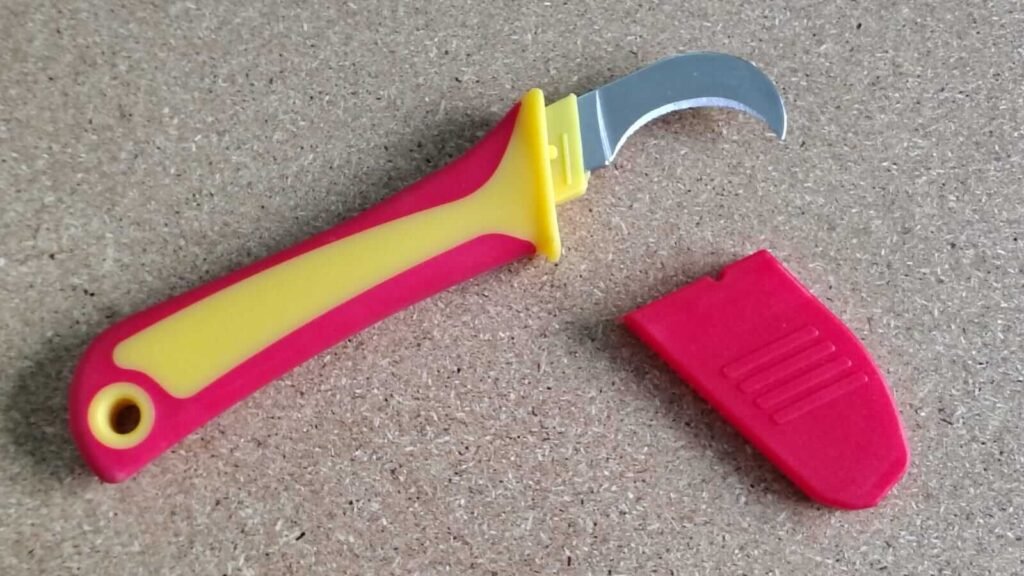
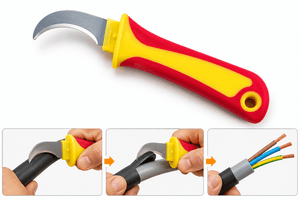
An electrician’s cable stripping knife is a hand tool designed to help remove cable sheaths and coverings. A common design features a curved hook blade, an ergonomic handle, and a protective blade cover.
The hooked blade is different from the straight blade found on an ordinary utility knife. Its shape can make certain cable preparation tasks easier to control, depending on the cable type and the cutting technique.
The knife shown in this article has a red-and-yellow handle and a curved metal blade. It is a practical example of the type of hooked cable knife used by electricians.
How Is a Cable Stripping Knife Used?
One of its main uses is opening the outer sheath of suitable electrical cables, including R2V cables.
It can also help with removing certain inner protective coverings, depending on the cable construction and the electrician’s experience. This requires particular care because the insulation around the conductors must not be damaged.
Armoured cables need additional attention. Their construction includes protective layers and metallic armour. A cable knife may be useful for suitable non-metallic sheath layers, but it is not designed to cut through steel wire armour. The appropriate armour-cutting tool should be used for that job.
Important Things to Consider When Using a Cable Knife
- Understand the cable: Identify the outer sheath, inner layers, insulation, and armour before starting.
- Control the blade: Use careful, controlled movements rather than excessive pressure.
- Protect the conductors: Avoid cutting or scoring the insulation around the individual conductors.
- Use the correct tool: Do not use a hooked knife as a substitute for a dedicated armoured cable tool.
- Check the knife: Inspect the blade and handle for damage before use.
A little experience makes a significant difference when preparing cables. The aim is to remove only the required covering while keeping the remaining cable layers in good condition.
Cable Stripping Knife vs. Ordinary Utility Knife
Both tools can be used for cutting certain materials, but they have different blade designs.
A hooked cable knife is designed for cable preparation tasks where its curved blade can help guide the cut along a sheath. An ordinary utility knife usually has a straight blade and is more commonly used for general cutting.
Neither tool is suitable for every cable or every task. The right choice depends on the cable construction, the job, and the user’s experience.
Safety and Maintenance
Always isolate the electrical supply, secure it against reconnection, and prove the cable is dead using suitable test equipment before cutting or stripping it.
Never assume that a red-and-yellow handle means a knife is VDE-certified or suitable for live electrical work. Check the manufacturer’s specifications and markings.
Keep the blade clean and in good condition. When the knife is not being used, fit its protective cover and store it safely in a toolbox or suitable tool pouch.
For further guidance, the UK Health and Safety Executive explains safe working practices around electrical equipment and the importance of proper isolation.
HSE – Work on electrical equipment, machinery or installations
Other Tools Every Electrician Should Know
A cable knife is only one of the hand tools used during electrical installation and maintenance. Other tools also play an important role in preparing cables and completing electrical work.
You can also read our guides:
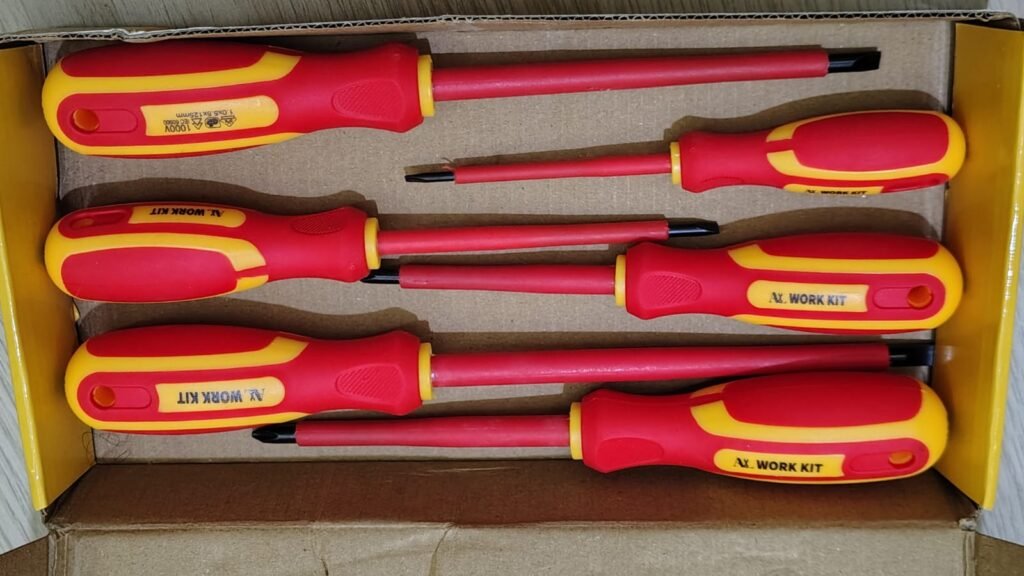
Best Insulated Screwdriver Sets for Electricians: Safety & Buyer’s Guide.
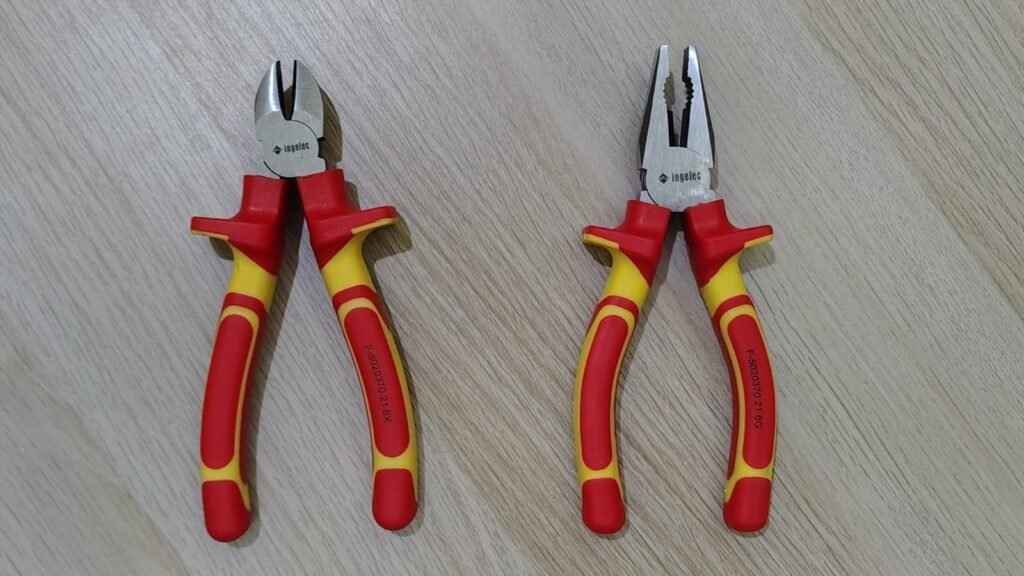
Best Insulated Pliers for Electricians: Safety and Buying Guide.
Final Thoughts
A hooked cable stripping knife may look like a simple tool, but it has an important place in an electrician’s toolkit. It can be useful when opening suitable cable sheaths and preparing R2V and armoured cables.
From my own experience, the key is not simply having a sharp blade. It is understanding the cable construction, knowing where to cut, and avoiding damage to the conductor insulation.
For electricians who regularly prepare electrical cables, a good cable knife is a practical tool worth keeping in the toolbox.