Insulated pliers are essential hand tools for electricians who install, maintain, and repair electrical systems. Depending on their design, they can help with gripping, bending, twisting, and cutting wires. Choosing the right tool depends on the task, the wire sizes involved, and the tool’s construction.
For electrical work, it is important to distinguish properly rated insulated tools from ordinary pliers with plastic-covered handles. This guide explains the main types of pliers, the features to consider before buying, and how to maintain them.
Why Are Insulated Pliers Important for Electrical Work?
Insulated pliers have protective insulation around their handles designed to help reduce the risk of electric shock when the tools are used correctly and within their specified ratings. Electricians use different types of pliers for gripping conductors, bending wires, and cutting suitable materials.
Electrical safety reminder: Whenever possible, disconnect power before working on a circuit and verify that it is de-energized using an appropriate tester. Insulated tools provide an additional protective measure, but they do not make working on live circuits automatically safe. Handle color alone does not prove that a tool is certified.
The Two Main Types of Pliers for Electricians
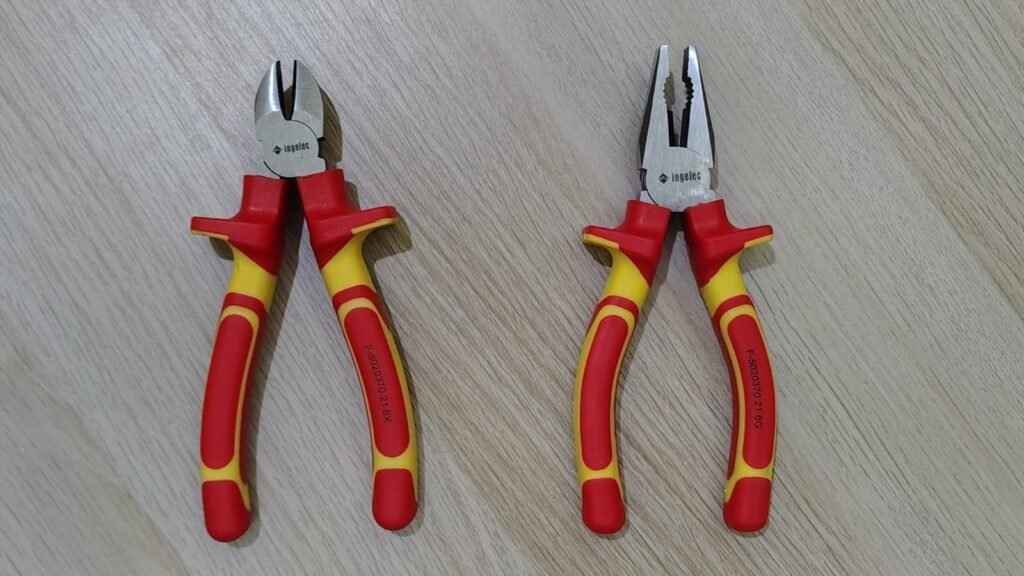
Combination pliers and diagonal cutting pliers may look similar, but they are designed for different tasks. Understanding the difference helps electricians choose suitable tools for their work.
1. Insulated Diagonal Cutting Pliers
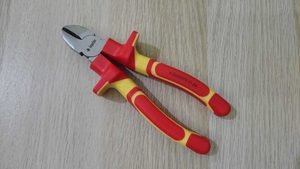
Diagonal cutting pliers, also known as side cutters, are designed primarily for cutting wires and trimming conductor ends. Their angled jaws can help reach wires in tight spaces, such as inside electrical enclosures and junction boxes.
Before using diagonal cutters, check the manufacturer’s stated cutting capacity and compatible materials. Using cutters beyond their rated limits can damage the cutting edges or the tool.
Features to consider include:
- Cutting edges suitable for the wire sizes you handle.
- Comfortable handles that provide a secure grip.
- Smooth movement at the pivot joint.
- Verified insulation ratings and safety markings when the tool is intended for electrical work.
2. Insulated Combination Pliers
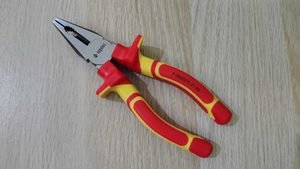
Combination pliers are versatile hand tools used for gripping, bending, and twisting wires. Depending on their design, they may also include cutting edges for suitable wire sizes.
They are useful for general electrical installation tasks, but they should not replace specialized tools when a job requires dedicated cutting, stripping, or crimping.
Features to consider include:
- Strong, well-aligned gripping jaws.
- Suitable cutting edges if wire cutting is required.
- Comfortable handles for repeated use.
- Verified insulation ratings and manufacturer documentation for electrical applications.
Key Features to Look for Before Buying
Before choosing insulated pliers, consider the following features to find tools that suit your work.
Verified Insulation Rating
Check the manufacturer’s documentation and safety markings. If you need a tool rated for work up to 1,000 V AC, verify that the specific model has the appropriate rating and complies with the relevant standard, such as IEC 60900 where applicable.
Never assume certification based only on the handle color or appearance.
Cutting and Gripping Performance
Choose a tool suited to the task. Diagonal cutters are designed mainly for cutting, while combination pliers are intended for gripping and bending and may also include cutting edges.
Always stay within the manufacturer’s stated capacity.
Comfortable Handles
A secure, comfortable grip can improve control during repetitive work. For insulated tools, confirm that the handle construction meets the stated electrical safety requirements.
Durable Construction
Look for aligned jaws, a well-made pivot joint, and smooth operation. Inspect the tool for loose components, damaged jaws, or rough movement before use.
Appropriate Size
Smaller pliers may be easier to maneuver in confined spaces, while larger models may provide more leverage for suitable tasks. Choose the size according to the work you perform.
How to Choose the Right Pliers for Your Work
- For cutting wires: Consider diagonal cutting pliers with suitable cutting capacity.
- For gripping and bending wires: Combination pliers may be more versatile.
- For confined spaces: Consider the size and shape of the jaws.
- For electrical applications: Verify the tool’s insulation rating and manufacturer documentation.
- For frequent daily use: Consider handle comfort, construction quality, and ease of maintenance.
Having different types of pliers can be useful because each tool has a specific purpose.
Related Guides for Electricians
The following guides can help electricians explore other useful tools for electrical installation and maintenance.
• Best Insulated Screwdriver Sets for Electricians: Safety & Buyer’s Guide
• Best Ferrule Crimping Tools for Electricians: Features and Buying Guide
How to Maintain Insulated Pliers
Proper inspection and storage can help keep your tools in good condition.
- Inspect the handles before use. Look for cuts, cracks, burns, exposed metal, or other damage to the insulation.
- Clean the jaws after use. Remove dirt and residue that could affect gripping or cutting performance.
- Check the pivot joint. Make sure the pliers open and close smoothly.
- Store tools properly. Keep them away from excessive heat, moisture, corrosive substances, and sharp objects that could damage the insulation.
- Stop using damaged tools. Remove tools with damaged insulation from service. Do not rely on tape or improvised repairs to restore electrical safety.
Follow the manufacturer’s inspection, maintenance, and replacement instructions.
Common Mistakes to Avoid
- Assuming plastic-covered handles automatically make ordinary pliers suitable for electrical work.
- Choosing a tool without checking its safety markings and manufacturer specifications.
- Using cutting edges on wire sizes or materials beyond their rated capacity.
- Continuing to use tools with damaged insulation or loose components.
- Treating insulated tools as a substitute for disconnecting power and following safe electrical procedures.
Final Thoughts
The best insulated pliers for electricians depend on the task. Diagonal cutting pliers are designed primarily for cutting wires, while combination pliers provide gripping and bending functions and may also offer cutting capability.
Before choosing a tool, check its intended use, construction, insulation rating, and manufacturer documentation. Regular inspection and safe working practices are equally important when working with electrical equipment.