Water pump pliers are versatile hand tools used by plumbers, maintenance technicians, and construction professionals. They are designed to grip, hold, and turn pipes, nuts, fittings, and other rounded or irregularly shaped objects.
Their adjustable jaws make them useful for working with different sizes of fittings without needing several fixed-size tools. However, not all water pump pliers have the same adjustment system, jaw capacity, or build quality.
In this guide, we explain how water pump pliers work, where they are useful, what features to look for, and how to choose the right pair for plumbing, maintenance, and general construction work.
What Are Water Pump Pliers?
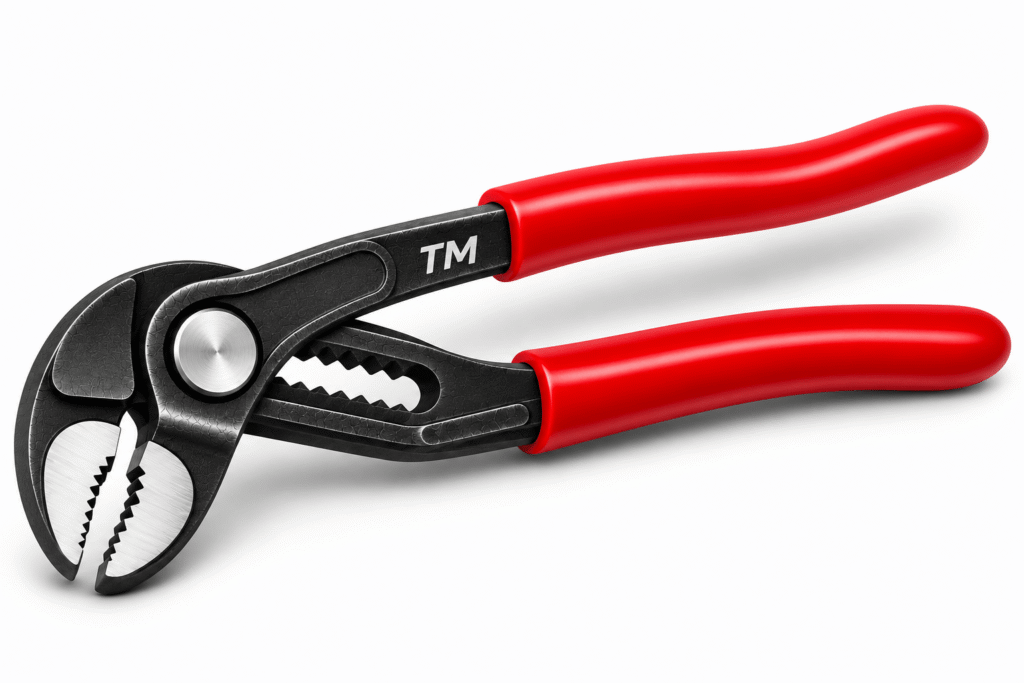
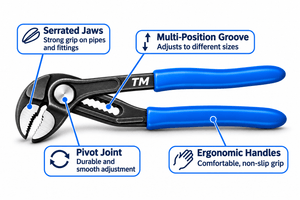
Water pump pliers are adjustable gripping pliers with serrated jaws and a movable joint. The joint can be repositioned to open the jaws wider or narrower, allowing the tool to grip different workpiece sizes.
Unlike ordinary combination pliers, water pump pliers are designed to handle larger fittings and provide a stronger grip. Many modern models also include fine adjustment systems that make it easier to match the jaw opening to the workpiece.
They are commonly used for gripping pipes, turning plumbing fittings, holding nuts, and working with components that are difficult to handle by hand.
Common Uses of Water Pump Pliers
Water pump pliers are useful in several trades and maintenance tasks.
Plumbing Work
Plumbers use water pump pliers to grip and turn pipe fittings, compression nuts, valves, and other plumbing components. Their adjustable jaws make them practical when working with different fitting sizes.
Care is needed when working on polished or delicate surfaces because the serrated jaws can leave marks. Use suitable protective jaw covers or another tool when the finish must be protected.
Maintenance and Repairs
These pliers can help loosen or tighten stubborn fittings, hold irregular parts, and grip components during repair work. They are useful in workshops, building maintenance, and general mechanical tasks.
Construction and Installation
During installation work, water pump pliers can help hold threaded fittings, secure components temporarily, and handle different shapes and sizes of hardware.
They are a useful addition to a professional toolbox, but they should not replace a tool specifically designed for every fastening job.
Main Features to Look For
Before choosing water pump pliers, consider the features that affect grip, comfort, and durability.
Adjustable Jaw Opening
The adjustment system determines how easily the pliers can fit different workpiece sizes. Some models use a sliding joint with several positions, while others use a push-button adjustment mechanism.
Choose a system that locks securely and does not move unexpectedly during use.
For an example of an advanced adjustment system, see the official KNIPEX guide to Cobra and Alligator water pump pliers.
Serrated Gripping Jaws
The teeth on the jaws help the pliers grip round and irregular surfaces. Well-made jaws should provide a secure hold without excessive slipping.
Remember that serrated jaws can damage chrome-plated, painted, or soft materials.
Handle Design and Grip
Comfortable, non-slip handles make the tool easier to control, especially during repeated work. Look for handles that feel secure in your hand and provide enough leverage for the intended tasks.
Material and Build Quality
Professional water pump pliers are commonly made from hardened tool steel or chrome-vanadium steel. A strong joint, accurately machined adjustment mechanism, and durable gripping teeth are important signs of good construction.
Choosing the Right Size
Water pump pliers are available in different lengths, commonly around 180 mm, 250 mm, and 300 mm, although other sizes are available.
- 180 mm: A compact option for smaller fittings and work in restricted spaces.
- 250 mm: A versatile general-purpose size for many plumbing and maintenance tasks.
- 300 mm: Offers greater jaw capacity and leverage for larger workpieces, but requires more working space.
Always check the manufacturer’s stated jaw capacity rather than relying on the overall tool length alone.
Water Pump Pliers vs. Pipe Wrenches
Water pump pliers and pipe wrenches can both grip pipes and fittings, but they are designed differently.
Water pump pliers use adjustable serrated jaws and are convenient for gripping different shapes and sizes. A traditional pipe wrench uses a hook jaw and a movable lower jaw designed to grip and turn pipes, particularly during heavier plumbing work.
For larger threaded steel pipes and demanding pipe-turning jobs, a suitable pipe wrench may be the better choice.
For more details, read our guide:
Best Pipe Wrenches for Professional and Construction Work
Water Pump Pliers vs. Adjustable Wrenches
An adjustable wrench has smooth, parallel jaws designed to fit the flat sides of nuts and bolts. Water pump pliers have serrated jaws designed to grip round or irregular surfaces.
Use an adjustable wrench when you need to turn a nut or bolt while reducing the risk of damaging its flat sides. Choose water pump pliers when you need a stronger grip on pipes, fittings, or irregular components.
For a closer look at adjustable wrenches, see our guide:
Best Adjustable Wrenches for Plumbing, Maintenance and Construction Work
How to Use Water Pump Pliers Safely
Using the correct technique helps improve grip and reduce the risk of injury.
- Adjust the jaws to fit the workpiece closely before applying force.
- Make sure the adjustment joint is properly engaged.
- Position the jaws so they grip securely and do not slip.
- Pull the handles in a controlled direction and avoid sudden excessive force.
- Keep your fingers away from the joint and moving parts.
- Do not use ordinary water pump pliers on live electrical components.
If a fitting is badly stuck, use the correct tool and method rather than forcing the pliers beyond their intended capacity.
Maintenance Tips
A little maintenance helps keep water pump pliers working properly.
- Wipe the jaws and handles clean after use.
- Remove dirt, moisture, and residue from the adjustment joint.
- Apply a small amount of suitable lubricant to the moving joint when needed.
- Check the teeth for excessive wear or damage.
- Store the tool in a dry toolbox to help prevent corrosion.
If the adjustment mechanism becomes loose or the jaws no longer grip securely, inspect the tool and replace it if necessary.
What to Check Before Buying
Before purchasing water pump pliers, consider the following:
- Size and jaw capacity: Make sure the tool can handle the fittings you work with.
- Adjustment mechanism: Choose a secure and easy-to-use system.
- Grip quality: Look for well-made serrated jaws.
- Handle comfort: Non-slip handles can improve control during regular use.
- Build quality: Check the joint, steel construction, and overall finish.
- Manufacturer information: Look for clear specifications and reliable product documentation.
A professional tool does not always need to be the largest or most expensive. The best choice is the one that matches the work you actually do.
Final Thoughts
Water pump pliers are practical tools for plumbing, maintenance, installation, and general construction work. Their adjustable jaws make them useful for gripping pipes, fittings, nuts, and irregularly shaped components.
When choosing a pair, pay attention to jaw capacity, adjustment quality, handle comfort, and overall construction. Selecting the right size and using the tool correctly can make everyday work easier and safer.
For professional users, a well-made pair of water pump pliers can be a valuable addition to a hand-tool collection.