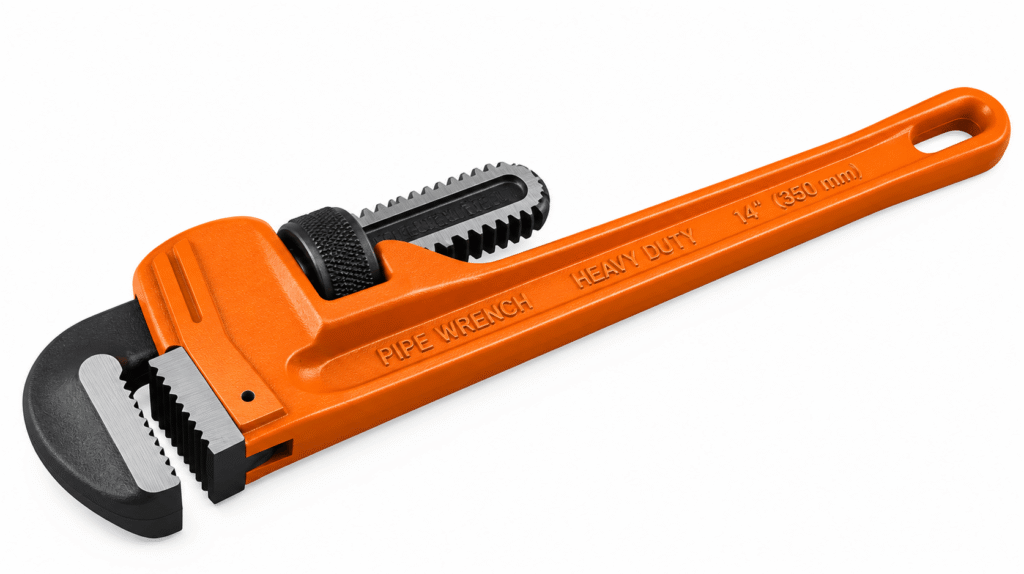
A pipe wrench is a heavy-duty hand tool used to grip and turn round pipes and threaded fittings. Although it is commonly associated with plumbing, this tool is also useful in various construction, installation, maintenance, and industrial applications where threaded metal pipes need to be tightened or removed.
Pipe wrenches come in different designs and sizes, each intended for particular working conditions. Some are suitable for everyday jobs, while others are designed to provide better access in restricted spaces or handle larger pipes.
Choosing the right pipe wrench can make a difference in grip, control, and working comfort. In this guide, we will look at the main types of pipe wrenches, their common uses, and the important features to consider before buying one.
1. What Is a Pipe Wrench?
A pipe wrench is a heavy-duty hand tool designed to grip and turn round pipes and threaded fittings. It usually has an adjustable upper jaw, a fixed lower jaw, serrated teeth, and an adjustment nut.
Unlike an ordinary adjustable wrench, a traditional pipe wrench uses toothed jaws that grip the surface of a pipe. When force is applied in the correct direction, the jaws tighten their grip and help turn the pipe.
Pipe wrenches are commonly used for:
- Installing threaded metal pipes.
- Tightening and loosening pipe fittings.
- Removing old or stuck pipe connections.
- Plumbing installation and maintenance.
- Construction and industrial pipework.
- General maintenance involving suitable round metal components.
A traditional pipe wrench is not designed for tightening ordinary nuts and bolts. For those jobs, use the correct general-purpose wrench.
2. Common Types of Pipe Wrenches
Pipe wrenches come in several designs. Understanding their differences can help you choose the right tool for your work.
1. Straight Pipe Wrench
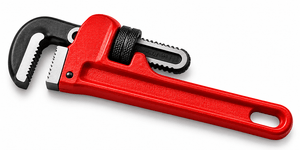
The straight pipe wrench is the traditional design used in many workshops and construction sites.
It has an adjustable jaw and a long handle that provides leverage when turning threaded pipes. It is suitable for general installation, maintenance, and repair work.
This is a practical choice for workers who need a versatile pipe wrench for everyday jobs.
2. Aluminum Pipe Wrench
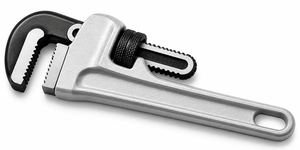
An aluminum pipe wrench has a lightweight body compared with many traditional cast-iron models.
Its lighter construction makes it easier to carry around a construction site, especially when workers need to use the tool frequently or work in different locations.
It is available in different sizes, so check the manufacturer’s pipe capacity before choosing one.
3. Offset Pipe Wrench
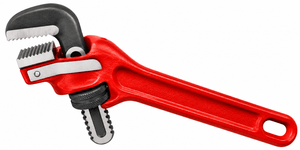
An offset pipe wrench has an angled head designed to help reach pipes in restricted or awkward spaces.
It can be useful when working near walls, inside installations, or around other pipes where a standard straight wrench is difficult to position.
4. End Pipe Wrench
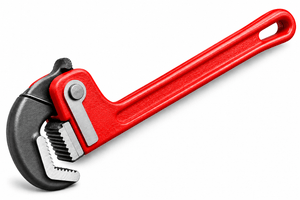
An end pipe wrench is designed for gripping pipes in locations where access is limited, particularly near walls or other obstructions.
Its head design helps workers reach connections that may be difficult to access with a standard pipe wrench.
5. Chain Wrench
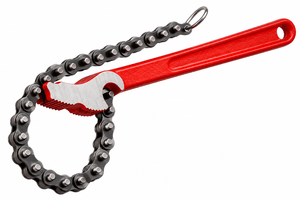
A chain wrench uses a strong metal chain that wraps around the pipe to provide a secure grip. The chain tightens around the pipe as force is applied through the handle.
It is useful for gripping and turning large or difficult-to-reach pipes, especially in heavy-duty plumbing and industrial work.
However, the metal chain can leave marks on finished surfaces, so it is not the best choice for delicate or polished pipes.
3. Choosing the Right Pipe Wrench Size
Pipe wrenches are available in different handle lengths and gripping capacities. Choosing the correct size is important for both safety and performance.
Common sizes include:
- 10-inch pipe wrench: Suitable for smaller jobs and restricted working areas.
- 14-inch pipe wrench: A practical general-purpose size for many everyday tasks.
- 18-inch pipe wrench: Provides additional leverage for larger pipe connections.
- 24-inch pipe wrench: Designed for heavier work where a larger gripping capacity and more leverage may be required.
These are common tool sizes, not guaranteed pipe capacities. Always check the manufacturer’s specifications to make sure the wrench is suitable for the pipe diameter and type of work.
A larger wrench is not automatically the best choice. In tight spaces, a smaller tool may be easier to control and position.
4. How to Choose the Best Pipe Wrench
Before buying a pipe wrench, consider the following points:
Material and Construction
Look for a strong body designed for regular professional use. Traditional pipe wrenches are commonly made from cast iron, while some professional models use aluminum to reduce weight.
The material should suit the type of work and the frequency of use.
Jaw Quality
The jaws are among the most important parts of a pipe wrench. Their teeth should be sharp, properly shaped, and free from excessive wear.
Worn or damaged teeth can reduce grip and increase the risk of slipping.
Adjustment Mechanism
The adjustment nut should move smoothly and allow the movable jaw to be positioned correctly.
A good adjustment mechanism makes it easier to fit the wrench to different pipe diameters.
Handle Length and Weight
A longer handle can provide greater leverage, but it may be difficult to use in restricted spaces.
Consider the balance between working space, tool weight, and the amount of force required.
Professional or Occasional Use
For regular construction, installation, and maintenance work, choose a durable model from a reputable manufacturer.
For occasional home repairs, a smaller and more affordable pipe wrench may be sufficient.
5. Pipe Wrench Safety and Maintenance
Using a pipe wrench correctly helps reduce the risk of injuries and damage to equipment.
Follow these practical safety tips:
- Inspect the wrench before use, especially the jaws, adjustment nut, and handle.
- Make sure the wrench has the correct capacity for the pipe.
- Keep the jaw teeth clean and free from oil and dirt.
- Position the wrench correctly so the jaws grip the pipe securely.
- Pull the handle with steady pressure rather than pushing it.
- Maintain a stable working position to avoid losing your balance if the wrench slips.
- Wear suitable protective gloves and safety footwear when required by the job.
- Wear safety glasses when there is a risk of flying particles or debris.
Never use a pipe wrench as a hammer or use it to lift, bend, or raise pipes. Do not add an extension pipe to the handle to increase leverage. If more capacity or leverage is needed, choose a suitable larger wrench.
For more detailed guidance, see the Canadian Centre for Occupational Health and Safety’s guide to Pipe Tools: Wrenches, Cutters, Reamers, and Threaders.
Regular maintenance is also important. Clean the wrench after use, check the teeth and adjustment mechanism, and store it in a dry place. Replace the tool if the handle is bent or its gripping parts are damaged.
For additional construction safety advice, you can also read our guides on How to Choose the Right Work Gloves for Construction Jobs and How to Choose the Right Safety Helmet for Construction Work.
6. Final Thoughts
A pipe wrench is a valuable tool for professionals working with threaded pipes and fittings in construction, installation, maintenance, and other suitable applications.
The best model depends on the type of work, pipe diameter, available working space, and the amount of leverage required.
A standard straight pipe wrench is a practical starting point for general tasks. Aluminum models are worth considering when reducing tool weight is important, while offset and end pipe wrenches can help in restricted spaces. A strap wrench is a useful alternative when protecting a finished surface is a priority.
Before buying, pay attention to the tool’s construction, jaw quality, adjustment mechanism, and working capacity. Choosing the right pipe wrench for the job will help you work with better control and make your tool collection more useful and reliable.