A copper tube bender is a useful hand tool for plumbers, HVAC technicians, refrigeration specialists, and other professionals who work with copper tubing. It allows users to create smooth bends without making unnecessary joints or changing the direction of the pipe with multiple fittings.
Choosing the right tube bender helps produce cleaner bends and reduces the risk of flattening, kinking, or damaging the copper tube. However, different tools are designed for different tube diameters, materials, and working conditions.
In this guide, we explain how copper tube benders work, explore the common types available, discuss their main features, and share practical tips for choosing and using the right tool.
What Is a Copper Tube Bender?
A copper tube bender is a tool designed to bend copper tubing to a required angle while helping maintain its round shape.
Instead of forcing the tube by hand, the tool supports it during bending. Depending on the design, it may use a forming wheel, guide, pressure shoe, or bending form to control the curve.
Copper tube benders are commonly used in plumbing, air-conditioning, refrigeration, and heating installations. They help technicians route tubing around corners, obstacles, and equipment while keeping the installation neat.
The correct bender depends on the tube diameter, wall thickness, material temper, and required bend radius.
Common Types of Copper Tube Benders
There are several types of copper tube benders. Each has its own advantages, and the best choice depends on the type of work and the tubing being used.
1. Lever-Type Copper Tube Bender
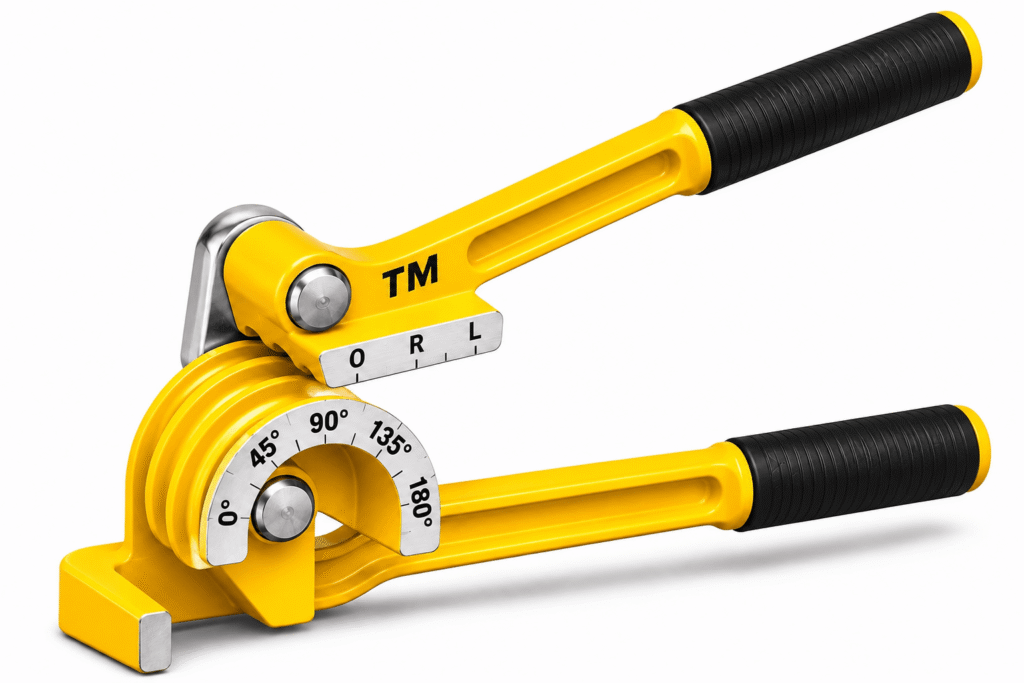
A lever-type tube bender uses two handles and a forming wheel to create controlled bends. The tube sits in a shaped groove while the handles apply gradual pressure.
Many models include angle markings such as 45°, 90°, 135°, and 180°, helping the user control the bending angle.
This type is commonly used for smaller copper tubing in plumbing, refrigeration, and air-conditioning work. The correct model must be selected for the tube diameter and material.
2. Ratcheting Tube Bender
A ratcheting tube bender uses a ratchet mechanism to apply bending force in controlled steps. This design can make bending easier when working with tubing that requires more force.
Depending on the model, ratcheting benders may support a range of tube diameters and bending angles. Always check the manufacturer’s specifications before purchasing.
3. Spring Tube Bender
A spring tube bender is a simple tool that fits around or inside compatible tubing to support it during manual bending.
It is generally used for smaller, softer copper tubes and other compatible tubing materials. The spring helps reduce the risk of the tube becoming flattened or kinked during bending.
4. Manual and Heavy-Duty Tube Benders
Some manual tube benders are designed for larger tubing or more demanding applications. They may use stronger frames, larger forming sections, and longer handles to provide additional leverage.
For larger or harder tubing, a suitable heavy-duty or mechanical bending machine may be necessary. Do not assume that a small hand bender can handle every copper tube size.
Main Parts of a Lever-Type Copper Tube Bender
Although designs vary between manufacturers, many lever-type tube benders include the following components:
- Forming wheel: Supports the tube and helps create the required curve.
- Bending handle: Provides leverage to apply controlled bending force.
- Guide or pressure arm: Holds and guides the tube during the bending operation.
- Angle scale: Displays the bending angle to help the user control the result.
- Tube groove: Supports the tubing and helps maintain its shape.
- Handle grips: Provide a more secure and comfortable grip.
Some models also include a tube stop or holding clip to keep the tube in the correct position before bending.
How to Use a Copper Tube Bender
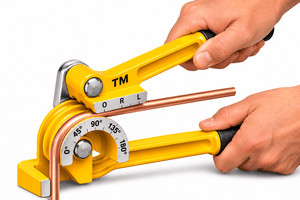
The exact procedure depends on the tool design, but the following steps describe the general method for using a lever-type tube bender.
- Measure the tube: Determine the required length and mark the position of the bend.
- Check the tubing: Make sure the tube is suitable for the selected bender and is free from damage.
- Prepare the tool: Check that the forming wheel, guide, and moving parts are clean and in good condition.
- Position the tube: Place the copper tube in the forming groove and align the bend mark with the tool’s reference mark.
- Secure the tube: Engage the holding clip or guide if the tool has one.
- Apply steady pressure: Move the bending handle gradually until the required angle is reached.
- Check the result: Release the tube carefully and inspect the bend for flattening, kinks, or other visible damage.
Always follow the instructions supplied with the specific tube bender. Different designs may use different alignment marks and operating procedures.
7 Essential Tips for Choosing and Using a Copper Tube Bender
Choosing a suitable tool is important, but using it correctly is equally important. Keep these seven points in mind before and during your work.
1. Check the Tube Diameter
Choose a bender designed for the outside diameter of the copper tube you intend to bend. A tool that is too large or too small may not support the tubing correctly.
2. Consider the Copper Tube Temper
Copper tubing is available in different tempers, including annealed and hard-drawn conditions. Annealed copper is generally easier to bend, while hard-drawn tubing requires suitable equipment and more careful selection of the bending method.
Always check that the tool is approved for the type of tubing you are using.
3. Choose the Correct Bend Radius
A bend that is too tight can cause the tube to flatten, wrinkle, or kink. Follow the recommended minimum bend radius for the tube type, size, and bending equipment.
4. Look for Clear Angle Markings
Angle markings make it easier to produce consistent bends. A clear scale can help when making repeated 45° or 90° bends during installation work.
5. Check the Build Quality
Look for a strong frame, durable forming wheel, secure pivot points, and handles that feel comfortable in your hands. The tool should move smoothly without excessive looseness.
6. Consider the Working Space
A compact hand bender may be more practical in restricted spaces, while a larger model may provide better leverage for certain applications. Consider where you will use the tool before choosing its size and design.
7. Inspect the Tube After Bending
After every bend, check the tubing for flattening, cracks, wrinkles, or visible deformation. A clean bend should maintain a suitable cross-sectional shape and meet the installation requirements.
Copper Tube Bender vs. Copper Tube Flaring Tool
A copper tube bender and a copper tube flaring tool perform two different jobs.
A tube bender changes the direction of the copper tubing by creating a controlled curve. A flaring tool, on the other hand, expands and shapes the end of the tube to create a flared connection with a compatible fitting.
These tools are not interchangeable. The correct one depends on the task being performed.
If you also work with flared copper connections, see our guide to the Copper Tube Flaring Tool Kit: How It Works, How to Use It, and What to Look For.
Other Useful Hand Tools for Plumbing Work
A tube bender is only one of the tools used during plumbing and maintenance work. Depending on the installation, you may also need adjustable wrenches for tightening or loosening compatible nuts and fittings.
For more information, read our guide to Best Adjustable Wrenches for Plumbing, Maintenance and Construction Work.
You can add links to suitable tube benders, replacement parts, and other plumbing tools in this article when your product pages and affiliate links are ready.
Safety Tips When Using a Copper Tube Bender
Although manual tube benders are relatively simple tools, proper handling is important.
- Wear suitable safety glasses when working with copper tubing.
- Secure the tube correctly before applying pressure.
- Keep your fingers away from moving parts and pinch points.
- Do not force tubing beyond the tool’s rated capacity.
- Avoid using damaged or worn bending equipment.
- Follow the manufacturer’s instructions for the selected tool.
- Inspect the tube after bending before installing it.
Technical Reference: Copper Tube Bending
For practical guidance on copper pipe bending, the BPEC Essential Plumbing Skills guide explains how to measure and mark copper pipes before bending, use a pipe bender to form accurate 90-degree bends, and create passovers and offsets. It also highlights the importance of allowing for springback when checking the final bend angle.
For more details, see the BPEC Copper Pipe Bending Guide.
Conclusion
A copper tube bender is a practical tool for creating smooth and controlled bends in copper tubing. Lever-type, ratcheting, spring, and heavy-duty models offer different solutions for different applications.
Before buying, check the tube diameter, material temper, bending radius, tool construction, and working conditions. Choosing the right equipment and following the correct bending procedure can help reduce tube damage and produce cleaner installations.