PPR pipe welding machines are essential tools for plumbers and installation professionals who work with polypropylene pipes. These machines use controlled heat to join pipes and fittings, creating strong, permanent connections for water supply and plumbing systems.
Whether you are installing a new water line, repairing an existing system, or working on a residential or commercial project, choosing the right PPR welding machine can make the job easier and help produce reliable joints.
In this guide, we explain how PPR welding machines work, their main parts, the different welding die sizes, and what to consider before buying one.
What Is a PPR Pipe Welding Machine?
A PPR pipe welding machine, also called a socket fusion welding machine, is an electrically heated tool used to join PPR pipes and fittings.
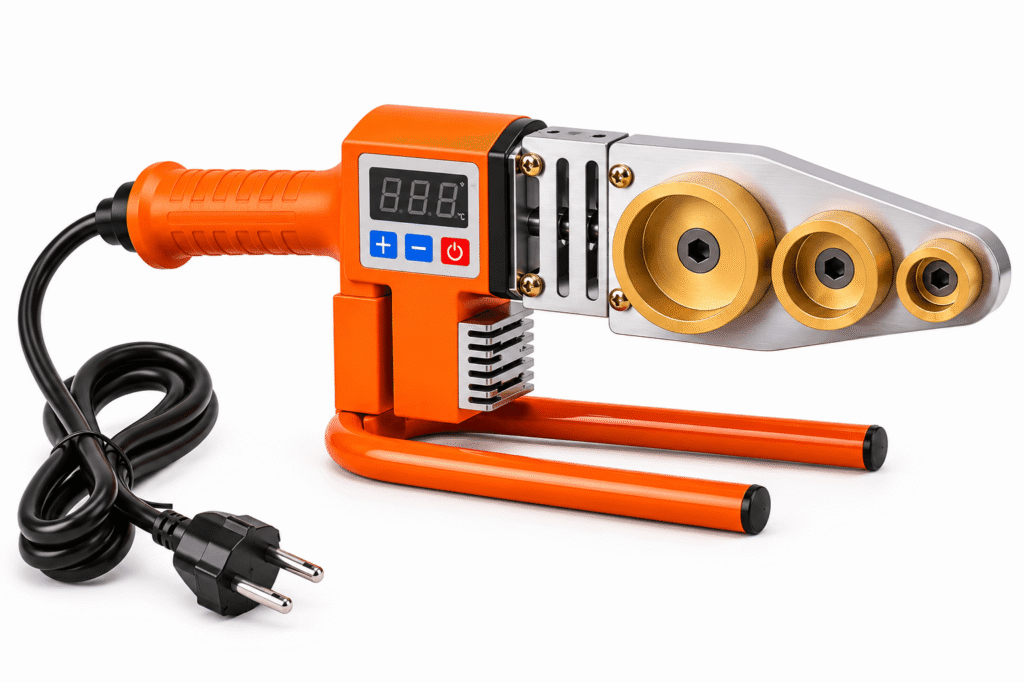
The machine has a heated metal plate fitted with two matching dies. One die heats the outside of the pipe, while the other heats the inside of the fitting. When both surfaces reach the required temperature, they are removed from the dies and joined together.
After cooling, the pipe and fitting form a fused connection. Unlike threaded connections, this process does not require a separate mechanical joint or sealing tape.
PPR welding machines are commonly used in hot and cold water installations, plumbing systems, and some heating applications. Always check that the pipe system and machine are suitable for the intended application.
Main Parts of a PPR Pipe Welding Machine
Most standard PPR socket welding machines include several basic components:
- Heating plate: The metal section that transfers heat to the welding dies.
- Welding dies: Matching male and female heating sockets used for different pipe diameters.
- Temperature control: A thermostat or digital controller that regulates the heating temperature.
- Power indicator: Shows the operating or heating status, depending on the model.
- Handle: Allows the installer to hold and position the machine.
- Metal stand: Supports the machine when it is not being held.
- Storage case: Keeps the machine and its accessories together during transport and storage.
The design and included accessories can vary between manufacturers and models.
PPR Welding Die Sizes: From 20 mm to 63 mm
The welding dies are among the most important parts of a PPR welding machine. Each pipe diameter requires a matching pair of dies: one male die for the inside of the fitting and one female die for the outside of the pipe.
Common socket-welding die sizes include:
20 mm, 25 mm, 32 mm, 40 mm, 50 mm, and 63 mm.
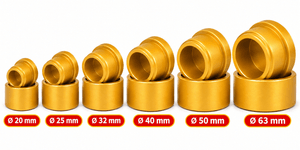
These sizes cover many common plumbing installations, from smaller water connections to larger pipe runs. However, not every machine includes all six sizes. Some kits may contain fewer dies, while others may support additional diameters.
Before buying a machine, check the included die sizes and make sure they match the PPR pipes used in your projects. Also check that replacement dies are available and compatible with the machine.
8 Steps for Using a PPR Pipe Welding Machine
Correct preparation and handling are important for producing reliable PPR joints. The general process involves the following steps:
- Measure and cut the pipe: Cut the pipe squarely using a suitable pipe cutter. The cut should be clean and free from damage.
- Prepare the pipe and fitting: Make sure the surfaces are clean and dry. Follow the pipe manufacturer’s instructions for any additional preparation.
- Mark the insertion depth: Mark the required socket depth on the pipe so it is not pushed too far into the fitting.
- Select the correct dies: Fit the matching male and female dies for the pipe diameter. Make sure they are clean and securely attached.
- Heat the machine: Allow the machine to reach the temperature specified by the pipe system manufacturer.
- Heat the pipe and fitting: Push the pipe and fitting straight onto their matching dies for the specified heating time.
- Join the parts: Remove both components and insert the pipe into the fitting to the marked depth. Do not twist them during joining.
- Allow the joint to cool: Hold the parts in alignment and allow them to cool for the required time before handling or testing.
Heating times and cooling periods depend on pipe diameter, material, wall thickness, and the manufacturer’s instructions. Do not rely on one timing chart for every PPR system.
Important Features to Consider Before Buying
Not all PPR welding machines offer the same performance or accessories. Consider these points before choosing one:
- Power rating: Check the machine’s wattage and make sure it is suitable for the pipe sizes and workload.
- Temperature control: A reliable thermostat or digital controller helps maintain the required heating temperature.
- Die sizes included: Choose a kit that includes the diameters you regularly use.
- Die coating and quality: Good-quality, non-stick coated dies help reduce material sticking when properly maintained.
- Heating plate design: Check that the plate can hold the required dies securely and provides even heating.
- Handle and stand: A comfortable handle and stable stand make the tool easier to use.
- Storage case: A strong case helps protect the machine and dies during transport.
- Replacement parts: Check whether compatible dies and other spare parts are available.
For occasional household repairs, a basic kit may be enough. For frequent professional work, durability, temperature stability, and replacement-part availability become more important.
Safety Tips When Using a PPR Welding Machine
The heating plate and dies become very hot during operation. Always handle the machine carefully and follow its instruction manual.
- Wear suitable heat-resistant gloves when handling hot components.
- Keep the machine on a stable, heat-resistant surface.
- Avoid touching the heating plate and dies while they are hot.
- Keep the power cable away from the hot parts.
- Work in a suitable, ventilated area.
- Disconnect the machine before changing or removing dies, following the manufacturer’s instructions.
- Allow the machine to cool before storing it.
- Inspect the power cable and plug before use.
Never use a damaged machine or welding dies with damaged or unsuitable coatings.
Other Plumbing Tools You May Need
A PPR welding machine is only one part of a plumber’s toolkit. Accurate pipe preparation and installation also require suitable hand tools.
For gripping and turning threaded metal pipes and fittings, see our guide to Best Pipe Wrenches for Professional and Construction Work.
For cutting plastic pipes cleanly before joining them, read our guide to Plastic Pipe Cutter: Types, Uses, and How to Choose the Right One.
Choosing the correct tools for each stage of the installation helps make plumbing work more accurate and efficient.
Conclusion
A PPR pipe welding machine is an important tool for plumbers who regularly install polypropylene piping systems. The right machine should offer reliable temperature control, suitable welding die sizes, a durable heating plate, and a practical design.
Before buying, check the pipe diameters you work with most often, the accessories included in the kit, and the availability of replacement dies. Most importantly, follow the pipe manufacturer’s welding instructions to help produce strong and reliable connections.
External technical reference: Wavin PPR Technical Guide – Welding Working Procedures