A pipe deburring tool is a small but useful hand tool for plumbers, heating engineers, and other professionals working with pipes and tubing. Its main purpose is to remove sharp edges and burrs left behind after cutting a pipe.
Although it may look like a simple tool, proper deburring is an important part of pipe preparation. Rough edges can interfere with fitting installation, damage sealing components, or leave metal particles inside the pipe.
Whether you work with copper tubing or other compatible pipe materials, choosing and using the correct deburring tool can help produce cleaner and more professional results.
What Is a Pipe Deburring Tool?
A pipe deburring tool is designed to remove unwanted material from the inner edge, outer edge, or both edges of a pipe after cutting.
Cutting a pipe can leave small metal or plastic burrs around its opening. These sharp edges should be removed before the pipe is connected to a fitting.
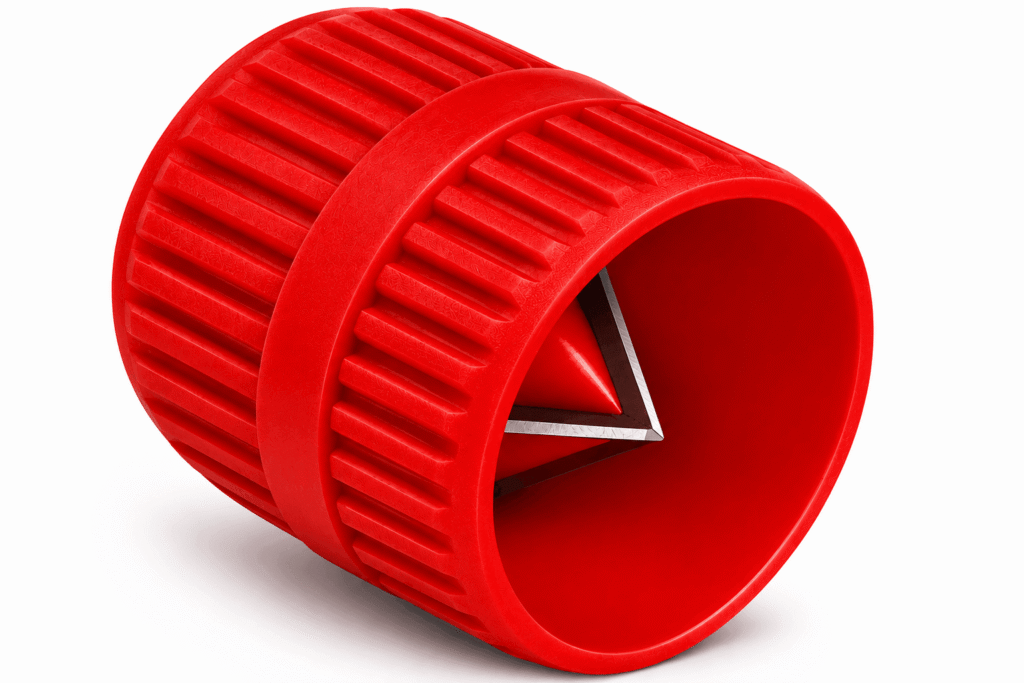
Many manual pipe deburring tools have a compact cylindrical body with a textured grip and cutting blades inside. Some models are designed for internal deburring, while others can work on both internal and external edges.
The exact design, blade arrangement, and compatible pipe materials depend on the model.
Why Is Pipe Deburring Important?
Deburring helps prepare the pipe end before installation. It removes sharp edges that could interfere with fitting connections or damage sealing components.
For example, some press-fit systems use sealing rings that can be damaged by poorly prepared pipe ends. Following the fitting manufacturer’s installation instructions is therefore essential.
A properly prepared pipe end also makes it easier to inspect the cut and achieve a clean finish.
7 Essential Tips for Choosing and Using a Pipe Deburring Tool
1. Choose the Right Type of Deburring Tool
Not all pipe deburring tools have the same design or function.
Some are made for removing burrs from the inside of a pipe, while others can work on both the internal and external edges.
Before buying, consider the type of work you normally perform and choose a tool designed for those applications.
A compact rotary hand deburrer can be convenient for everyday plumbing work, especially when working with small and medium-sized tubing.
2. Check Pipe Material Compatibility
Pipe material is one of the most important factors when selecting a deburring tool.
Some tools are designed for copper pipes, while others are suitable for aluminium, stainless steel, or specific plastic materials.
Never assume that one tool works with every type of pipe.
Check the manufacturer’s specifications to confirm which materials the tool supports. This is particularly important when working with PEX, PVC, or multilayer pipes, as different materials may require different preparation methods.
3. Check the Supported Pipe Diameter
Pipe deburring tools are available in different sizes and working ranges.
A small hand tool may be suitable for narrow copper tubing, while larger tools are designed for wider pipes.
For example, some ROTHENBERGER internal and external deburring tools are designed for pipe diameters from 4 to 36 mm, while other models cover different diameter ranges.
Always check the supported diameter before purchasing. Using an unsuitable tool can produce poor results or damage the pipe edge.
4. Inspect the Cutting Blades Before Use
The cutting blades are the most important working parts of a deburring tool.
Before using the tool, inspect the blades for visible damage, wear, or contamination.
Damaged or blunt blades may struggle to remove burrs cleanly and can leave an uneven finish.
Keep the cutting area clean and replace the tool if its blades are damaged or no longer perform properly.
Always keep your fingers away from the cutting edges.
5. Use the Correct Technique and Apply Light Pressure
Correct technique helps produce a smooth pipe edge without removing unnecessary material.
Start by cutting the pipe to the required length using a suitable pipe cutter. Make sure the cut is as straight as possible.
Next, position the deburring tool correctly on the pipe end, following the tool manufacturer’s instructions.
Rotate the tool with controlled movements and apply light, even pressure. Avoid forcing it against the pipe.
For tools designed to deburr both internal and external edges, make sure each cutting surface is used in the correct position.
The aim is to remove sharp burrs and leave a clean, even edge.
6. Clean the Pipe End After Deburring
After removing the burrs, inspect the pipe carefully.
Remove loose metal or plastic particles using a clean cloth or an appropriate cleaning method recommended for the pipe system.
Check both the inside and outside edges to make sure no sharp material remains.
This step is particularly important in plumbing and heating installations, where loose particles can enter the pipe system or interfere with fittings.
For press-fit and other specialised connections, follow the manufacturer’s pipe preparation instructions.
7. Choose a Comfortable and Durable Design
A good deburring tool should be comfortable to hold and easy to control.
Look for a strong body, a secure grip, and cutting blades made from suitable durable material.
A textured or ribbed outer surface can help improve grip when working by hand.
Also consider the tool’s size and weight. A compact design is convenient to carry in a plumbing tool bag and can be useful when working in restricted spaces.
Choosing a durable tool with replaceable parts, where available, may also help extend its working life.
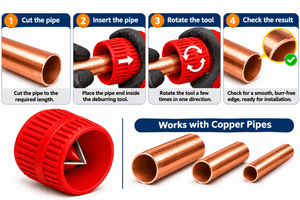
How to Use a Pipe Deburring Tool
The basic process of deburring a pipe is straightforward, but the correct procedure depends on the tool design.
- Cut the pipe: Use a suitable pipe cutter to obtain the required length and a clean cut.
- Position the tool: Place the deburring tool over the pipe end according to the manufacturer’s instructions.
- Rotate the tool: Rotate the tool with controlled movements and apply light, even pressure, following the manufacturer’s instructions.
- Inspect the result: Check the inner and outer edges and remove any remaining loose particles.
Do not use excessive force. The purpose is to remove burrs and sharp edges, not to reduce the pipe wall unnecessarily.
Pipe Deburring Tool vs. Pipe Cutter
A pipe deburring tool and a pipe cutter perform two different jobs.
A pipe cutter is used to cut the pipe to the required length. A deburring tool is used afterward to remove sharp edges and unwanted material left by cutting.
Both tools are useful during pipe preparation, but they are not interchangeable.
If you regularly work with plastic plumbing pipes, you may also find our guide useful:
Plastic Pipe Cutter: Types, Uses, and How to Choose the Right One.
This guide explains the different types of plastic pipe cutters and what to consider when choosing one for plumbing work.
Pipe Deburring and Copper Tube Flaring
Deburring is also important when preparing copper tubing for certain types of connections.
However, deburring and flaring are two different operations. A deburring tool removes sharp edges, while a flaring tool forms a shaped opening at the end of the copper tube so it can connect to a compatible flare fitting.
For more information about this process, read our guide:
Copper Tube Flaring Tool Kit: How It Works, How to Use It, and What to Look For.
Understanding the difference between these tools helps ensure that each job is completed with the correct equipment.
Recommended External Resource
For an example of a professional internal and external pipe deburring tool, visit the official ROTHENBERGER product page:
ROTHENBERGER Internal and External Deburrer for Copper and Stainless Steel
Always check the product’s technical specifications before choosing a model for your work.
Final Thoughts
A pipe deburring tool may be small, but it plays an important role in preparing pipe ends for installation.
Removing burrs and sharp edges helps create a cleaner finish and reduces the risk of damaging compatible fittings or sealing components.
When choosing a tool, pay attention to pipe material compatibility, supported diameters, blade quality, and ease of use.
Most importantly, follow the manufacturer’s instructions and take the time to inspect every pipe end before making a connection.
A properly prepared pipe is an important part of achieving a reliable plumbing installation.