A plastic pipe cutter is an essential hand tool for plumbers, maintenance technicians, and construction professionals. It is designed to cut suitable plastic pipes cleanly and accurately, helping prepare them for plumbing installations, repairs, and other applications.
However, not all plastic pipe cutters are the same. Some are designed for small-diameter tubing, while others can handle larger pipes or specific materials such as PVC, CPVC, PEX, PP, and multilayer pipes.
Choosing the right tool requires more than looking at its size or appearance. You need to check which pipe materials it can cut, its maximum cutting capacity, and whether its design is suitable for your type of work.
In this guide, we explain the main types of plastic pipe cutters, their common uses, important features, and what to check before buying one.
What Is a Plastic Pipe Cutter?
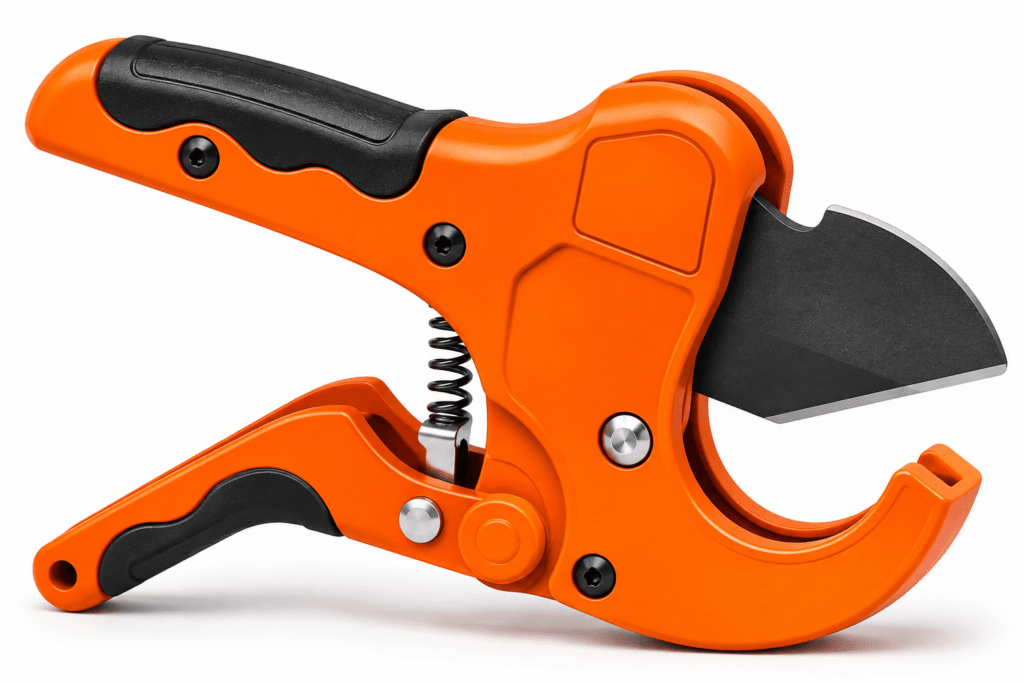
A plastic pipe cutter is a hand-operated tool used to cut plastic pipes and tubing to the required length.
Most handheld models have a sharp cutting blade, a supporting jaw, and two handles. Some use a direct cutting action, while others feature a ratcheting mechanism that moves the blade forward gradually.
Plastic pipe cutters are commonly used in plumbing, heating installations, water distribution systems, irrigation, and general maintenance work.
The important point is that a cutter designed for one type of plastic pipe may not be suitable for every other material. Always check the manufacturer’s specifications before using it.
Different Types of Plastic Pipe Cutters
Plastic pipe cutters are available in several designs. Each type has its own advantages depending on the pipe material, diameter, and working conditions.
1. Ratcheting Plastic Pipe Cutter
A ratcheting pipe cutter uses a mechanism that advances the blade gradually each time the handles are squeezed.
This design helps reduce the effort required when cutting suitable plastic pipes. It is commonly used by plumbers and maintenance professionals who need to make repeated cuts.
Some ratcheting models are designed for several pipe materials, but their cutting capacity and compatibility vary by model.
2. Scissor-Style Pipe Cutter
Scissor-style cutters use a simple squeezing action to move the blade through the pipe.
They are generally suitable for smaller plastic pipes and flexible tubing. Their compact design makes them convenient for light-duty plumbing and maintenance work.
3. Single-Stroke Pipe Cutter
A single-stroke pipe cutter is designed to complete a cut through a direct handle movement rather than several ratcheting steps.
These tools are useful for suitable smaller pipes and tubing. Check the manufacturer’s stated capacity before choosing one for professional work.
4. Rotary Plastic Pipe Cutter
A rotary pipe cutter uses a rotating cutting wheel or blade to cut around the pipe.
Depending on its design, it can provide controlled cuts on specific plastic pipes. Make sure the cutting wheel is intended for the material and pipe size you are working with.
5. Internal Pipe Cutter
An internal pipe cutter is designed to cut a pipe from the inside. Some models attach to a power drill and are used for particular repair or modification tasks.
This is a more specialized tool and should not be confused with a standard handheld plastic pipe cutter.
Types of Plastic Pipes and Compatible Cutters
One of the most important things to check before buying a pipe cutter is the material it is designed to cut.
Plastic pipes are manufactured from different materials, and their hardness, flexibility, wall thickness, and construction can vary.
Here are some common pipe materials used in plumbing and construction.
PVC (Polyvinyl Chloride)
PVC pipes are commonly used in drainage, waste, vent, and other plumbing applications, depending on local standards and the pipe specification.
Many plastic pipe cutters are designed to cut PVC pipes, but the maximum diameter and wall thickness must be checked.
CPVC (Chlorinated Polyvinyl Chloride)
CPVC is used in certain hot- and cold-water plumbing systems.
Some cutters are specifically rated for CPVC, while others may have different limitations. Check the manufacturer’s material compatibility list before cutting.
PEX (Cross-Linked Polyethylene)
PEX is a flexible plastic pipe commonly used in water distribution and heating installations.
A suitable PEX cutter is designed to make a clean cut without crushing or deforming the tubing.
PP and PPR (Polypropylene)
PP and PPR pipes are used in different plumbing and water distribution systems.
Some professional plastic pipe cutters are suitable for these materials. However, the cutter must be approved for the pipe diameter and construction.
PE and HDPE (Polyethylene and High-Density Polyethylene)
PE and HDPE pipes are used in water supply, irrigation, and other applications.
Because these pipes can vary considerably in diameter and wall thickness, a standard handheld cutter may not be suitable for every size. Larger pipes may require specialized cutting equipment.
ABS (Acrylonitrile Butadiene Styrene)
ABS is used in certain drainage and waste pipe systems.
Some professional plastic pipe cutters list ABS among their compatible materials. Always confirm this in the product specifications.
Multilayer Pipes
Multilayer pipes combine different materials in a layered construction.
They require a cutter specifically designed for multilayer tubing. Some tools may also require an adapter or additional preparation equipment to produce a suitable cut.
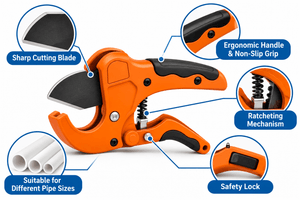
Key Features of a Plastic Pipe Cutter
When comparing plastic pipe cutters, pay attention to the main components and design features. These can affect cutting accuracy, comfort, and durability.
Place the infographic immediately below this heading and before the paragraph above.
Sharp Cutting Blade
The blade is one of the most important parts of the tool.
A sharp, properly designed blade helps produce a cleaner cut and reduces the effort required during operation.
Some professional models have replaceable blades, which can be useful for frequent use.
Ergonomic Handle and Grip
Comfortable handles with non-slip surfaces provide better control during cutting.
This is particularly important for plumbers and technicians who make many cuts during the working day.
Ratcheting Mechanism
A ratcheting mechanism allows the blade to advance gradually through the pipe.
It can make cutting easier on suitable materials and diameters, especially when more pressure is required.
Safety Lock
Some cutters include a safety lock that keeps the handles closed when the tool is not in use.
This helps protect the blade during storage and transportation. However, not every model includes this feature.
Cutting Capacity
Every pipe cutter has a specified cutting range or maximum pipe diameter.
For example, some handheld models are designed for pipes up to 28 mm, others up to 42 mm, and larger models may handle 50 mm or 63 mm pipes.
These are examples of available capacities, not a standard classification. Always check the exact specifications of the model you intend to buy.
How to Choose the Right Plastic Pipe Cutter
Before buying a plastic pipe cutter, consider the following points.
1. Check the Pipe Material
Start by identifying the materials you normally work with.
If you work with PVC, CPVC, PEX, PPR, or multilayer pipes, make sure the cutter is specifically rated for those materials.
Do not assume that a cutter suitable for PVC will automatically work correctly with every other plastic pipe.
2. Check the Pipe Diameter
Measure the outside diameter of the pipes you intend to cut.
Compare it with the manufacturer’s cutting capacity. A cutter rated for a maximum of 42 mm, for example, should not be used on a larger pipe.
For larger pipes, you may need a different cutter or a specialized cutting method.
3. Consider the Pipe Wall Thickness
Pipe diameter is not the only factor that matters.
Thicker or harder-walled pipes may require a more suitable cutting tool. Always follow the manufacturer’s recommendations for the pipe type and wall construction.
4. Choose the Right Cutting Mechanism
A ratcheting cutter can reduce the effort required for repeated cuts.
A scissor-style cutter may be sufficient for smaller tubing, while rotary or specialized cutters may be more appropriate for certain applications.
Choose the mechanism that matches your usual work rather than simply buying the largest tool.
5. Look for a Comfortable Handle
A secure, comfortable grip helps improve control and reduces hand fatigue.
If you use the cutter regularly, handle design and overall build quality are worth considering.
For another useful plumbing hand tool, read our guide to the Best Adjustable Wrenches for Plumbing, Maintenance and Construction Work.
6. Check Blade Replacement Availability
A cutter with a replaceable blade can be a practical choice for professionals.
Before buying, check whether replacement blades are available and whether they can be changed easily.
For other useful plumbing hand tools, see our guide to Water Pump Pliers: Uses, Types, and How to Choose the Right Pair.
Understanding Pipe Cutter Sizes and Cutting Capacity
Cutting capacity is one of the most important specifications when comparing pipe cutters.
Manufacturers usually state the maximum outside diameter of the pipe that a tool can cut.
Here are some examples of capacities found in different handheld plastic pipe cutters:
- Up to 28 mm: suitable for certain smaller pipes and tubing.
- Up to 32 mm: available in some compact professional models.
- Up to 42 mm: common in several ratcheting plastic pipe cutters.
- Up to 50 mm: available in larger-capacity models.
- Up to 63 mm: offered by some heavy-duty ratcheting cutters.
These figures are examples only. They do not mean that every cutter can handle every material within the stated diameter.
For examples of professional plastic pipe cutters and their material compatibility, see the official VIRAX product specifications.
Before purchasing, check three things:
- The maximum outside diameter.
- The pipe materials approved by the manufacturer.
- Whether the cutter is suitable for the pipe wall thickness and construction.
This information is usually available in the product description or technical datasheet.
How to Use a Plastic Pipe Cutter Correctly
Using the cutter correctly helps produce a clean cut and reduces the risk of damaging the pipe.
- Measure the pipe: Determine the required length before cutting.
- Mark the cutting point: Use a marker to create a clear cutting line around the pipe.
- Position the pipe: Place the pipe correctly inside the cutter jaws.
- Align the blade: Make sure the blade is positioned over the marked line.
- Cut carefully: Squeeze the handles gradually. For ratcheting models, continue the squeeze-and-release action until the blade passes through the pipe.
- Inspect the cut: Check that the pipe end is straight and free from visible cracks or deformation.
- Finish the pipe end: Remove burrs or rough edges using a suitable deburring tool when necessary.
Always follow the manufacturer’s instructions, especially when working with multilayer or specialized plastic pipes.
Plastic Pipe Cutter vs. Hacksaw
Both tools can be used to cut suitable plastic pipes, but they work differently.
A plastic pipe cutter is convenient for compatible pipe sizes because it can provide a controlled cut with a hand-operated mechanism.
A hacksaw is more versatile and can handle a wider range of pipe sizes and materials when fitted with a suitable blade. However, it may leave rough edges that require additional finishing.
For regular plumbing work involving smaller compatible plastic pipes, a dedicated pipe cutter can be a practical choice. For larger pipes or materials outside the cutter’s rated capacity, another cutting method may be necessary.
You can also explore our guide to the Best Pipe Wrenches for Professional and Construction Work.
Safety Tips When Cutting Plastic Pipes
Although a handheld pipe cutter is relatively simple to use, its blade can cause injuries if handled carelessly.
- Wear safety glasses to protect your eyes from plastic fragments.
- Keep your fingers away from the cutting blade.
- Support the pipe properly while cutting.
- Do not force the tool beyond its rated cutting capacity.
- Inspect the blade and cutting mechanism before use.
- Use the safety lock when the tool has one and is not being used.
- Follow the manufacturer’s instructions for blade replacement and maintenance.
If the pipe is too large or too thick for a handheld cutter, choose another suitable cutting method.
Maintenance Tips for Plastic Pipe Cutters
Regular maintenance helps keep a plastic pipe cutter in good working condition.
- Clean plastic residue from the blade and cutting area after use.
- Check the blade regularly and replace it when necessary.
- Inspect the pivot and ratcheting mechanism for wear or damage.
- Check the return spring and safety lock if fitted.
- Store the tool in a dry place to protect its metal components.
Never use a damaged or excessively worn cutter, especially when accurate cuts are required.
Final Thoughts
A plastic pipe cutter is a practical hand tool for plumbing installations, maintenance, and construction work. However, choosing the right model requires more than checking its appearance or price.
Before buying, identify the pipe materials you work with, check the maximum cutting diameter, and make sure the tool is suitable for the pipe wall thickness and construction.
Whether you need a compact cutter for smaller tubing or a heavy-duty ratcheting model for larger pipes, checking these specifications can help you choose the right tool for your work.