A diamond hole saw drill bit set is a useful tool for drilling clean, round holes in hard materials such as ceramic tiles, porcelain, marble, and other suitable stone surfaces. It is commonly used by tile installers, plumbers, electricians, and construction professionals who need accurate openings for pipes, fittings, cables, and other installations.
Unlike ordinary drill bits, diamond hole saws use an abrasive diamond-coated cutting edge to grind through hard materials. This makes them suitable for applications where conventional drill bits may struggle or damage the surface.
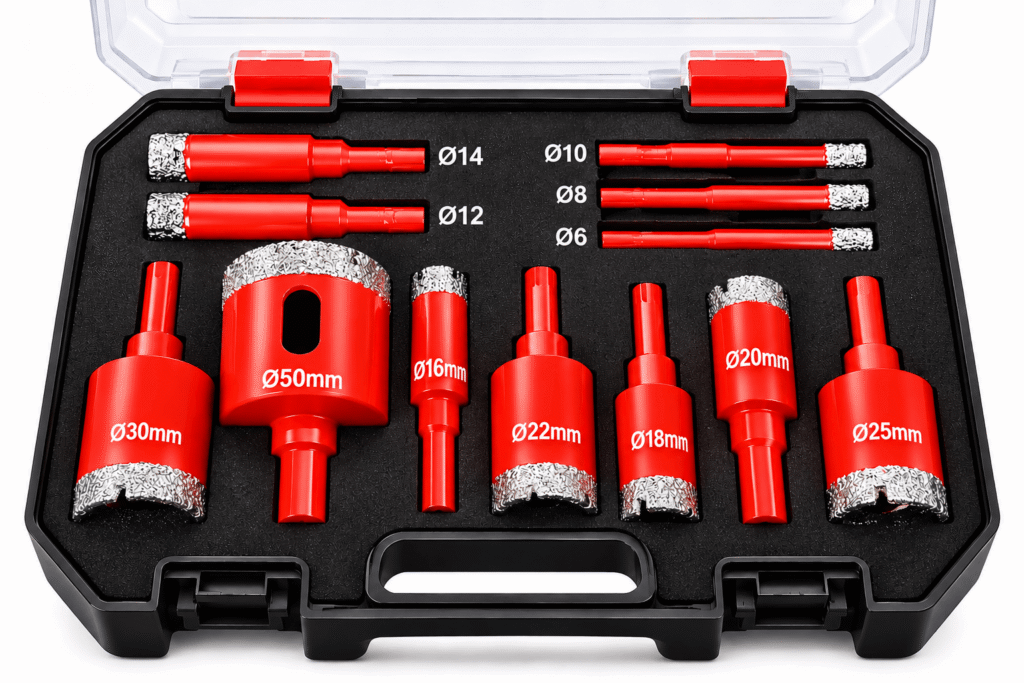
The 12-piece diamond hole saw drill bit set shown in this guide comes with different bit sizes and a protective storage case. Having several sizes in one kit can make it easier to handle different drilling requirements without purchasing each bit separately.
However, choosing the right size and using the correct drilling technique are important. Material type, bit compatibility, drilling speed, and cooling requirements can all affect the final result.
In this guide, we explain the main features, common uses, and important buying tips to help you choose and use a diamond hole saw drill bit set correctly.
What Is a Diamond Hole Saw Drill Bit Set?
A diamond hole saw drill bit set is a collection of cylindrical cutting bits designed to create circular holes in hard materials.
Each bit has a cutting edge coated with diamond abrasive particles. Instead of cutting like a conventional toothed hole saw, the diamond edge gradually grinds away the material to form a round opening.
These bits are commonly used for drilling ceramic tiles, porcelain, marble, granite, and other materials when the particular bit is designed for that application.
A set usually includes several diameters, allowing users to select the appropriate size for different installation tasks.
Main Features of a Diamond Hole Saw Drill Bit Set
The 12-piece set shown in the image includes several features worth considering.
1. Multiple Cutting Sizes
The set contains different diameters, giving users more flexibility when drilling holes of different sizes.
Smaller bits can be useful for narrow openings, while larger hole saws are suitable for wider openings needed for certain pipes, fittings, and installation work.
Always check the diameter marked on each bit before drilling.
2. Diamond-Coated Cutting Edges
The cutting edges feature a rough, diamond-coated surface designed to grind through hard materials.
Diamond abrasive is particularly useful when working with hard ceramic and porcelain surfaces, where ordinary drill bits may not provide the same cutting performance.
3. Cylindrical Hole Saw Design
The larger bits have a cylindrical cutting body that helps produce circular openings.
Some designs include an opening in the side of the body to help remove the drilled material after completing the hole.
4. Different Bit Profiles
The set includes both larger cylindrical hole saws and smaller, narrower diamond drill bits.
This combination provides different options for drilling tasks, depending on the required hole diameter and the material being worked on.
5. Protective Storage Case
The bits are arranged inside a fitted storage case.
This helps keep the different sizes organized, makes it easier to identify the required bit, and protects the cutting edges during storage and transport.
Common Uses of Diamond Hole Saw Drill Bits
Diamond hole saw drill bits are used in several construction and installation applications.
Ceramic and Porcelain Tiles
They are commonly used to create openings in ceramic and porcelain tiles for plumbing fittings, bathroom accessories, and other installations.
Porcelain can be particularly hard, so using a suitable diamond bit and the correct drilling technique is important.
Bathroom and Plumbing Installations
Larger hole saws can be used to create openings for pipes, taps, and other plumbing fittings in suitable tiled surfaces.
The required diameter depends on the fitting and installation specifications.
Electrical Installations
Electricians and installers may use suitable diamond hole saws to create openings for electrical fittings and cable-related installations in ceramic or stone surfaces.
Always select a bit designed for the material and required hole size.
Marble and Natural Stone
Some diamond hole saws are suitable for drilling marble, granite, and other natural stones.
However, compatibility depends on the bit design and the material’s hardness. Check the manufacturer’s specifications before use.
7 Buying Tips for Choosing a Diamond Hole Saw Drill Bit Set
Before buying a diamond hole saw drill bit set, consider these seven important points.
1. Check the Available Diameters
The first thing to check is the range of sizes included in the set.
Think about the holes you regularly need to drill. Smaller diameters may be suitable for narrow fittings, while larger sizes are useful for pipes and other installation openings.
Choose a set that includes the sizes you actually need rather than paying for unnecessary options.
2. Check the Diamond Cutting Edge
The quality of the diamond-coated cutting edge affects drilling performance and service life.
Look for evenly distributed abrasive material and a well-finished cutting rim. Poor-quality or uneven cutting edges may produce rough holes and wear out more quickly.
3. Check Drill Compatibility
Not every diamond hole saw fits every drilling machine.
Check the shank type and connection before buying. Make sure the bit is compatible with your drill, adapter, or other equipment.
Also check whether the manufacturer recommends a standard rotary drill or another type of machine.
4. Check Wet or Dry Drilling Requirements
Some diamond hole saws are designed for wet drilling, others for dry drilling, and certain models can be used with either method.
Water cooling can help reduce heat during drilling, but the correct method depends on the specific bit.
Always follow the manufacturer’s instructions rather than assuming that every diamond bit can be used wet or dry.
5. Consider the Materials You Need to Drill
Check which materials the set is designed for.
A bit suitable for standard ceramic tiles may not perform equally well on hard porcelain, granite, or other dense materials.
Choose a set specifically rated for the materials you work with most often.
6. Look for a Durable Storage Case
A good storage case keeps the bits organized and helps protect their cutting edges.
This is particularly useful for professionals who carry tools between different jobsites.
Make sure the case holds the bits securely and makes the different diameters easy to identify.
7. Compare Set Contents and Overall Value
Before purchasing, compare the number of bits, available diameters, cutting-edge quality, shank compatibility, and included accessories.
A 12-piece set can offer good value when its sizes match your regular work requirements.
However, the number of pieces alone does not determine quality. A smaller set with better cutting performance may be a better choice for professional use.
How to Use a Diamond Hole Saw Drill Bit
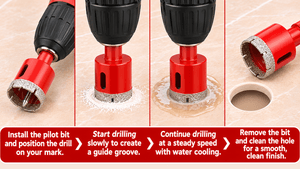
Using the correct technique helps produce cleaner holes and reduces the risk of damaging the tile or the cutting bit.
- Mark the drilling position: Measure and mark the exact location of the required hole.
- Select the correct bit: Choose a diameter suitable for the fitting or opening.
- Check the drill connection: Make sure the bit is securely fitted to a compatible drilling machine.
- Prepare the surface: Support and secure the tile properly before drilling.
- Disable hammer action: Use the rotary drilling mode unless the manufacturer specifies otherwise.
- Start carefully: Begin drilling with controlled pressure to help prevent the bit from slipping.
- Control heat: Use the cooling method recommended for the particular bit.
- Finish carefully: Avoid excessive pressure when approaching the other side of the material.
Always wear suitable eye protection and follow the manufacturer’s operating instructions.
Diamond Hole Saw vs. Standard Hole Saw
Diamond hole saws and standard hole saws are designed for different materials and applications.
| Feature | Diamond Hole Saw | Standard Hole Saw |
|---|---|---|
| Cutting method | Diamond abrasive grinding | Teeth cut through material |
| Typical materials | Ceramic, porcelain, and suitable stone | Wood, plastic, and some metals |
| Cutting edge | Diamond-coated rim | Metal cutting teeth |
| Common applications | Tile and stone drilling | General workshop and construction tasks |
| Material compatibility | Depends on the diamond bit specification | Depends on tooth design and material |
Choosing the correct type is important. A standard wood or metal hole saw is not a suitable replacement for a diamond hole saw when drilling hard porcelain or ceramic tiles.
Maintenance and Storage Tips
Proper care can help extend the working life of diamond hole saw drill bits.
- Clean the bits after use and remove any remaining drilling debris.
- Allow wet-used bits to dry before storing them.
- Check the diamond cutting edges for excessive wear or damage.
- Avoid dropping the bits or striking their cutting edges against hard surfaces.
- Store each bit in its correct position inside the case.
- Follow the manufacturer’s recommendations for cleaning and maintenance.
Replace worn or damaged bits when their cutting performance becomes unsuitable for the job.
Frequently Asked Questions
Can a diamond hole saw drill through porcelain tiles?
Yes, provided the bit is specifically designed for porcelain. Use the recommended drilling speed and cooling method, and avoid hammer action.
Can I use a diamond hole saw without water?
Some diamond hole saws are designed for dry drilling, while others require water cooling. Always check the manufacturer’s instructions for the specific model.
What is a diamond hole saw used for?
It is used to create circular holes in suitable hard materials, including ceramic tiles, porcelain, marble, and certain types of stone.
Can I use a diamond hole saw with a regular drill?
Some models are compatible with standard rotary drills, provided the shank and connection match. Check the manufacturer’s specifications before use.
How can I prevent tiles from cracking while drilling?
Secure the tile properly, use a suitable diamond bit, avoid hammer action, and apply controlled pressure. Follow the recommended drilling and cooling procedure.
How long does a diamond hole saw last?
Its service life depends on the bit quality, material hardness, drilling technique, cooling, and frequency of use. There is no single service-life figure that applies to every model.
Related Articles
Double Suction Cup Lifters: 7 Essential Tips for Choosing and Using One.
How to Choose the Right Safety Glasses for Construction Work.
Final Thoughts
A diamond hole saw drill bit set can be a practical addition to the toolbox of tile installers, plumbers, electricians, and other construction professionals.
The 12-piece set shown in this guide offers several cutting sizes in one organized case, making it useful for different drilling requirements.
Before choosing a set, check the available diameters, diamond cutting-edge quality, drill compatibility, and wet or dry drilling requirements. Using the correct bit and following the manufacturer’s instructions can help produce cleaner holes and improve the working life of the tool.
Further Technical Guidance
For additional guidance on drilling ceramic and porcelain slabs, see the FLORIM Ceramic Materials Technical Guide. It explains the importance of using suitable diamond bits, disabling hammer action, controlling drilling speed, and applying appropriate cooling methods.