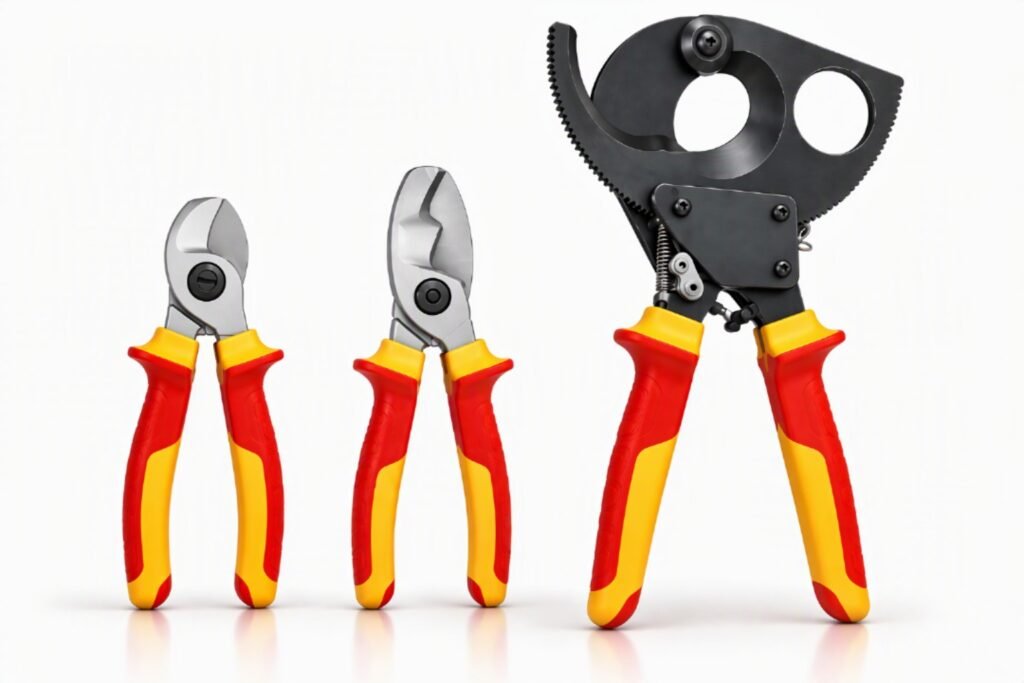
The 3 types of manual cable cutters discussed in this guide are designed to help electricians cut suitable electrical cables cleanly and accurately, making cable preparation easier for installation, connection, and maintenance work.
Not all cable cutters have the same design. Some feature curved cutting jaws, others use a more conventional cutting-head design, while ratcheting models use a mechanical mechanism to make cutting suitable larger cables easier.
In this guide, we look at three common manual cable cutter designs, explain their uses, and discuss what to consider when choosing the right tool.
For more information about cable preparation, read our guide: The Electrician’s Cable Knife: A Practical Tool for Cable Preparation.
3 Types of Manual Cable Cutters
1. Curved-Jaw Cable Shears
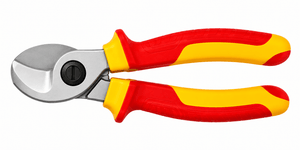
Curved-jaw cable shears feature specially shaped cutting blades designed to hold a suitable cable in position during cutting.
The curved cutting edges work together to provide a controlled cutting action. This design can help produce a clean cut on compatible copper and aluminium cables.
Their compact construction makes them convenient for electricians who need a portable hand tool for electrical installation and maintenance work.
Common uses:
- Cutting suitable copper cables.
- Cutting suitable aluminium cables.
- Preparing cable ends during electrical installation.
- Carrying out maintenance work where a controlled cut is required.
Curved-jaw cable shears are available in different sizes and cutting capacities. Always check the manufacturer’s specifications to make sure the tool is suitable for the cable you intend to cut.
2. Standard Manual Cable Cutters
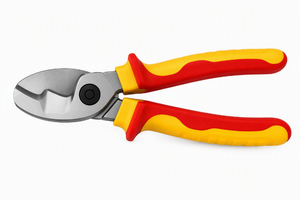
Standard manual cable cutters are hand-operated tools designed for cutting suitable electrical cables. They generally feature a compact cutting head, two handles, and specially shaped cutting edges.
Their straightforward design makes them practical for electricians who need a convenient tool for routine cable-cutting tasks.
Depending on the model, these cutters may be suitable for copper or aluminium cables. Their cutting capacity varies, so it is important to check the maximum cable diameter and conductor size before use.
Common uses:
- Cutting suitable electrical cables during installation.
- Preparing cable lengths for electrical connections.
- Carrying out maintenance and repair work.
- Cutting compatible copper or aluminium conductors within the tool’s rated capacity.
A standard manual cable cutter can be a practical choice for everyday electrical work when the cable size is within the tool’s specified cutting range.
3. Manual Ratcheting Cable Cutters
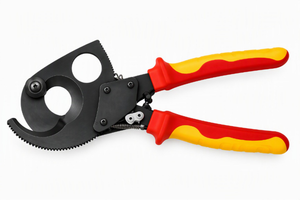
Manual ratcheting cable cutters use a mechanical ratcheting mechanism to move the cutting blade forward in controlled stages.
Instead of relying on one continuous squeezing movement, the user operates the handles repeatedly. Each movement advances the cutting mechanism until the cable is cut.
This design provides additional mechanical advantage and can make cutting suitable larger cables easier than using a conventional hand-operated cutter. However, the actual cutting capacity depends on the tool’s design and manufacturer specifications.
Common uses:
- Cutting suitable large-diameter copper cables.
- Cutting suitable aluminium cables.
- Electrical installation work involving larger conductors.
- Maintenance tasks where additional mechanical advantage is useful.
Manual ratcheting cable cutters are generally larger than standard cable cutters. Before choosing one, check its maximum cable diameter, compatible conductor materials, and operating instructions.
Brands That Make Manual Cable Cutters
Examples include:
- Bosch Professional: Offers professional hand tools, including cable-cutting tools.
- KNIPEX: Known for professional pliers, cable shears, and specialist cutting tools.
- LCT: Offers cable-cutting tools, including manual ratcheting designs.
- Greenlee: Manufactures tools and equipment for electrical installation and utility applications.
- HAUPA: Offers professional tools and equipment for electrical work.
Product availability and tool designs vary between manufacturers. Not every brand offers all the cutter types discussed in this guide.
How to Choose the Right Manual Cable Cutter
Choosing the right cable cutter depends mainly on the type and size of cable you work with and how frequently you use the tool.
Understanding the differences between the 3 types of manual cable cutters can help electricians choose the right tool for each job.
Consider the following points before buying.
1. Check the Cable Material
Make sure the cutter is designed for the conductor material you intend to cut.
Many cable cutters are designed for copper and aluminium cables, but not every model is suitable for every conductor type.
Do not assume that a tool designed for copper or aluminium cables can also cut steel wire, armoured cable, or other hard materials.
2. Check the Cutting Capacity
Every cable cutter has a specified cutting capacity.
Manufacturers may state the maximum cable diameter, conductor cross-section, or both.
Compare these specifications with the cables you normally work with. Never exceed the tool’s rated capacity.
3. Choose the Right Cutting Mechanism
Curved-jaw cable shears provide a compact cutting design for suitable cables.
Standard manual cable cutters offer a straightforward hand-operated cutting action.
Manual ratcheting cable cutters provide additional mechanical advantage when working with suitable larger cables.
Choose the design that matches your regular work.
4. Consider Handle Comfort and Grip
Comfortable handles and a secure grip help improve control during cutting.
If you use the tool frequently, consider its handle shape, overall size, and weight.
Remember that coloured or plastic-covered handles do not automatically mean that a tool is insulated for live electrical work.
5. Check Blade Quality and Maintenance
The cutting edges should be properly designed for the materials and cable sizes specified by the manufacturer.
Keep the cutting head clean and inspect the blades regularly. If the cutting edges become damaged or worn, follow the manufacturer’s maintenance or replacement instructions.
Safe Use and Maintenance
Using a cable cutter correctly helps reduce the risk of injury and damage to the tool.
Follow these basic safety practices:
- Always disconnect the electrical supply before cutting a cable.
- Verify the absence of voltage using an appropriate tester and safe working procedures.
- Never cut a live electrical cable with an ordinary manual cable cutter.
- Check the cable material and size before cutting.
- Use only a cutter designed for the cable you are working with.
- Keep your fingers away from the cutting edges.
- Inspect the tool for damaged handles, loose joints, or worn blades.
- Clean and store the cutter properly after use.
If a tool is intended for work where protection against electric shock is required, check that it carries the appropriate insulation rating and certification, such as IEC 60900. Ordinary plastic or rubber-covered handles are not proof of electrical insulation.
For more information, refer to the IEC 60900 standard for insulated hand tools.
You may also find our guide to Best Insulated Pliers for Electricians: Safety and Buying Guide useful when choosing insulated hand tools.
Final Thoughts
Manual cable cutters are available in different designs to suit different electrical installation and maintenance tasks.
Curved-jaw cable shears offer a compact cutting design, standard manual cable cutters provide a straightforward cutting action, and manual ratcheting cable cutters provide additional mechanical advantage for suitable larger cables.
The best choice depends on the cable material, cable size, cutting capacity, and type of work you normally carry out.
Before buying, always check the manufacturer’s specifications and choose a tool designed for the cables you intend to cut.