Manual pipe threaders are essential tools for plumbers, pipefitters, and maintenance professionals who work with threaded metal pipes. They are designed to cut external threads on the ends of pipes, allowing them to connect securely with threaded fittings, valves, elbows, and other plumbing components.
Unlike powered pipe threading machines, manual pipe threaders use a ratcheting mechanism and replaceable cutting dies. This makes them useful for installation work, repairs, and maintenance jobs where portability and access to electrical power may be limited.
Choosing the right manual pipe threader depends on several factors, including pipe size, thread standard, die quality, and the type of work being performed. In this guide, we explain how these tools work, where they are used, and what to consider before buying one.
What Is a Manual Pipe Threader?
A manual pipe threader is a hand-operated tool used to create external threads on the ends of metal pipes. These threads allow pipes to connect with compatible threaded fittings without welding.
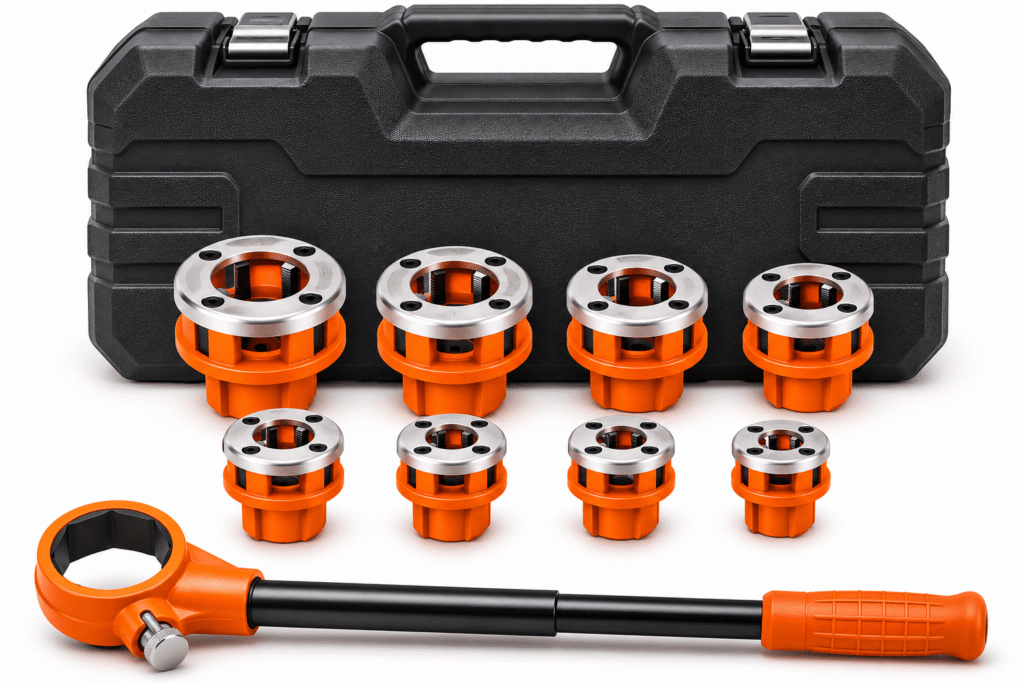
Most traditional manual pipe threaders use a ratchet handle connected to a die head containing sharp cutting dies. As the operator turns the handle, the dies gradually cut threads into the outside surface of the pipe.
Manual ratchet pipe threaders are commonly used with steel pipes and suitable metal conduits. However, the correct cutting head must be selected for the pipe material, diameter, and required thread standard.
Main Parts of a Manual Ratchet Pipe Threader
Understanding the main components helps users operate the tool correctly and choose a suitable replacement set.
1. Ratchet Handle
The ratchet handle provides the leverage needed to turn the die head around the pipe.
Its main function is to transfer the operator’s force to the cutting head. The ratcheting mechanism allows the user to make controlled movements without continuously rotating the entire handle through a full circle.
A good ratchet handle should provide a comfortable grip, reliable engagement, and sufficient leverage for the intended pipe sizes.
2. Ratchet Assembly
The ratchet assembly connects the handle to the die head and controls the direction of rotation.
Most manual models include a forward and reverse setting. This allows the operator to advance the cutting dies and then release the tool from the finished threads.
3. Die Heads
Die heads hold the cutting dies and guide the threading process.
Different die heads are available for different pipe diameters and thread standards. Some sets include several interchangeable heads to cover a range of common pipe sizes.
4. Cutting Dies
Cutting dies are the sharp components that actually form the threads on the pipe.
They must be compatible with the die head and the required thread specification. Worn or damaged dies can produce poor-quality threads and make cutting more difficult.
5. Carrying Case
Many complete manual pipe threader kits include a carrying case for storing and transporting the ratchet assembly and interchangeable die heads.
A well-organized case makes it easier to identify the correct cutting head and keep the components protected between jobs.
Common Uses of Manual Pipe Threaders
Manual pipe threaders are used in several plumbing, installation, and maintenance applications.
Plumbing Installations
Plumbers use manual threaders to prepare metal pipes for threaded connections. These connections are commonly used with compatible elbows, couplings, tees, and valves.
The tool is particularly useful when installing or modifying threaded steel pipe systems.
Industrial Pipe Fitting
Pipefitters and maintenance technicians use manual threaders when repairing or installing threaded pipe connections in workshops and industrial facilities.
Their portable design can be useful for smaller jobs where bringing a powered threading machine is unnecessary.
Gas Pipe Installations
Some metal gas piping systems use threaded connections. Manual pipe threaders can prepare suitable pipes for these applications.
However, gas installations must follow applicable local regulations and use approved materials, fittings, and sealing methods. Threading a pipe correctly does not, by itself, guarantee a safe gas connection.
Electrical Conduit Work
Manual pipe threaders can also be used to create threads on compatible rigid metal electrical conduits.
This allows electricians to connect threaded conduit sections and compatible fittings during electrical installations.
The correct conduit-specific dies and thread specifications must be used.
How to Use a Manual Ratchet Pipe Threader
Using a manual pipe threader requires proper preparation and the correct cutting accessories. Following the manufacturer’s instructions helps produce consistent threads and reduces the risk of damaging the tool.
Step 1: Secure the Pipe
Place the pipe in a suitable pipe vise and tighten it securely.
The pipe must remain stable throughout the threading operation. Movement can affect thread quality and make the tool difficult to control.
Step 2: Cut the Pipe to the Required Length
Use an appropriate pipe cutter to make a clean, square cut.
An uneven pipe end can make it difficult to start the threading process correctly.
Step 3: Remove Burrs
Use a suitable pipe reamer or deburring tool to remove sharp edges and internal burrs left by cutting.
This helps prepare the pipe end for threading.
Step 4: Select the Correct Die Head
Choose a die head that matches the pipe diameter, material, and required thread standard.
Do not assume that every die head is compatible with every pipe thread system.
Step 5: Install the Die Head
Fit the selected die head into the ratchet assembly according to the manufacturer’s instructions.
Make sure it is properly seated and locked before starting.
Step 6: Apply Thread Cutting Oil
Apply a suitable thread cutting oil to the pipe and cutting area.
Proper cutting oil reduces friction, helps remove metal chips, and improves the threading process.
Step 7: Start Cutting the Threads
Position the die head squarely over the pipe end and apply controlled pressure.
Move the ratchet handle in the cutting direction, following the manufacturer’s instructions. Keep the tool aligned with the pipe to avoid uneven threads.
Step 8: Complete the Threading Process
Continue until the required thread length is reached.
For RIDGID manual threaders, the manufacturer’s instructions specify stopping when the end of the dies is flush with the end of the pipe.
Step 9: Remove the Die Head
Change the ratchet direction and carefully turn the die head backward to remove it from the newly cut threads.
Clean the pipe end and inspect the finished threads before connecting the fitting.
Understanding Pipe Thread Standards: NPT vs. BSPT
One of the most important considerations when buying a manual pipe threader is the thread standard.
Two common tapered pipe thread systems are NPT and BSPT.
NPT (National Pipe Taper):
NPT is a tapered pipe thread standard commonly used in North America. It has a 60-degree thread angle.
BSPT (British Standard Pipe Taper):
BSPT is a tapered pipe thread standard commonly used in the United Kingdom and other markets. It has a 55-degree thread angle.
Although some NPT and BSPT sizes may appear similar, their thread profiles are different. They should not be treated as directly interchangeable.
Before purchasing a manual pipe threader, check whether the included die heads are designed for NPT, BSPT, or another required thread standard.
What Pipe Sizes Can Manual Threaders Handle?
A manual pipe threader can handle different pipe sizes depending on the design of the set and the die heads included. Most sets use interchangeable die heads, allowing users to thread pipes of different diameters.
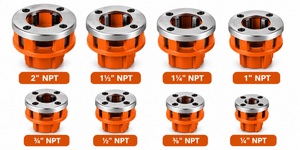
These sizes are commonly used in plumbing, water supply, and industrial piping. However, not every manual pipe threader set includes all these sizes. Some kits contain only a selection of die heads, while others cover a wider range.
Before choosing a set, check the sizes marked on the included die heads and make sure they cover the pipe diameters you regularly work with.
Manual vs. Electric Pipe Threader
Both manual and powered pipe threaders perform the same basic operation, but they are designed for different working conditions.
| Feature | Manual Pipe Threader | Electric Pipe Threader |
|---|---|---|
| Power source | Hand-operated | Electric motor |
| Portability | Generally portable | Usually heavier |
| Operating effort | Requires physical effort | Requires less manual effort |
| Threading speed | Slower | Generally faster |
| Best suited for | Repairs and smaller jobs | Repeated and higher-volume work |
| Initial investment | Often lower | Usually higher |
A manual pipe threader can be a practical choice for occasional threading work, while an electric model may be more suitable for professionals who regularly prepare large numbers of threaded pipes.
How to Choose the Right Manual Pipe Threader
Before buying a manual pipe threader, consider these important factors.
1. Pipe Size Capacity
Check the minimum and maximum pipe sizes supported by the tool.
Choose a set that covers the sizes commonly used in your projects.
2. Thread Standard
Make sure the die heads match the thread system required for your installation.
This is especially important when comparing NPT and BSPT models.
3. Die Quality
Cutting dies should be durable, sharp, and suitable for the materials being threaded.
Also check whether replacement dies are available.
4. Ratchet Handle Quality
The ratchet handle should provide reliable engagement and comfortable operation.
A secure grip and suitable handle length can make a difference when working with larger pipes.
5. Included Accessories
Check whether the package includes all the components you need, such as:
- Ratchet handle
- Ratchet assembly
- Die heads
- Cutting dies
- Carrying case
Some products are sold as complete kits, while others include only selected components.
6. Brand and Replacement Parts
Consider established manufacturers that provide product documentation, compatible accessories, and replacement parts.
This can make maintenance and long-term use easier.
Safety Tips and Maintenance
Manual pipe threaders require physical force, and their cutting dies contain sharp edges. Proper handling is important.
Follow these basic precautions:
- Secure the pipe firmly before starting.
- Inspect the ratchet mechanism and cutting dies before use.
- Keep the handle clean and free from oil and grease.
- Wear suitable eye protection.
- Keep hands away from the cutting edges.
- Use the correct thread cutting oil.
- Never extend the handle with an additional pipe to increase leverage.
- Follow the manufacturer’s operating instructions.
After use, clean the die heads, remove metal chips, and inspect the cutting edges.
Store the components in their case to protect them from damage and unnecessary wear.
Frequently Asked Questions
Can a manual pipe threader cut threads on steel pipes?
Yes. Suitable manual pipe threaders are commonly used to cut external threads on compatible steel pipes. The correct die heads and cutting oil are essential.
Can I use one manual pipe threader for different pipe sizes?
Yes. Many sets include interchangeable die heads for different nominal pipe sizes. However, the supported range depends on the specific model and kit.
What is the difference between NPT and BSPT dies?
NPT and BSPT use different thread profiles and standards. The correct dies must match the thread system required for the pipe and fittings.
Do manual pipe threaders require electricity?
No. They operate using a manually operated ratchet handle, making them useful in locations where electrical power is unavailable.
Is a manual pipe threader suitable for professional plumbing work?
Yes. It can be useful for repairs, smaller installations, and maintenance work. For frequent high-volume threading, a powered threading machine may be more efficient.
Final Thoughts
Manual pipe threaders remain useful tools for plumbers, pipefitters, electricians, and maintenance professionals who work with threaded metal pipes and compatible conduit systems.
Their interchangeable die heads, portable design, and manually operated ratchet mechanism make them practical for many installation and repair tasks.
Before choosing a set, pay close attention to pipe size capacity, thread standards, cutting die quality, and the condition of the ratchet handle.
Selecting the correct tool for the job can help produce cleaner threads, improve connection quality, and make pipe installation work more efficient.
Related Articles
Best Pipe Wrenches for Professional and Construction Work.
Yoke Pipe Vise: Uses, Parts, and 6 Buying Tips.
External Reference
For detailed operating instructions, safety precautions, and product information, visit the official manufacturer documentation:
RIDGID – Exposed Ratchet Threader Sets and Manual Threader Instructions