An adjustable wrench is one of the most useful hand tools for plumbing, maintenance, installation, and general construction work. Its movable jaw allows one tool to fit different sizes of nuts and bolts, making it a practical choice for professionals and DIY users.
Unlike fixed-size spanners, an adjustable wrench can handle several fastener sizes without requiring a complete set of individual wrenches. However, not all adjustable wrenches offer the same comfort, strength, jaw capacity, or build quality.
Some models feature a traditional all-metal construction, while others include rubber or plastic grips for improved handling. Choosing the right size and design can make everyday work easier and more efficient.
In this guide, we look at the main adjustable wrench designs, common sizes, important features, and what to consider before buying one.
What Is an Adjustable Wrench?
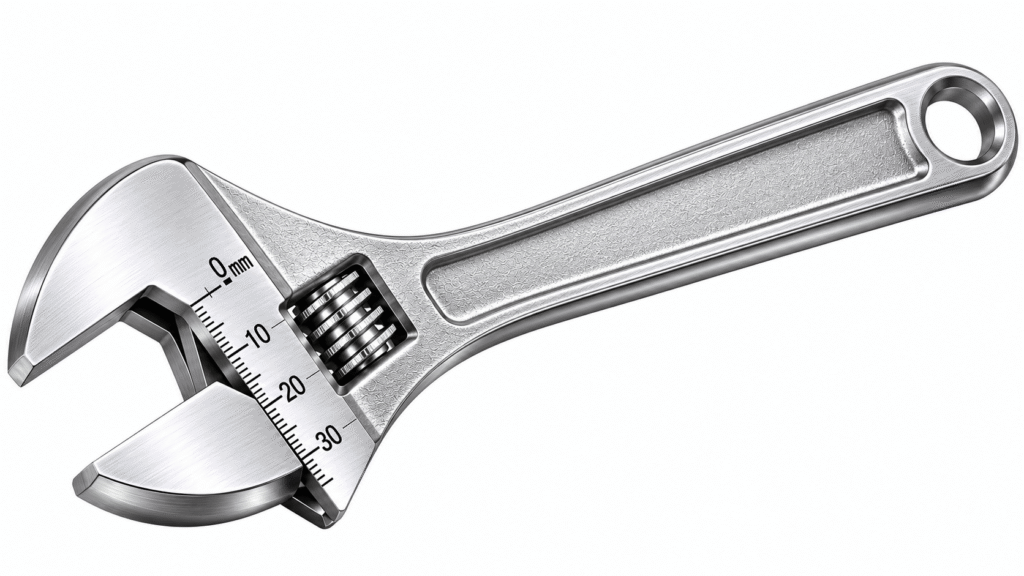
An adjustable wrench is a hand tool designed to tighten or loosen nuts and bolts of different sizes. It has two jaws, one fixed and one movable, which can be adjusted using a small worm gear.
Turning the adjustment mechanism changes the opening between the jaws, allowing the wrench to fit different fasteners.
Most adjustable wrenches are made from forged steel or chrome-vanadium steel, with a polished or chrome-plated finish to help protect the surface against corrosion.
They are commonly used by plumbers, mechanics, maintenance technicians, installers, and construction workers.
Main Types of Adjustable Wrenches
Adjustable wrenches are available in different handle designs and sizes. Two common options are traditional all-metal models and models with comfortable plastic or rubber grips.
1. Standard All-Metal Adjustable Wrench
The standard adjustable wrench features a solid metal body and handle. It is a traditional design widely used in workshops, maintenance jobs, plumbing installations, and construction work.
Its simple construction makes it practical for everyday use. Many models include a measurement scale near the movable jaw to help users estimate the jaw opening.
Main features:
- Strong metal construction.
- Adjustable jaw for different fastener sizes.
- Compact and practical design.
- Suitable for general maintenance and installation work.
- Available in several lengths.
This design is a good choice for users who prefer a traditional metal tool without an additional grip covering.
2. Adjustable Wrench with Comfort Grip
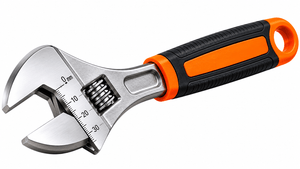
Some adjustable wrenches feature a plastic or rubber-coated handle designed to provide a more comfortable and secure grip.
This design can be useful during repeated maintenance tasks or when working for extended periods. The grip material may also help reduce discomfort when holding the tool.
Main features:
- Rubber or plastic handle covering.
- Comfortable handling.
- Better grip in many working conditions.
- Available in different sizes.
- Suitable for regular maintenance and installation work.
However, the quality of the handle material and its resistance to oils, chemicals, and workshop conditions can vary between models.
Common Adjustable Wrench Sizes
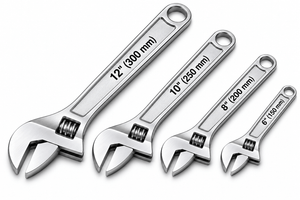
Adjustable wrenches are commonly sold in different lengths. The size is usually measured from the end of the handle to the head of the tool.
The most common options include 6, 8, 10, and 12 inches.
6-Inch Adjustable Wrench
A 6-inch adjustable wrench is compact and easy to carry. It is useful for smaller fasteners and jobs in restricted spaces where a longer handle may be difficult to position.
8-Inch Adjustable Wrench
An 8-inch model offers a practical balance between size and handling. It is suitable for many everyday maintenance, plumbing, and installation tasks.
10-Inch Adjustable Wrench
A 10-inch adjustable wrench provides a longer handle and is useful for larger fasteners that require more leverage, provided the tool’s jaw capacity is suitable.
12-Inch Adjustable Wrench
A 12-inch model is larger and generally offers greater leverage. It can be useful for heavier maintenance and installation work, although its size may make it less convenient in tight spaces.
Important: The overall length does not determine the exact maximum jaw opening. Always check the manufacturer’s specifications before choosing a wrench.
All-Metal vs. Comfort-Grip Adjustable Wrenches
Both designs can be useful, but the best option depends on the type of work and personal preference.
| Feature | All-Metal Wrench | Comfort-Grip Wrench |
|---|---|---|
| Handle | Solid metal | Rubber or plastic covering |
| Grip comfort | Depends on handle design | Usually more comfortable |
| Construction | Traditional metal design | Metal body with covered handle |
| Cleaning | Generally simple | Depends on grip material |
| Best for | General professional use | Repeated handling and longer tasks |
A high-quality all-metal wrench can be an excellent everyday tool. A comfort-grip model may be preferable when handling comfort is a priority.
What to Look for When Buying an Adjustable Wrench
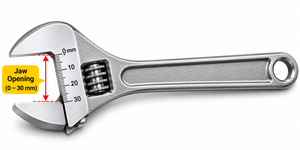
Before purchasing an adjustable wrench, consider the following features.
1. Material and Build Quality
Look for a wrench made from strong, durable steel. Chrome-vanadium steel is commonly used in quality hand tools.
The body should feel solid, with no visible cracks, sharp manufacturing defects, or poor finishing.
2. Smooth Jaw Adjustment
The worm gear should turn smoothly without excessive looseness. The movable jaw should open and close easily while remaining stable during use.
A loose or poorly fitting jaw can slip on a fastener and damage its edges.
3. Jaw Capacity
Check the maximum jaw opening in millimeters. A longer wrench does not automatically mean it can fit every larger nut or bolt.
Choose a model with enough capacity for the fasteners you regularly work with.
4. Handle Comfort
If you frequently use the tool, consider a model with an ergonomic rubber or plastic grip.
For all-metal models, look for a handle shape that is comfortable to hold and provides good control.
5. Corrosion Resistance
A polished or chrome-plated finish can help protect the tool against corrosion. However, it is still important to clean and dry the wrench after use, especially in damp working environments.
How to Use an Adjustable Wrench Correctly
Using an adjustable wrench correctly helps reduce the risk of slipping and damaging fasteners.
- Adjust the movable jaw until it fits the nut or bolt closely.
- Make sure both jaws sit firmly against the flat sides of the fastener.
- Whenever possible, position the wrench so that force is applied toward the fixed jaw.
- Apply steady pressure rather than sudden force.
- Avoid using extension pipes to increase leverage unless the manufacturer specifically allows it.
- Do not use a damaged wrench or one with a loose adjustment mechanism.
For round pipes, use a proper pipe wrench instead of an ordinary adjustable wrench. Pipe wrenches are specifically designed to grip round surfaces.
Adjustable Wrench Maintenance Tips
Regular maintenance helps keep an adjustable wrench working smoothly.
- Clean dirt, grease, and moisture after use.
- Keep the movable jaw and adjustment mechanism free from debris.
- Apply a small amount of suitable lubricant to the adjustment mechanism when necessary.
- Store the tool in a dry place.
- Check the jaws and worm gear regularly for wear or damage.
A well-maintained wrench can remain useful for many years, depending on its quality and working conditions.
Final Thoughts
An adjustable wrench is a practical addition to any professional toolbox. Its ability to fit different nut and bolt sizes makes it useful for plumbing, maintenance, installation, and general construction work.
The standard all-metal design is a dependable traditional option, while a comfort-grip model can provide better handling during repeated tasks.
When choosing one, pay attention to the steel quality, jaw capacity, adjustment mechanism, handle comfort, and overall construction. Selecting the correct size for your work is just as important as choosing the right design.
Related Guides
How to Choose the Right Work Gloves for Construction Jobs
Best Pipe Wrenches for Professional and Construction Work
External Resource
For additional information about using and maintaining hand tools safely, see the guide from Klein Tools: