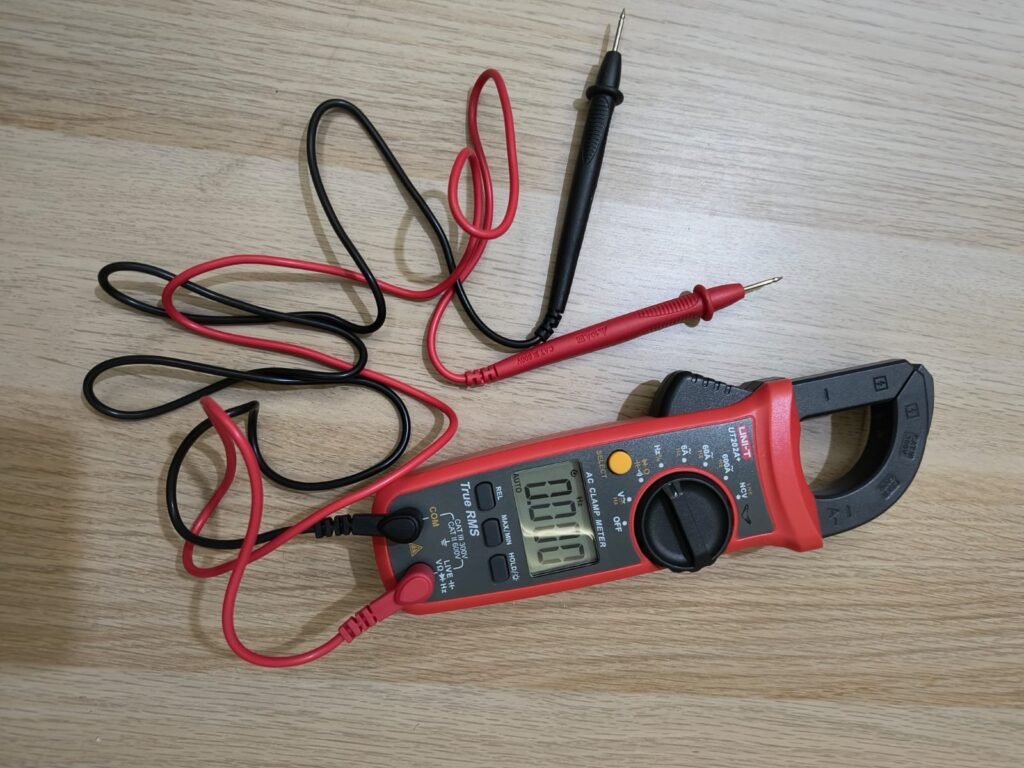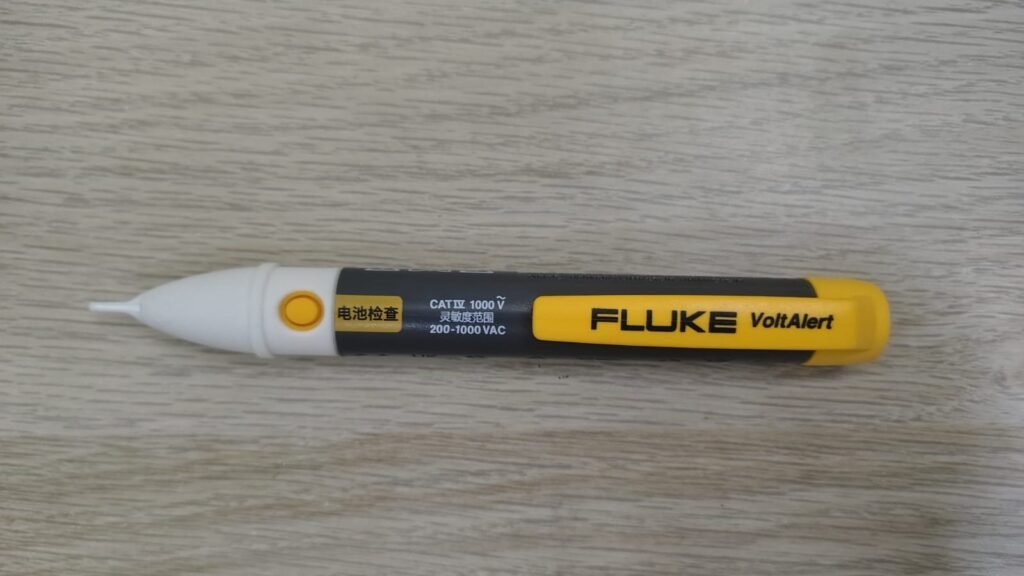
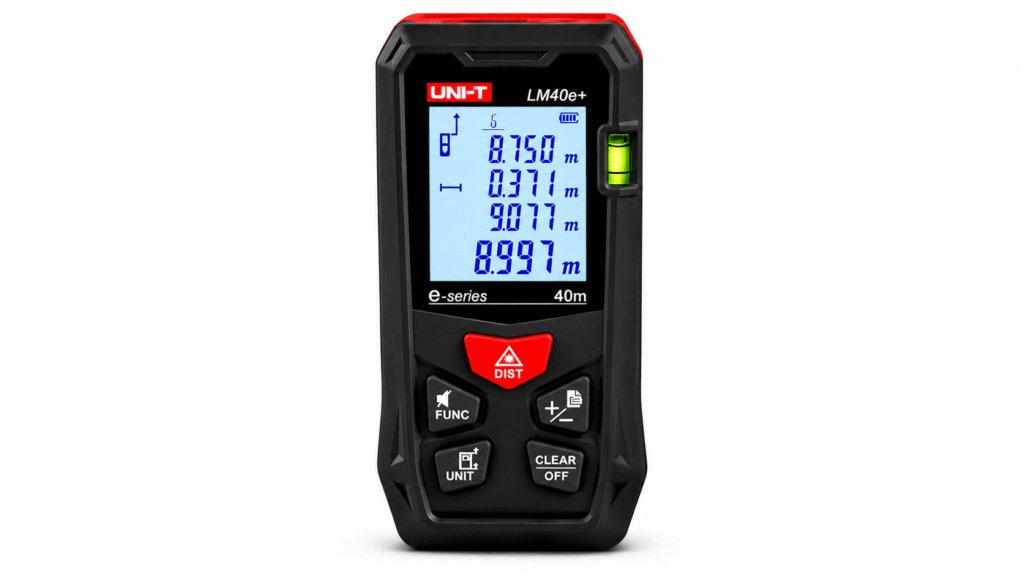
The UNI-T LM40e+ laser distance meter is a compact measuring tool designed to make distance measurements faster and more convenient. With a measuring range of up to 40 meters, it can be useful for electricians, construction workers, installers, and DIY users who regularly need to measure rooms, walls, openings, and other distances.
Unlike a basic tape measure, this device can also calculate areas and volumes, perform indirect measurements using the Pythagorean theorem, and store measurement records for later reference.
This review examines the UNI-T LM40e+ laser distance meter, including its specifications, measurement functions, practical applications, limitations, and seven tips for more reliable results.
UNI-T LM40e+ Laser Distance Meter: Main Features and Specifications
The UNI-T LM40e+ belongs to UNI-T’s laser distance meter range. It uses a red laser to measure the distance between the instrument and a target surface.
Its main features include:
- Maximum measuring range: 40 meters
- Minimum measuring distance: 0.05 meters
- Measurement accuracy: ±(2 mm + 5 × 10⁻⁵ × D)
- Laser class: Class 2
- Laser wavelength: 630–670 nm
- Laser output: Less than 1 mW
- Measurement units: Six selectable unit formats
- Measurement reference: Front and rear reference points
- Measurement modes: Single, continuous, area, volume, and Pythagorean measurements
- Maximum/minimum values during continuous measurement
- Addition and subtraction of distance, area, and volume results
- Measurement memory: Up to 99 records
- Self-calibration adjustment: -9 mm to +9 mm
- Power supply: Two 1.5V AAA alkaline batteries
- Operating temperature: 0°C to 40°C
- Storage temperature: -20°C to 60°C
- Dimensions: 104 × 48 × 25 mm
The manufacturer specifies an accuracy formula rather than a fixed error value for every distance. This means the possible measurement deviation increases slightly as the measured distance becomes longer.
How Does the UNI-T LM40e+ Work?
The LM40e+ measures distance by sending a laser beam toward a target surface and calculating the distance from the returned signal.
To take a basic measurement, the user points the laser toward the target and presses the measurement button. The result appears on the display.
The device offers both single and continuous measurement modes.
In single measurement mode, it takes one measurement and displays the result.
In continuous measurement mode, it keeps updating the current distance. The display also shows the maximum and minimum values recorded during the measuring process.
This can be useful when checking distances between different points or finding the shortest or longest distance within a measuring area.
Measurement Modes and Functions
The UNI-T LM40e+ offers several measurement functions beyond basic distance measurement.
Single Distance Measurement
This is the standard mode for measuring the distance between the meter and a target.
It is useful for measuring room dimensions, wall lengths, ceiling heights, and installation distances.
Continuous Measurement
In continuous mode, the meter updates the measurement while the user moves it or changes the target position.
The display shows the current distance, along with the maximum and minimum values recorded during the measurement.
Area Measurement
The area function calculates the area of a rectangular space.
The user measures the length and width separately. The device then calculates the area automatically.
This function can be useful when estimating floor areas, wall surfaces, or other rectangular spaces.
Volume Measurement
The volume function measures three dimensions: length, width, and height.
After taking these measurements, the meter calculates the volume automatically.
It can be useful for estimating the volume of rooms, storage spaces, and other rectangular areas.
Pythagorean Measurement
The LM40e+ includes four indirect measurement modes based on the Pythagorean theorem.
These modes allow the device to calculate a distance that cannot be measured directly, using two or three other measurements depending on the selected mode.
This can be helpful when measuring certain heights or distances where direct access is difficult.
For accurate results, the measurements must follow the order and reference points shown on the instrument display.
Addition and Subtraction
The device can add or subtract measured distances.
It can also add or subtract area and volume results. This is useful when working with several separate sections that need to be combined or compared.
Other Useful Features
Front and Rear Measurement Reference
The LM40e+ allows the user to choose between the front and rear measurement reference points.
The default setting is the rear reference point. This is important because the selected reference determines where the measurement begins.
For example, when placing the back of the meter against a wall, the rear reference is generally the appropriate setting.
Six Measurement Unit Formats
The device provides six selectable unit formats for different measurement preferences.
These include metric and imperial formats, such as meters, feet, inches, and feet-and-inches formats.
The available display formats also include different decimal and fractional presentations.
Measurement Memory
The LM40e+ can store up to 99 measurement records.
This can help users review previous measurements without having to write down every result immediately.
Self-Calibration Function
The device includes a self-calibration adjustment function with a range of -9 mm to +9 mm.
This feature allows the user to adjust the displayed measurement according to a known reference distance.
However, calibration should only be performed carefully using a reliable reference measurement and following the manufacturer’s instructions.
Display Backlight and Sound
The display backlight turns on automatically when a button is pressed and switches off after approximately 15 seconds without operation.
The sound function can also be switched on or off.
The device automatically powers off after approximately 150 seconds without operation.
Battery Compartment and Power Supply
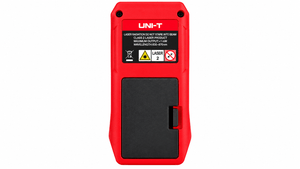
The UNI-T LM40e+ is powered by two 1.5V AAA batteries. The battery compartment is located on the back of the meter, beneath a removable cover. According to the manufacturer, the batteries can provide up to 8,000 measurements under specified conditions. The rear of the device also features a safety label identifying it as a Class 2 laser product.
7 Essential Tips for Accurate Laser Distance Measurements
Getting reliable results from a laser distance meter depends not only on the instrument but also on how it is used.
Here are seven practical tips to consider when using the UNI-T LM40e+.
1. Choose the Correct Measurement Reference
Before taking a measurement, check whether the meter is set to the front or rear reference point.
Using the wrong reference can introduce an error because the measurement may start from a different part of the instrument than expected.
2. Keep the Meter Steady
Hold the instrument firmly while taking measurements.
Movement during measurement can make it harder to aim accurately, especially when measuring longer distances.
3. Aim at a Suitable Target Surface
The laser needs a surface that can return a usable signal to the instrument.
Very dark, weakly reflective, or unsuitable surfaces may cause measurement errors.
A suitable target plate can help when measuring difficult surfaces.
4. Be Careful in Strong Sunlight
Strong sunlight can interfere with the laser receiver and make measurements more difficult.
When possible, avoid measuring directly in intense sunlight or use a suitable target surface to improve the return signal.
5. Check the Measurement Unit
The LM40e+ supports several measurement formats.
Before recording a result, make sure the selected unit is correct. This is especially important when switching between metric and imperial measurements.
6. Use the Correct Mode for the Job
Select the appropriate function before measuring.
Use single measurement for a simple distance, continuous measurement when comparing positions, area mode for rectangular surfaces, and volume mode when three dimensions are required.
For indirect measurements, follow the Pythagorean measurement sequence shown on the display.
7. Check the Battery and Measurement Conditions
Low battery power can affect measurement reliability.
The manufacturer also warns that strong sunlight, significant temperature changes, weak reflections, and unsuitable measuring conditions may lead to errors.
Check the battery indicator and repeat questionable measurements when necessary.
Practical Uses for Electricians and Construction Workers
The UNI-T LM40e+ can be useful for several everyday measuring tasks.
The UNI-T LM40e+ laser distance meter can also help with general measuring tasks before electrical installation work begins.
For electricians, it can help measure:
- Distances between electrical panels and installation points.
- Room dimensions before planning cable routes.
- Ceiling heights before installing lighting equipment.
- Wall lengths and distances for electrical conduit installations.
- Approximate dimensions when preparing material estimates.
For construction workers and installers, it can also help measure room dimensions, floor areas, wall surfaces, and rectangular spaces.
However, a laser distance meter only measures distances and calculates dimensions. It does not detect hidden electrical cables, pipes, or structural elements inside walls.
Advantages and Limitations
Advantages
- A measuring range of up to 40 meters.
- Several measurement functions in one compact device.
- Area and volume calculations.
- Four Pythagorean indirect measurement modes.
- Front and rear measurement reference options.
- Memory for up to 99 measurement records.
- Selectable metric and imperial unit formats.
- Self-calibration adjustment function.
Limitations
- Strong sunlight can make measurements more difficult.
- Weakly reflective surfaces may cause measurement errors.
- The instrument requires suitable target surfaces for reliable readings.
- The user must select the correct reference point and measurement mode.
- It is not designed to detect hidden cables or pipes.
Safety and Proper Use
The UNI-T LM40e+ uses a Class 2 laser with an output below 1 mW.
Never point the laser toward anyone’s eyes or face. Do not look directly into the laser beam, and avoid directing it toward highly reflective surfaces.
The manufacturer also advises against opening, repairing, or modifying the instrument yourself.
For detailed operating instructions, measurement modes, and safety information, refer to the official UNI-T LM40e+ user manual.
Other Electrical Tools Worth Exploring
Choosing the right measuring equipment is only one part of working safely and accurately with electrical installations.
You may also find these ToolsMingle guides useful:
UNI-T UT12D Voltage Detector Review: Features, Uses, and Safety Tips.
Best Voltage Testers for Home Electrical Work in 2026.
These guides cover other useful testing tools for electrical work.
Final Thoughts
The UNI-T LM40e+ is a multifunction laser distance meter with a maximum measuring range of 40 meters. Its distance, area, volume, continuous, and indirect measurement functions make it a practical option for users who regularly need to take measurements during construction, installation, and electrical work.
Its memory, selectable measurement units, front and rear reference points, and self-calibration adjustment add further convenience.
As with any laser measuring instrument, reliable results depend on using the correct measurement mode, choosing a suitable target surface, and following the manufacturer’s operating instructions.
For users who need a compact device for everyday distance and dimension measurements, the UNI-T LM40e+ laser distance meter offers several useful functions in one handheld tool.