Focus Keyword: UNI-T UT12D Voltage Detector
Introduction
A reliable voltage detector is a useful tool for electricians who need to check for the presence of AC voltage quickly and conveniently. Whether you are inspecting electrical outlets, checking cables, or carrying out routine maintenance, a non-contact voltage detector can help you perform preliminary electrical checks without touching exposed conductors directly.
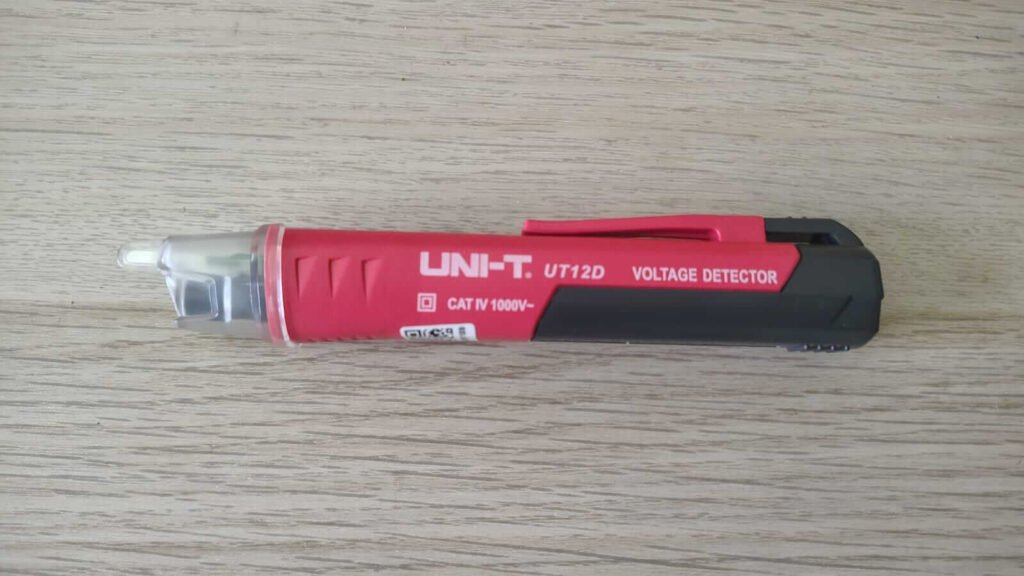
The UNI-T UT12D Voltage Detector is a compact, pen-style electrical testing tool designed for this purpose. It features non-contact AC voltage detection, visual and audible alerts, a built-in flashlight, and selectable high- and low-voltage detection modes.
In this review, I will look at the main features, practical uses, advantages, limitations, and safety considerations of the UNI-T UT12D. I also have this tool and have tested it myself, so I can share my practical impression alongside the manufacturer’s specifications.
What Is the UNI-T UT12D Voltage Detector?
The UNI-T UT12D is a non-contact AC voltage detector designed to help identify the presence of alternating current voltage near suitable electrical conductors and equipment.
Unlike a traditional multimeter, it does not require direct electrical contact with the conductor for its normal non-contact detection function. You bring the sensor tip close to the test point and look for the detector’s visual and audible indications.
This makes it useful for preliminary checks during electrical installation, troubleshooting, and maintenance work.
However, it is important to understand that a voltage detector is not a replacement for a properly rated multimeter or an approved procedure for verifying that an electrical circuit is de-energized.
Key Features of the UNI-T UT12D
1. Non-Contact AC Voltage Detection
The UT12D detects AC voltage without requiring the sensor tip to make direct electrical contact with an exposed conductor.
According to the manufacturer’s documentation, the detector supports two detection ranges:
- High-voltage mode: 90–1000V AC.
- Low-voltage mode: 24–1000V AC.
The lower-voltage mode can help detect weaker electrical signals, but it can also be more susceptible to electrical interference. The correct mode depends on the testing conditions and the manufacturer’s instructions.
2. Audible and Visual Alerts
When the detector senses a suitable AC voltage signal, it provides audible and visual indications.
These alerts help the user recognize a detected signal without needing to look at a numerical display. The buzzer and indicator lights are particularly useful during routine inspection work.
Keep in mind that the response can depend on the conductor, insulation, distance, electrical environment, and selected sensitivity mode.
3. Built-In Flashlight
The built-in flashlight is a practical feature when working inside cabinets, near electrical outlets, or in other poorly illuminated areas.
Instead of immediately reaching for a separate light, you can use the detector’s integrated flashlight to help see the area being inspected.
It is a convenient addition, although it does not replace proper workplace lighting.
4. High- and Low-Voltage Modes
One useful feature of the UT12D is its selectable detection sensitivity.
The high-voltage mode is intended for common AC electrical systems, while the low-voltage mode extends the specified detection range down to 24V AC.
The lower-voltage setting may be useful when checking certain low-voltage AC applications. However, it can be more sensitive to interference, so readings should always be interpreted carefully.
5. Compact Pen-Style Design
The UT12D has a slim, pen-shaped body that is easy to carry in a tool bag or work pocket.
Its compact design makes it convenient for electricians who regularly move between electrical panels, sockets, cables, and different work areas.
The pocket clip also helps keep the detector accessible during routine work.
My Experience With the UNI-T UT12D
I own the UNI-T UT12D and have tested it myself. My practical impression is positive, and I have found it to be a useful tool for preliminary electrical checks.
I particularly appreciate its pen-style design and the convenience of having a flashlight built into the device. Its audible and visual alerts also make it straightforward to use when checking for the presence of an AC voltage signal.
For an electrician, having a compact detector readily available can be helpful during everyday work.
However, personal experience with one unit does not establish that every unit will perform identically in every situation. Detection results can vary depending on the electrical environment and testing conditions.
For that reason, I recommend following the manufacturer’s instructions and checking the detector’s operation before and after use according to an appropriate safety procedure.
Where Can You Use the UNI-T UT12D?
The UNI-T UT12D can be useful for preliminary checks in several situations.
Checking Electrical Outlets
The detector can help identify the presence of an AC voltage signal near a suitable outlet. Follow the manufacturer’s instructions and avoid inserting the detector into an outlet in a way that is not specified for the device.
Inspecting Electrical Cables
It can help identify the possible presence of AC voltage near suitable insulated cables. Detection results depend on the cable construction, insulation, distance, and surrounding electrical conditions.
Electrical Maintenance
Electricians can use a non-contact voltage detector during initial inspections and troubleshooting to help locate areas where an AC voltage signal may be present.
Working in Poor Lighting
The integrated flashlight can be useful when inspecting equipment in dimly lit locations.
Important: The UT12D is a preliminary detection tool. It must not be relied upon as the sole method of proving that a circuit is safe to touch.
Advantages and Limitations
Advantages
- Non-contact AC voltage detection.
- High- and low-voltage detection modes.
- Audible and visual alerts.
- Built-in flashlight.
- Compact, pocket-friendly design.
- Useful for preliminary electrical inspections.
Limitations
- It does not provide a numerical voltage reading.
- Detection can be affected by insulation, distance, interference, and the electrical environment.
- A missing alarm does not prove that a conductor is de-energized.
- It cannot replace a properly rated multimeter or an approved electrical safety procedure.
- The detector’s capabilities and ratings should be confirmed for the exact model and regional version.
UNI-T UT12D vs. a Traditional Multimeter
A non-contact voltage detector and a multimeter serve different purposes.
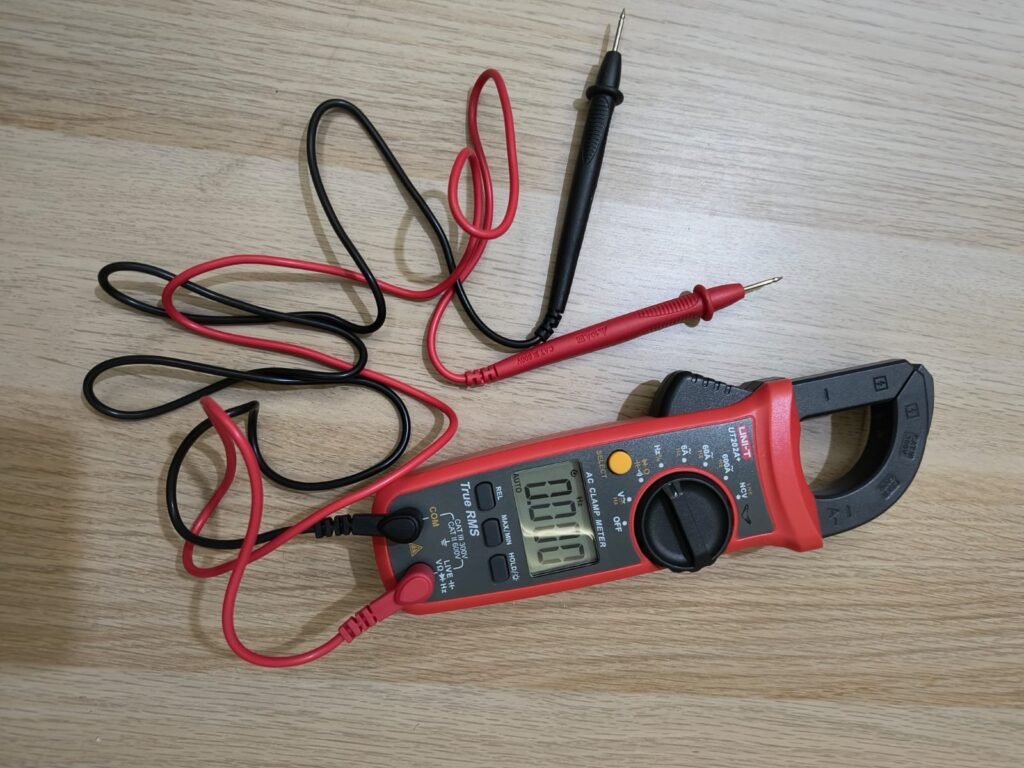
The UT12D is convenient when you want to perform a quick preliminary check for the presence of an AC voltage signal. A multimeter, on the other hand, can provide numerical measurements such as voltage and, depending on the model, current, resistance, and continuity.
If you need more detailed measurements for electrical troubleshooting, a suitable multimeter is the better choice.
You can also read my guide to For more electrical testing options, read my guide to Best Voltage Testers for Home Electrical Work in 2026. to explore other testing instruments from the same manufacturer.
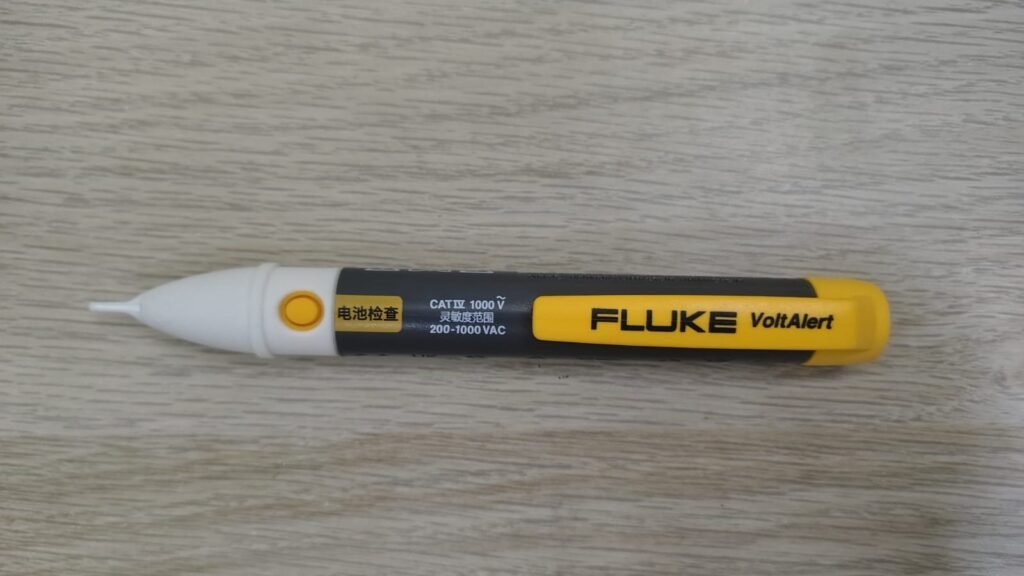
If you are comparing non-contact voltage detectors, read my Fluke 2AC VoltAlert Review: Features and Safe Use for more information about another voltage detector.
Electrical Safety: What You Should Know
Voltage detectors are useful tools, but safe electrical work requires more than a single test.
Before working on an electrical circuit:
- Follow the applicable electrical safety procedures and the manufacturer’s instructions.
- Use suitable personal protective equipment and properly rated test instruments.
- Do not assume a circuit is safe because the detector does not produce an alarm.
- Where required, isolate the circuit and verify the absence of voltage using an appropriate contact-testing instrument and an approved procedure.
- Check that your test instrument is functioning correctly before and after the verification process.
Non-contact detectors can miss voltage under certain conditions. They may also respond to induced or nearby electrical fields. Never use an absence of indication as proof that a conductor is safe to touch.
For the most accurate information about operating modes and limitations, consult the manufacturer’s documentation.
Is the UNI-T UT12D Worth Considering?
The UNI-T UT12D is worth considering if you need a compact non-contact voltage detector for preliminary electrical checks.
Its selectable detection modes, audible and visual alerts, built-in flashlight, and pocket-friendly shape make it a practical addition to an electrician’s toolkit.
Based on my own experience with the device, I have found it useful for everyday preliminary checks. Nevertheless, its suitability depends on your work requirements, and it should always be used within its specified limits.
If you need numerical voltage measurements or must verify that a circuit is de-energized before touching it, choose the appropriate rated testing equipment and follow the correct safety procedure.
Frequently Asked Questions
What does the UNI-T UT12D detect?
It is designed to detect the presence of AC voltage without direct electrical contact. Its specified detection ranges are 90–1000V AC in high-voltage mode and 24–1000V AC in low-voltage mode.
Does the UNI-T UT12D have a flashlight?
Yes. The detector includes a built-in flashlight to help illuminate the inspection area.
Does the UNI-T UT12D measure the exact voltage?
No. It is a voltage detector, not a numerical voltage meter. Use an appropriate multimeter when you need an actual voltage measurement.
Can the UNI-T UT12D prove that a wire is safe to touch?
No. A lack of indication does not prove that a conductor is de-energized. Follow an approved electrical safety procedure and use suitable test equipment to verify the absence of voltage.
Is the UNI-T UT12D suitable for electricians?
It can be a useful supplementary tool for electricians who need to perform preliminary checks. Its suitability depends on the task, the electrical environment, and the requirements of the applicable safety procedures.
Final Verdict
The UNI-T UT12D is a compact and practical non-contact voltage detector with useful features for everyday electrical inspections. Its two detection modes, audible and visual alerts, and built-in flashlight make it a convenient tool to carry.
My experience with the device has been positive, and I consider it useful for preliminary checks. The most important point, however, is to understand its limitations and never rely on it alone to establish that an electrical circuit is safe.
For electricians who want a convenient supplementary detector, the UNI-T UT12D is worth considering as part of a properly equipped electrical toolkit.
Manufacturer’s product information: UNI-T UT12D Voltage Detector — Official Website