A yoke pipe vise is a heavy-duty hand tool designed to hold metal pipes securely while working on them. It is commonly used by plumbers, pipefitters, maintenance technicians, and professionals who work with threaded pipe systems.
Unlike a pipe wrench, which is used to grip and turn pipes or fittings, a pipe vise holds the pipe in a fixed position. This makes it easier and safer to perform tasks such as cutting, threading, and other pipe preparation work.
Yoke pipe vises are available in different sizes and designs. Most bench models use a hinged yoke, a threaded feed screw, and hardened jaws to apply pressure and keep the pipe from moving during work.
In this guide, we will explain how a yoke pipe vise works, identify its main components, discuss common applications, and cover six important factors to consider before choosing one.
What Is a Yoke Pipe Vise?
A yoke pipe vise is a mechanical clamping tool used to secure pipes during plumbing, installation, and maintenance work.
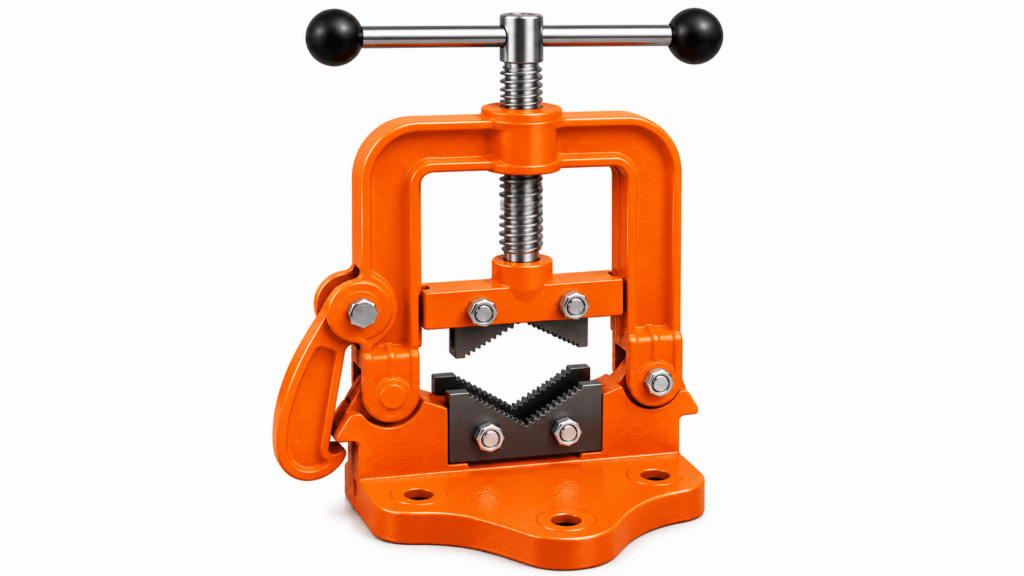
It typically consists of a strong metal base, a hinged upper frame called the yoke, a threaded feed screw, and specially shaped jaws. The operator places the pipe between the jaws and turns the handle to lower the upper jaw and hold the pipe firmly.
Many bench-mounted models are made from cast iron or other strong materials, while their gripping jaws are commonly manufactured from hardened alloy steel.
The main purpose of this tool is to prevent the pipe from rotating or moving while work is being performed. A properly selected and securely mounted vise can provide stable support for repeated workshop tasks.
How Does a Yoke Pipe Vise Work?
The operating principle is simple. The threaded feed screw converts the turning movement of the handle into downward pressure.
First, the operator lifts or opens the yoke to create enough space for the pipe. The pipe is then positioned on the lower jaw, with the working area kept as close to the vise as practical.
After positioning the pipe, the yoke is closed and the handle is turned. This moves the feed screw downward, pressing the upper jaw against the pipe and holding it between the two gripping surfaces.
The shaped and serrated jaws help resist movement during the job. When the work is complete, the handle is turned in the opposite direction to release the pressure, allowing the pipe to be removed.
The amount of pressure should be appropriate for the pipe material and size. Excessive force can damage the pipe or the vise.
Main Parts of a Yoke Pipe Vise
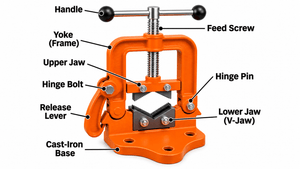
Understanding the main components makes it easier to operate the tool correctly and identify parts that may need inspection or replacement.
1. Yoke Frame
The yoke is the hinged upper frame that moves to open and close the vise. It provides the structure that supports the upper clamping mechanism.
2. Feed Screw
The feed screw is the threaded component that applies pressure to the upper jaw. Turning the handle moves the screw up or down.
3. Operating Handle
The handle is used to rotate the feed screw. Its crossbar design provides leverage and makes it easier to tighten or release the vise.
4. Upper Jaw
The upper jaw applies pressure to the pipe from above. Its shape and gripping surface help hold the pipe in position.
5. Lower Jaw
The lower jaw supports the pipe from underneath. Many designs use a V-shaped gripping surface to accommodate round pipes.
6. Base
The base supports the vise and provides the mounting points used to secure it to a workbench or suitable work platform.
7. Hinge Bolt and Pivot Points
The hinge bolt and related pivot components allow the yoke to move while keeping the assembly connected to the base. Their condition is important for smooth and reliable operation.
Note: Component shapes and arrangements can vary between manufacturers and models. Some models include additional features such as pipe rests or pipe-bending facilities.
Common Uses of a Yoke Pipe Vise
A yoke pipe vise is useful in workshops and on installation jobs where pipes need to remain stable during manual work.
Pipe Cutting
The vise can hold a pipe securely while the operator cuts it with a suitable pipe-cutting tool or saw. Stable positioning helps improve control during the cutting process.
Pipe Threading
When external threads are being cut onto a pipe, the vise helps prevent the pipe from rotating under the force applied by a manual threading tool.
The vise does not cut the threads itself. It simply holds the pipe while the threading equipment does the work.
Reaming and Deburring
After cutting a pipe, sharp edges and internal burrs may remain. Holding the pipe in a vise makes it easier to use a suitable reamer or deburring tool.
Pipe Installation and Maintenance
The vise is also useful during preparation, inspection, and repair work when a pipe needs to be held securely for a particular operation.
Types of Yoke Pipe Vises
Yoke pipe vises are available in different mounting arrangements, depending on the working environment.
Bench-Mounted Yoke Pipe Vise
A bench-mounted model is designed to be fixed to a stable workbench or suitable workshop platform. It is a practical choice for regular workshop use.
The mounting base usually includes holes for securing the vise with appropriate fasteners.
Portable Yoke Pipe Vise
Portable models are designed for situations where a permanently mounted vise is not practical. Depending on the design, they may attach to a plank, workbench, or suitable support using a clamping mechanism.
They are useful for installation and maintenance work that requires equipment to be moved between locations.
Not every yoke vise is portable, so check the mounting arrangement before purchasing.
6 Things to Consider When Choosing a Yoke Pipe Vise
Choosing the right vise depends on the pipe sizes you work with, the type of jobs you perform, and the working environment.
1. Pipe Capacity
Pipe capacity is one of the most important specifications. It indicates the range of pipe sizes that the vise is designed to hold.
For example, RIDGID offers bench yoke vise models with different capacities, including 1/8–2 inches, 1/8–3 inches, 1/8–4 inches, and 1/8–6 inches.
Always check the manufacturer’s stated capacity rather than assuming that every model can handle the same pipe sizes.
2. Construction Material
The frame and base should be strong enough for the intended workload. Many professional bench models use iron construction, while the gripping jaws may be made from hardened alloy steel.
Check the material specifications and overall construction quality before buying.
3. Jaw Quality
The jaws are responsible for gripping the pipe. Their shape, hardness, and condition affect how securely the pipe is held.
Look for durable jaws with suitable gripping surfaces. Replacement jaw availability is also worth considering if the vise will be used regularly.
4. Mounting Stability
A vise must be securely mounted before use. Check the base design, mounting holes, and compatibility with your workbench or support platform.
A stable mounting arrangement helps reduce unwanted movement during operation.
5. Size and Portability
Consider where the vise will be used most often.
A bench-mounted model is suitable for a permanent workshop, while a portable design may be more convenient for maintenance and installation jobs at different locations.
Also consider the weight and space required for storage and transportation.
6. Spare Parts and Maintenance
A good vise should be practical to maintain. Check whether replacement jaws and other service parts are available.
Inspect the screw, handle, hinge, and gripping surfaces regularly. A damaged or worn component can affect the vise’s ability to hold a pipe securely.
Yoke Pipe Vise vs. Chain Pipe Vise
Yoke and chain pipe vises are both designed to hold pipes, but they use different clamping arrangements.
A yoke pipe vise uses a hinged frame and a threaded screw to press the pipe between its jaws. A chain pipe vise uses a chain that wraps around the pipe and secures it against the gripping surface.
A yoke design is commonly found in bench-mounted workshop vises, while chain designs are available in both bench and portable configurations.
Neither design is automatically better for every job. The right choice depends on pipe size, work location, mounting requirements, and the type of work being performed.
Safety and Maintenance Tips
Correct setup and regular inspection are important when using any heavy-duty pipe vise.
- Secure the vise to a level, stable workbench or suitable support before use.
- Check the mounting fasteners before starting work.
- Inspect the jaws for worn or damaged teeth.
- Clean the gripping surfaces when necessary to help maintain proper contact with the pipe.
- Avoid using excessive force when tightening the feed screw.
- Never use an extended handle or an improvised extension to increase leverage.
- Support long pipes with suitable pipe stands to reduce unnecessary loading on the vise.
- Wear appropriate eye and foot protection during pipe work.
If the vise has damaged parts, loose mounting hardware, or worn gripping teeth, correct the problem before using it again.
Related Articles
If you work with plumbing and pipe installation tools, these guides may also be useful:
Best Manual Pipe Threaders: Types, Uses, and How to Choose the Right Tool.
Best Pipe Wrenches for Professional and Construction Work.
External Reference
For additional information about pipe vise installation, operation, inspection, and maintenance, consult the manufacturer’s official documentation:
RIDGID – Pipe Vise User Guide (PDF)
Final Thoughts
A yoke pipe vise is a useful tool for professionals who regularly work with metal pipes. By holding the pipe securely, it makes cutting, threading, and other preparation tasks easier to control.
Before choosing one, pay attention to pipe capacity, jaw quality, construction, mounting stability, and spare parts availability. Selecting a vise that matches your working requirements can make everyday pipe work more practical and reliable.