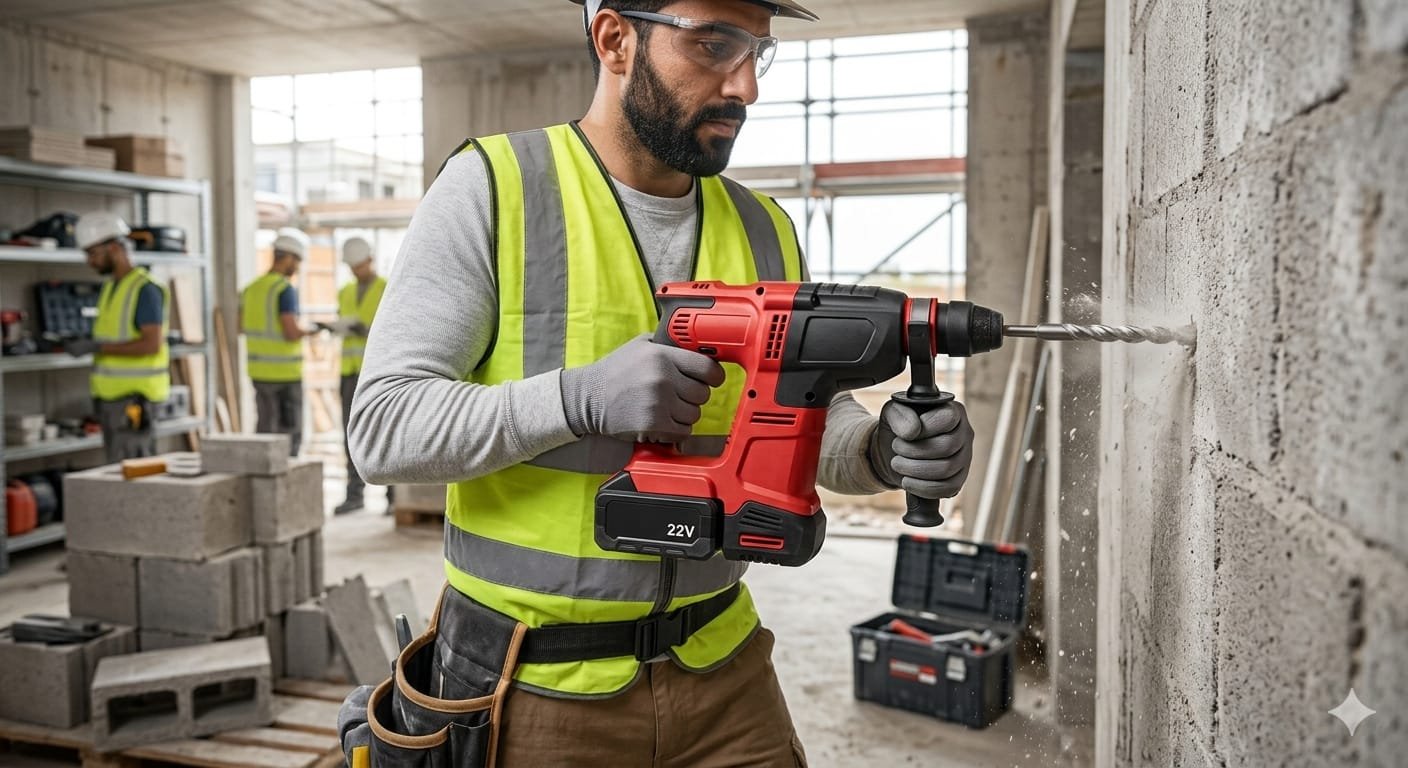
When it comes to drilling into tough surfaces like concrete, brick, or masonry, a standard drill driver just won’t cut it. To get the job done efficiently without burning out your tools, you need a cordless drill specifically engineered for heavy-duty masonry work.
Modern cordless technology has evolved significantly. Today’s high-voltage battery platforms deliver the same hitting power as old corded industrial tools, giving tradespeople and DIYers total freedom on the job site. Here is what you need to look for when choosing the best cordless drill for walls and concrete.
1. Rotary Hammer vs. Hammer Drill: Know the Difference
The most common mistake is buying a standard hammer drill for heavy concrete.
- Hammer Drills: Use two spinning ribbed discs to create a vibrating action. They are fine for occasional drilling into soft brick or light mortar, but they struggle with poured concrete.
- Rotary Hammers (SDS Plus): Use a pneumatic piston mechanism to strike the back of the drill bit directly. This creates a massive impact force, allowing the tool to pulverize hard concrete with ease. For professional or frequent wall drilling, an SDS Plus rotary hammer is the industry standard.
2. Battery Platform and Voltage (The Power Source)
For drilling concrete, voltage equals torque and hitting energy. You should look for cordless tools built on high-performance brushless motors and advanced battery ecosystems.
Heavy-duty jobs require a platform that prevents overheating under load. High-capacity systems, such as modern 22V or 36V platforms, run cooler and deliver sustained power, allowing you to drill dozens of holes on a single charge without losing speed.
3. Impact Energy (Measured in Joules)
When looking at the specifications of a rotary hammer, pay close attention to the Impact Energy rating, which is measured in Joules (J).
- For light residential tasks and anchoring, 1.5 to 2.5 Joules is perfect.
- For heavy demolition, chiseling, or large-diameter holes, look for a heavy-duty tool that delivers over 3 Joules of impact energy.
4. Dust Removal and Health Safety
Drilling into concrete generates a huge amount of hazardous silica dust. Breathing this in is dangerous for your lungs, and the dust can also get inside the tool and destroy the motor.
Always look for a cordless system that supports an integrated dust removal module (DRS). These attachments click directly onto the tool and draw power from the main battery, vacuuming up the dust right at the hole before it becomes airborne.
5. Vibration Reduction (AVR)
Drilling into stone or concrete subjects your hands and arms to intense vibrations. Over long hours, this causes fatigue and can lead to joint injuries. Premium tools feature Active Vibration Reduction (AVR) systems, which isolate the handles from the motor chassis, allowing you to work longer and more comfortably.
Summary Recommendation
If you only need to hang a few pictures on drywall or soft brick, a standard compact cordless drill with a hammer setting will work fine.
However, if you are a tradesperson or a DIYer regularly working with solid concrete, stone, or structural walls, invest in a dedicated brushless cordless rotary hammer. Look for a tool backed by a reliable high-voltage battery ecosystem, active dust collection, and safety clutches to protect your wrists if the bit binds. Having the right tool will save your energy, your time, and your wrists on every job.
Leave a Reply