Hearing protection for construction is essential on noisy building sites. Power tools, concrete breakers, grinders, drills and heavy machinery can expose workers to harmful noise every day.
Regular exposure to excessive noise can cause permanent hearing damage and tinnitus (ringing in the ears). Once hearing is damaged, it cannot always be restored.
Choosing the right hearing protection is therefore an important part of working safely on a construction site. The best option depends on the noise level, the task, comfort, and whether the worker needs to wear other personal protective equipment.
In this guide, we explain six common types of hearing protection, their advantages, and what to consider before choosing one.
Why Is Hearing Protection Important on Construction Sites?
Many construction activities produce high noise levels. Workers who regularly use or work near drills, grinders, concrete breakers, saws, and compressors may be at risk of hearing damage.
Hearing problems can develop gradually, so workers may not notice the damage until it becomes serious.
Hearing protection helps reduce the amount of noise reaching the ears. However, ear defenders and earplugs should not be the only safety measure. Reducing noise at its source, maintaining equipment, and limiting exposure time are also important.
6 Types of Hearing Protection for Construction Workers
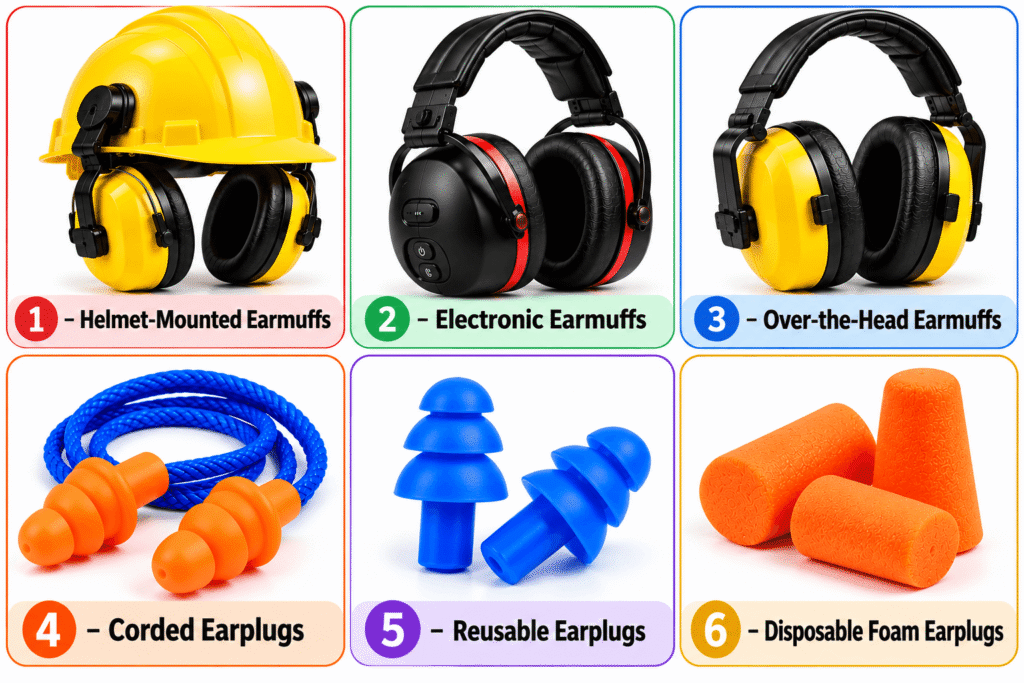
There are several types of hearing protection available. The following six options are commonly used in construction and other noisy workplaces.
1. Helmet-Mounted Earmuffs
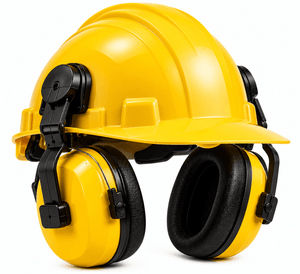
Helmet-mounted earmuffs attach directly to compatible safety helmets. They are designed for workers who need both head protection and hearing protection.
They are commonly used on construction sites where workers wear safety helmets throughout the working day.
Advantages:
- Attach directly to compatible safety helmets.
- Easy to move into position when needed.
- Convenient for workers who regularly use both types of protection.
- Available with different noise-reduction ratings.
What to consider:
Not every earmuff fits every safety helmet. Always check compatibility with the helmet and follow the manufacturer’s instructions. The ear cushions must form a proper seal around both ears.
2. Electronic Earmuffs
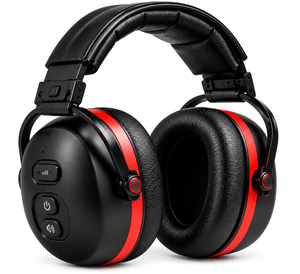
Electronic earmuffs are designed to reduce harmful noise while using built-in electronic features to help users hear certain surrounding sounds, depending on the model.
Some models use external microphones and limit amplified sound when noise becomes too loud. Other models may include communication or radio features.
They can be useful for workers who need hearing protection while communicating with colleagues.
Advantages:
- Some models help users hear conversations and surrounding sounds.
- Certain models include communication features.
- Suitable options are available for different work environments.
What to consider:
Electronic features do not automatically mean better hearing protection. Check the product’s noise-reduction rating, operating instructions, battery requirements, and suitability for the task.
3. Over-the-Head Earmuffs
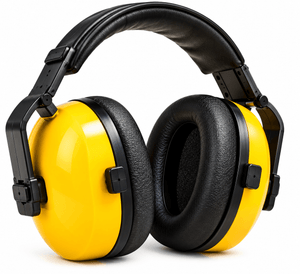
Over-the-head earmuffs are one of the most recognisable types of hearing protection.
They have two padded ear cups connected by an adjustable headband. The cups cover the ears and help reduce the amount of noise reaching the ear canal.
They are commonly used by construction workers, workshop employees, and people operating noisy power tools.
Advantages:
- Easy to put on and remove.
- Reusable with proper cleaning and maintenance.
- Available in different sizes and noise-reduction ratings.
- Do not need to be inserted into the ear canal.
What to consider:
The ear cups must fit comfortably and seal properly around the ears. Glasses, hair, hats, and other equipment can interfere with the seal and reduce protection.
4. Corded Earplugs
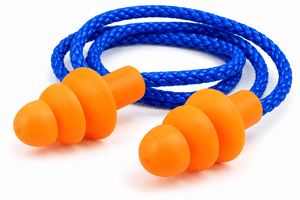
Corded earplugs are small hearing protectors connected by a flexible cord. The cord helps prevent them from getting lost when removed temporarily.
They are available in different materials and designs, including reusable styles.
Advantages:
- Convenient to carry around the neck when not in use.
- Less likely to be lost than separate earplugs.
- Compact and easy to store.
- Useful for workers who move between noisy and quieter areas.
What to consider:
The earplugs must fit correctly inside the ear canal. Always follow the manufacturer’s fitting and cleaning instructions. A cord does not improve the actual noise-reduction rating.
5. Reusable Earplugs
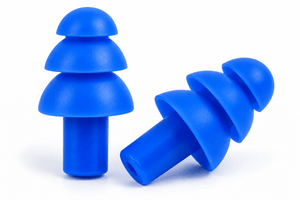
Reusable earplugs are designed to be used more than once. Many models are made from soft silicone and feature several flexible flanges to help create a seal inside the ear canal.
They are a practical option for workers who regularly need hearing protection.
Advantages:
- Can be reused when properly cleaned and maintained.
- Often supplied with a storage case.
- Available in different sizes and designs.
- Compact and easy to carry.
What to consider:
Reusable earplugs need regular cleaning according to the manufacturer’s instructions. They should not be shared with other workers. Replace them if they become damaged, lose their shape, or no longer fit properly.
6. Disposable Foam Earplugs

Disposable foam earplugs are made from soft, compressible foam. They are rolled between clean fingers before being inserted into the ear canal, where they expand to create a seal.
They are widely used in construction, manufacturing, workshops, and other noisy environments.
Advantages:
- Lightweight and inexpensive.
- Compact and easy to carry.
- Available in different sizes and noise-reduction ratings.
- Useful for workplaces that provide single-use hearing protection.
What to consider:
Correct fitting is essential. Roll the earplug as instructed, insert it carefully, and allow it to expand. Always use clean hands and dispose of single-use earplugs after use.
How to Choose the Right Hearing Protection
Choosing hearing protection is not simply about buying the product with the highest noise-reduction rating. The right choice depends on the actual noise exposure and the working environment.
Consider these important factors before buying:
1. Noise Reduction Rating
Check the product’s SNR (Single Number Rating) or other applicable noise-attenuation information.
The rating helps indicate how much noise the protector can reduce under specified test conditions. However, the correct level should be selected using a suitable assessment of workplace noise.
Too little protection may leave workers exposed to harmful noise, while too much protection can make it difficult to hear conversations, warning signals, and other important sounds.
2. Comfort and Fit
Hearing protection must fit properly and feel comfortable enough to wear throughout noisy tasks.
Earmuffs should cover the ears completely without gaps around the cushions. Earplugs should fit securely and comfortably inside the ear canal.
An uncomfortable product may encourage workers to remove it, reducing protection.
3. Compatibility With Other PPE
Construction workers often need to wear several types of personal protective equipment at the same time.
For example, earmuffs must work properly with safety helmets, safety glasses, and other equipment.
For more information, read our guides:
How to Choose the Right Safety Helmet for Construction Work
How to Choose the Right Safety Glasses for Construction Work
4. Hygiene and Maintenance
Reusable hearing protectors need regular inspection and cleaning.
Check earmuff cushions for damage, make sure headbands maintain their tension, and replace worn components when necessary.
Keep reusable earplugs clean and store them in a suitable case. Disposable foam earplugs should be replaced according to their instructions.
5. The Type of Work
Different construction tasks create different noise conditions.
Workers using grinders, concrete breakers, drills, and cutting equipment may need different levels of hearing protection depending on the measured noise exposure.
Choose protection that suits the task, the environment, and the worker’s needs.
Important Hearing Protection Advice for Construction Workers
Hearing protection works best when it is selected correctly and worn properly.
Keep these points in mind:
- Wear suitable hearing protection whenever required by the workplace noise assessment.
- Follow the manufacturer’s fitting instructions.
- Do not remove hearing protection while still exposed to harmful noise.
- Keep reusable protectors clean and in good condition.
- Replace damaged or worn hearing protection.
- Make sure you can still hear essential warning signals where required.
- Follow site safety rules and instructions from supervisors.
Remember that hearing protection should support other noise-control measures, not replace them.
What Does UK Safety Guidance Say About Hearing Protection?
In the UK, the Health and Safety Executive (HSE) provides guidance on controlling noise risks in the workplace.
Employers should assess noise exposure, reduce noise where reasonably practicable, and provide suitable hearing protection when additional protection is needed.
HSE also explains that hearing protectors must be selected carefully. Excessive noise reduction can make communication and warning signals difficult to hear.
For official guidance, visit the HSE page:
You can also read the HSE’s construction-specific guidance on noise risks in construction.
Final Thoughts
Choosing the right hearing protection is an important part of construction site safety. Whether you choose helmet-mounted earmuffs, electronic earmuffs, over-the-head earmuffs, corded earplugs, reusable earplugs, or disposable foam earplugs, the most important thing is selecting a suitable product and wearing it correctly.
Always consider workplace noise levels, comfort, fit, hygiene, and compatibility with other protective equipment.
Protecting your hearing today can help prevent permanent hearing problems in the future.