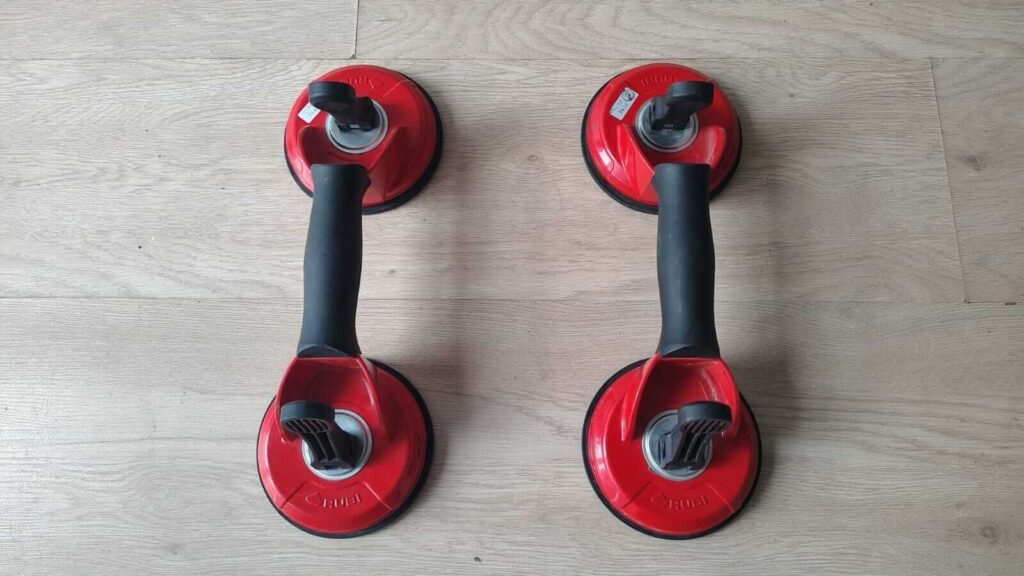
A double suction cup lifter is a practical tool for professionals who handle glass, ceramic tiles, mirrors, and other large, flat materials. It uses two suction pads connected by a handle to create a secure grip on a suitable surface, making it easier to lift, position, and move materials during installation.
For tile installers, glaziers, and construction workers, this tool can make handling large materials more comfortable and controlled. However, choosing the right model and using it correctly are essential for safe operation.
In this guide, we explain how double suction cup lifters work and share seven essential tips to help you choose, use, and maintain one.
What Is a Double Suction Cup Lifter?
A double suction cup lifter is a manual handling tool fitted with two rubber suction pads and a connecting handle. The pads attach to a suitable smooth surface by creating a vacuum seal when the locking levers are engaged.
Unlike a single suction cup, the double design provides two contact points and a convenient handle for gripping and positioning materials.
These tools are commonly used for handling:
- Glass panels and windows.
- Mirrors.
- Smooth ceramic tiles.
- Polished stone and other suitable flat materials.
The actual suitability depends on the surface finish, the condition of the suction pads, and the manufacturer’s specifications.
7 Essential Tips for Choosing and Using a Double Suction Cup Lifter
1. Choose a Suction Cup Suitable for the Surface
The first thing to consider is the material you intend to handle.
Standard double suction cup lifters are generally designed for clean, flat, smooth, and non-porous surfaces. They may work well on suitable glass, mirrors, and polished tiles.
However, textured, rough, porous, or heavily structured surfaces can prevent the rubber pads from forming a reliable vacuum seal.
If you regularly handle textured ceramic tiles, choose a model specifically designed for rough surfaces. Never assume that a standard suction cup will work on every type of tile.
2. Check the Maximum Lifting Capacity
Every suction cup lifter has a maximum rated capacity specified by its manufacturer.
Before buying or using one, check:
- The maximum permitted load.
- The type of surface covered by the rating.
- Whether the rating applies to horizontal or vertical handling.
- Any additional restrictions in the manufacturer’s instructions.
Remember that a higher lifting capacity does not automatically make a tool suitable for every material.
Never exceed the rated capacity. Also, do not assume that using two suction cups means you can simply double the lifting capacity of one cup.
3. Inspect the Rubber Pads Before Every Use
The rubber suction pads are among the most important parts of the tool.
Before attaching the lifter, check them for:
- Cuts or cracks.
- Deformation or damaged edges.
- Dirt, dust, or grease.
- Signs of hardening or excessive wear.
Even small damage can affect the vacuum seal and reduce the tool’s grip.
If the pads are damaged or cannot maintain a reliable seal, replace the tool or its pads according to the manufacturer’s instructions.
4. Clean Both the Surface and the Suction Pads
Dust, grease, moisture, and other contamination can interfere with the suction seal.
Before use, clean the material where the pads will be attached. Also make sure the rubber pads are clean and free from debris.
Allow the surfaces to dry when required by the manufacturer’s instructions.
Position both suction pads completely flat against the material. Avoid placing them across edges, joints, cracks, or uneven areas.
A clean contact surface is an important part of achieving a reliable grip.
5. Use the Locking Levers Correctly
Most manual double suction cup lifters use locking levers to create and release the vacuum.
To use this type of tool:
- Place both suction pads flat against the suitable surface.
- Make sure the rubber edges have full contact.
- Operate the locking levers according to the manufacturer’s instructions.
- Check that both pads are securely attached before handling the material.
- Release the vacuum using the designated release mechanism after positioning the material.
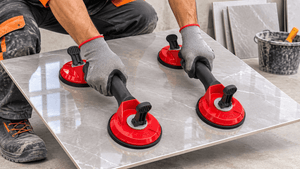
Never force a lever or use a damaged locking mechanism. If either suction pad fails to hold properly, stop and correct the problem before lifting.
6. Consider the Handle Design and Your Working Conditions
A comfortable handle makes a difference when handling large or heavy materials.
Look for a design that offers:
- A comfortable and secure grip.
- Enough clearance for your fingers.
- A strong connection between the handle and suction pads.
- A practical shape for the type of work you perform.
Also consider the size and weight of the material, the distance it needs to be moved, and whether one or more workers are required.
For large glass panels and heavy tiles, use an appropriate team-lifting method or mechanical handling equipment when necessary.
7. Store and Maintain the Tool Properly
Good maintenance helps extend the service life of a double suction cup lifter.
After use:
- Clean the rubber pads.
- Remove dust and other contamination.
- Check the locking levers and handle.
- Store the tool in a clean, dry place.
- Follow the manufacturer’s storage instructions.
Avoid exposing the rubber pads to oils, solvents, excessive heat, or other substances that may damage them.
Regular inspection is particularly important for tools used frequently on construction sites.
Safety Precautions When Using a Double Suction Cup Lifter
Although a double suction cup lifter is a useful handling tool, it should not be treated as a permanent support or a substitute for proper lifting equipment.
Keep these precautions in mind:
- Never use a suction cup on cracked or unsuitable material.
- Do not exceed the manufacturer’s rated capacity.
- Keep your hands and feet clear of potential drop zones.
- Never stand under a suspended load.
- Do not use the tool to lift people.
- Do not rely on a suction cup as the only support for overhead materials.
- Stop immediately if either suction pad begins to lose its grip.
For large or heavy panels, use appropriate lifting equipment and follow safe manual-handling procedures.
Choosing the right protective clothing is also important on a construction site. Read our guide to Construction Workwear: How to Choose the Right Work Clothes for practical advice on selecting suitable workwear.
Protecting your hands is equally important when handling glass and ceramic tiles. Check our guide on How to Choose the Right Work Gloves for Construction Jobs to learn about different types of work gloves.
Double Suction Cup Lifter vs. Single Suction Cup Lifter
Both tools are useful, but they serve slightly different handling needs.
| Feature | Single Suction Cup | Double Suction Cup |
|---|---|---|
| Suction pads | One | Two |
| Design | Compact | Longer handle design |
| Handling | Smaller suitable materials | Larger suitable materials |
| Grip points | One | Two |
| Typical use | General handling | Positioning and moving larger panels |
The best choice depends on the material, its dimensions, the working conditions, and the manufacturer’s rated capacity.
Is a RUBI Double Suction Cup Lifter Worth Considering?
RUBI is a recognised manufacturer of tools for tile installation and handling.
Its double suction cup lifter range includes models designed for handling large-format ceramic tiles and other suitable materials.
For example, the RUBI Double Suction Cup, reference 66900, is listed in the manufacturer’s product range. RUBI also offers separate suction cup models designed for rough or slightly textured tile surfaces.
Before purchasing, check the exact model number, surface compatibility, and rated capacity.
You can find product information on the official RUBI Double Suction Cup page.
When comparing products on Amazon, make sure the listing matches the intended application. Pay attention to the model, pad material, handle construction, and manufacturer’s specifications rather than choosing only by appearance or price.
Final Thoughts
A double suction cup lifter can be a valuable addition to the equipment used by tile installers, glaziers, and other construction professionals.
The right tool can make handling suitable glass panels and ceramic tiles more convenient, but safe operation depends on choosing the correct model, checking the suction pads, preparing the surface, and respecting the manufacturer’s lifting limits.
Whether you are buying your first suction cup lifter or replacing an older one, take the time to compare its design, capacity, and intended applications.
A suitable tool, properly maintained and used according to its instructions, can make material handling more controlled and efficient.