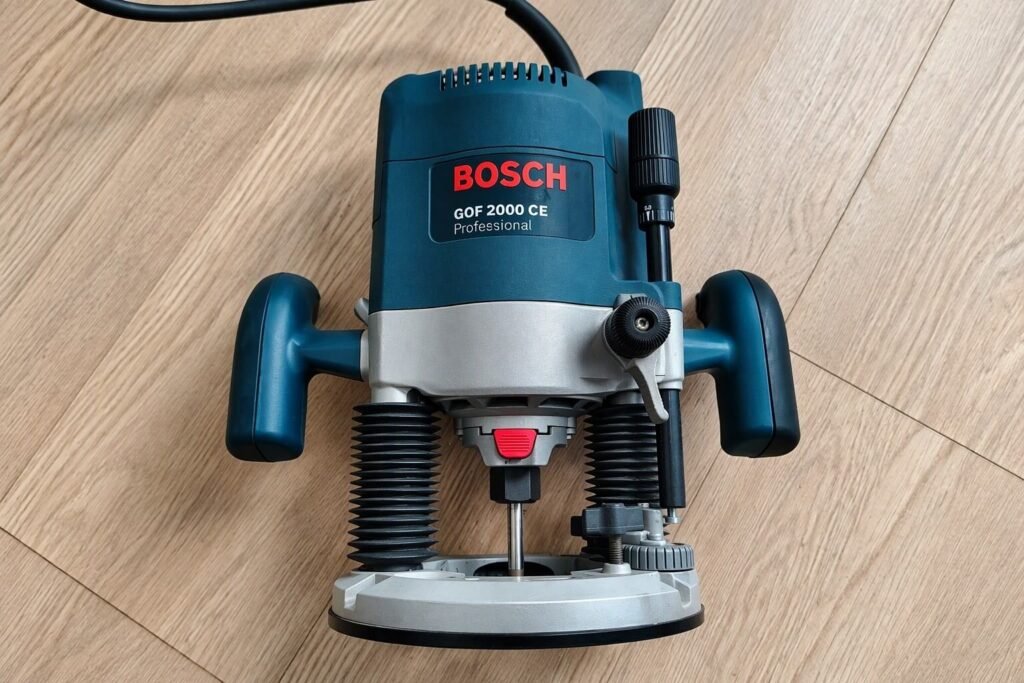
The Bosch GOF 2000 CE Professional is a powerful plunge router designed for woodworking tasks that require accurate grooves, edges, profiles, and other detailed cuts. With a 2,000 W motor, variable speed control, and a plunge depth of up to 65 mm, it is built for demanding workshop applications.
Choosing the right router is important for both professional woodworkers and experienced DIY users. Understanding the machine’s features, accessories, and correct operating methods can help you achieve cleaner results and work more safely.
In this guide, we look at the Bosch GOF 2000 CE Professional, its main specifications, common applications, and practical advice for getting better results.
Bosch GOF 2000 CE Professional: Main Features
The GOF 2000 CE is a plunge router. Unlike a fixed-base router, its motor and cutting bit move vertically through a controlled plunging mechanism. This allows the user to start a cut inside a workpiece rather than only at its edge.
Its main features include:
- Powerful 2,000 W motor: Designed for demanding routing applications.
- Variable speed control: Allows the operator to select a suitable speed for the material and router bit.
- Constant electronic control: Helps maintain a more consistent speed under load.
- Plunge mechanism: Provides controlled vertical movement during cutting.
- Depth adjustment system: Allows accurate adjustment of the cutting depth.
- Dust extraction connection: Supports connection to a suitable dust extraction system.
- Compatible collets: The specified tool holder range is 8–12.7 mm, depending on the correct collet fitted.
These features make the machine suitable for a range of woodworking operations when the correct router bit and accessories are used.
Bosch GOF 2000 CE Technical Specifications
The following specifications are taken from Bosch’s operating instructions. The electrical figures below apply to the 230 V version; specifications may vary by market or model variant.
| Specification | Bosch GOF 2000 CE |
|---|---|
| Rated input power | 2,000 W |
| No-load speed | 8,000–21,000 rpm |
| Speed selection | Variable, settings 1–6 |
| Constant electronic control | Yes |
| Tool holder range | 8–12.7 mm |
| Plunge depth | 65 mm |
| Dust extraction connection | Yes |
| Weight | Approximately 6.0 kg |
| Protection class | Class II |
Always check the rating plate on your own machine before connecting it to the power supply.
What Can You Use the Bosch GOF 2000 CE For?
A plunge router is a versatile woodworking tool. The GOF 2000 CE is intended for routing grooves, edges, profiles, elongated holes, and copy-routing applications.
Common uses include:
1. Cutting Grooves and Channels
A router can cut straight grooves in wooden panels, boards, and other suitable materials. These grooves can be used for joints, fittings, decorative details, and other woodworking applications.
2. Shaping Edges
With the correct profile bit, the router can create rounded, bevelled, and decorative edges. This is useful when finishing cabinet doors, shelves, table edges, and furniture components.
3. Creating Profiles and Decorative Details
Different router bits allow woodworkers to create decorative shapes and profiles. The final result depends on the selected bit, material, speed, and feed technique.
4. Copy Routing
With a suitable guide bushing or template system, the router can follow a pattern to reproduce a shape. This is useful when several identical parts are required.
5. Working With Plastics and Suitable Light Building Materials
Bosch also specifies applications in plastics and light building materials. The correct bit, speed, and working method must be selected for the material.
The manufacturer also permits machining non-ferrous alloys with appropriate router bits and reduced speed. This should only be attempted by users familiar with the process and the material requirements.
Understanding the Main Parts of the Router
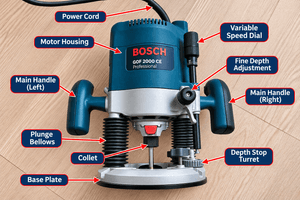
Knowing the main parts of the GOF 2000 CE makes setup and operation easier.
- Motor Housing: Contains the motor and ventilation openings.
- Variable Speed Dial: Used to select the operating speed.
- Handles: Provide control and a firm grip during operation.
- On/Off Switch: Controls the power to the machine.
- Lock-on Button: Keeps the switch in the operating position when used as designed.
- Depth Adjustment System: Allows the cutting depth to be set.
- Depth Stop: Helps control the maximum plunge depth.
- Collet: Holds the router bit securely.
- Base Plate: Rests on the workpiece and supports the router during cutting.
- Dust Extraction Connection: Allows a suitable extraction system to be connected.
The labelled image in this article is intended to help readers identify the main components. Always refer to the Bosch manual for the exact component names and operating instructions.
How to Use the Bosch GOF 2000 CE
Correct setup is essential before starting any routing operation.
Step 1: Choose the Correct Router Bit
Select a router bit suitable for the material and the intended cut. Check that its shank diameter matches the collet fitted to the machine.
Step 2: Disconnect the Power
Before installing or changing a router bit, unplug the machine from the electrical supply.
Step 3: Install the Router Bit
Fit the bit correctly into the collet and tighten it using the recommended procedure. Bosch specifies that the bit shank must be inserted sufficiently into the collet. Never operate the router with a loose or incorrectly fitted bit.
Step 4: Set the Cutting Depth
Adjust the depth while the machine is switched off. For deeper cuts, use several passes rather than trying to remove too much material in one operation.
Step 5: Select the Speed
Choose a suitable speed according to the material, bit diameter, and manufacturer’s recommendations. If you are unsure, begin with a test cut on a spare piece of the same material.
Step 6: Secure the Workpiece
Clamp the workpiece firmly so that it cannot move during routing. Make sure the router base has stable support.
Step 7: Make the Cut
Hold the router firmly with both hands. Start the machine according to the manual, lower it carefully to the selected depth, and move it at a steady feed rate.
After completing the cut, allow the router to return to its upper position before switching it off.
7 Practical Tips for Better Routing Results
Using a powerful router does not automatically guarantee a clean finish. Good preparation and correct technique are just as important.
1. Match the Router Bit to the Job
Choose a bit designed for the material and the type of cut. A suitable bit helps produce a cleaner finish and reduces unnecessary strain on the machine.
2. Check the Collet Size
The GOF 2000 CE supports tool holder sizes from 8 mm to 12.7 mm. Always use the correct collet for the router bit. Never force a bit into an incompatible collet.
3. Adjust the Speed to the Material
Different materials and bit diameters require different speeds. A large-diameter bit generally requires a lower speed than a smaller bit. Follow Bosch’s speed recommendations and test the setting on scrap material.
4. Use Several Passes for Deep Cuts
Do not try to remove too much material in one pass. Multiple shallow passes provide better control and can reduce stress on the bit and motor.
5. Feed Against the Direction of Rotation
Follow the feed direction specified by Bosch. The normal routing direction is against the rotation of the bit. Feeding in the wrong direction can cause the router to pull away from the operator and become difficult to control.
6. Keep the Workpiece Secure
Use clamps or a suitable workholding system to prevent movement. A stable workpiece helps improve accuracy and reduces the risk of accidents.
7. Control Dust and Wear Safety Equipment
Wood dust can be harmful, especially when working with certain hardwoods. Use suitable dust extraction, keep the work area ventilated, and wear appropriate respiratory, eye, and hearing protection.
Safety Advice Before Using the Router
The Bosch GOF 2000 CE is a powerful machine, so safe operation should always come first.
- Read the original Bosch operating manual before using the tool.
- Disconnect the power before changing bits or making adjustments.
- Inspect the router bit for damage before each use.
- Make sure the collet and bit are properly secured.
- Keep both hands on the handles during operation.
- Secure the workpiece before routing.
- Wear safety glasses and hearing protection.
- Use suitable dust extraction and respiratory protection.
- Keep hands away from the rotating bit.
- Wait until the router bit has completely stopped before putting the machine down.
Never remove guards or modify the machine’s safety components.
Is the Bosch GOF 2000 CE a Good Choice?
The Bosch GOF 2000 CE offers a powerful motor, variable speed control, a plunge mechanism, and a useful depth adjustment system. These features make it a capable option for demanding woodworking applications.
However, its weight of approximately 6 kg means that it may feel heavy during extended work or when handling smaller components. It is important to consider the type of work you do, the accessories available, and whether the machine’s size and weight suit your workshop.
For professional woodworkers and experienced users who need a powerful plunge router, the GOF 2000 CE is worth considering. Beginners should take time to learn the correct setup and operating techniques before attempting demanding cuts.
Final Thoughts
The Bosch GOF 2000 CE Professional is designed for a wide range of routing tasks, from cutting grooves to shaping edges and following templates. Its 2,000 W motor, variable speed control, and 65 mm plunge depth give it the capabilities needed for many workshop applications.
As with any power tool, good results depend on choosing the correct router bit, setting the right speed, securing the workpiece, and following safe operating procedures.
For the best results, always consult the original Bosch manual and use accessories that are compatible with your machine.
Frequently Asked Questions
What is the power of the Bosch GOF 2000 CE?
The Bosch GOF 2000 CE has a rated input power of 2,000 W.
What is the maximum plunge depth?
The specified plunge depth is 65 mm.
What router bit sizes does it support?
The tool holder range is 8–12.7 mm. The correct collet must be fitted for the router bit being used.
Can the Bosch GOF 2000 CE cut aluminium?
Bosch states that non-ferrous alloys can be machined using suitable router bits and reduced speed. Follow the manufacturer’s instructions and use an appropriate setup.
Does the Bosch GOF 2000 CE support dust extraction?
Yes. The machine has a dust extraction connection for use with a suitable extraction system.
Related Articles
Best Portable Air Compressors for Workshop and Construction Use
Bosch Professional Jigsaw: Features, Uses and Safety Guide
Official Bosch Reference
For complete technical specifications, setup instructions, and safety information, consult the Bosch GOF 2000 CE Professional Operating Manual.
ToolsMingle is an independent tools information website and is not affiliated with or endorsed by Bosch.