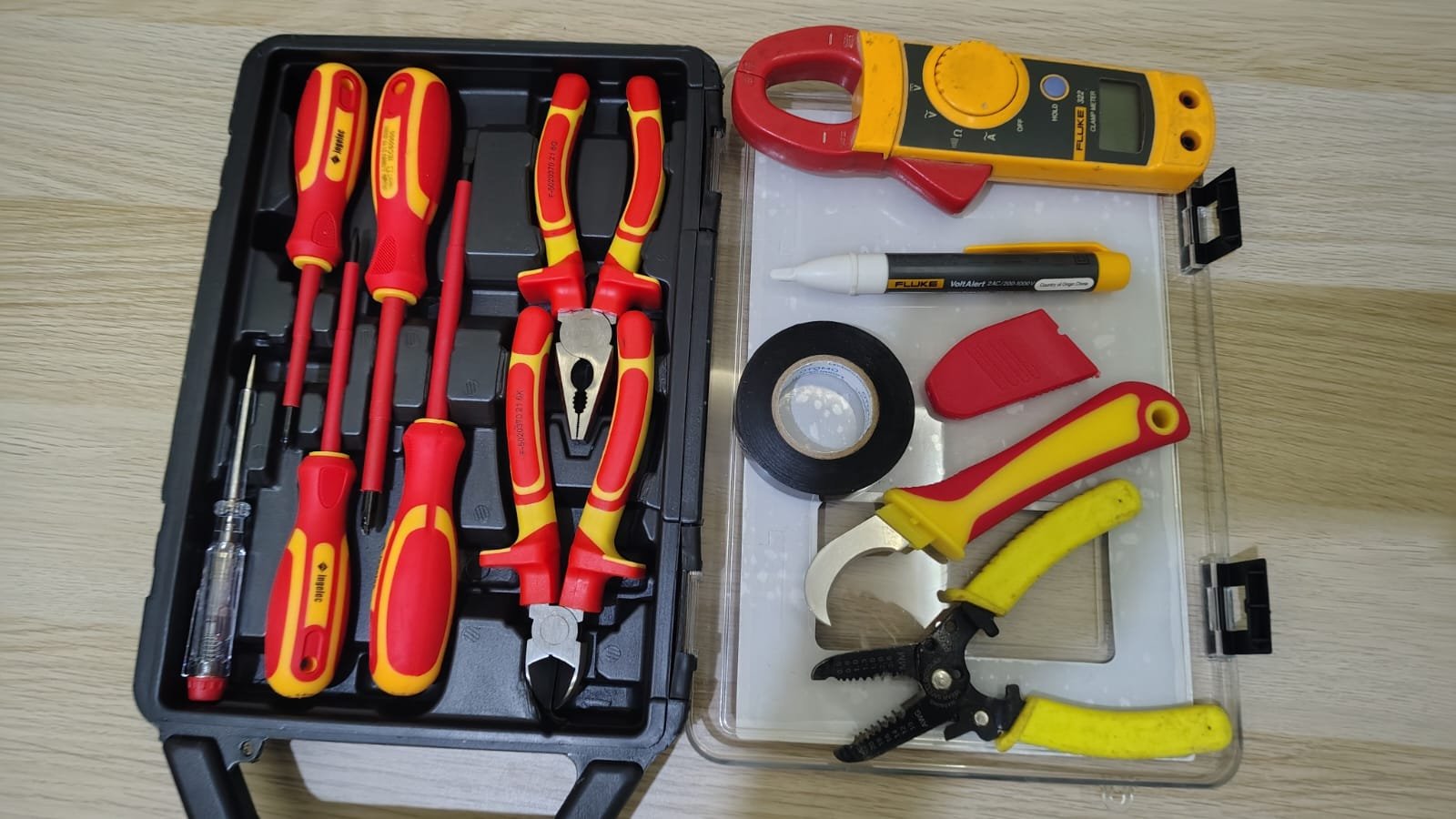
If you’re getting into home electrical work – whether it’s swapping outlets, installing a light fixture, or running new wiring – having the right hand tools makes the difference between a clean, safe job and a frustrating (or dangerous) one.
With over 28 years of hands-on electrical experience, I’ve built a toolbox that covers almost any job around the house. Here are the 5 hand tools I reach for the most, and why every DIY electrician should have them.
1. Insulated Screwdriver Set
A good set of insulated screwdrivers is non-negotiable. Insulated handles protect you from accidental shocks while working near live circuits. Look for a set with both flathead and Phillips heads in a few sizes, rated for at least 1000V.
Tip: Never use a regular, non-insulated screwdriver for electrical work, even “just to loosen one screw.” It’s not worth the risk.
2. Wire Strippers / Cutters
A quality wire stripper saves time and prevents damaged wires. It strips the insulation cleanly without nicking the copper underneath, which can weaken the connection or cause a fire hazard down the line.
Look for a stripper with multiple gauge notches (14, 12, 10 AWG are the most common for household wiring) and a built-in cutter so you don’t need a separate tool.
3. Needle-Nose Pliers
Needle-nose pliers are perfect for bending wire into a hook shape before wrapping it around a screw terminal, and for reaching into tight electrical boxes where your fingers won’t fit. A pair with an integrated wire cutter is even more versatile.
4. Non-Contact Voltage Tester
Before touching any wire, socket, or circuit, you need to know if it’s live. A non-contact voltage tester lets you check instantly without touching bare wires, making it one of the safest and most important tools in your kit.
(We covered this tool in detail in our full guide: Best Voltage Testers for Home Electrical Work.)
5. Fish Tape / Wire Puller
When you need to run new wire through walls, conduit, or ceilings, a fish tape is what gets it there. It’s a long, flexible steel or fiberglass wire with a hook on the end, used to pull cable through tight or hidden spaces without tearing open the whole wall.
Our Recommendation
If you’re just starting out, don’t buy the most expensive version of everything at once. Start with a basic insulated screwdriver set, a decent wire stripper, and a non-contact voltage tester – that covers the vast majority of simple household jobs safely.
As you take on bigger projects, add needle-nose pliers and a fish tape to your kit. In nearly three decades of electrical work, these 5 tools have never left my bag – they’re the foundation everything else builds on.
Leave a Reply