Choosing the best ferrule crimping tools for electricians depends on the wire sizes, ferrules, and terminals used in your electrical work. The right tool helps produce consistent crimps and keeps stranded wire ends organized for compatible electrical connections.
Choosing the right ferrule crimping tool depends on the wire sizes you use, the ferrules you install, and the type of terminals specified for your electrical work. A suitable tool can help produce consistent crimps and make wire preparation more organized.
In this guide, we explain what ferrule crimping tools do, the different types available, and the main features to consider before buying one.
What Are the Best Ferrule Crimping Tools?
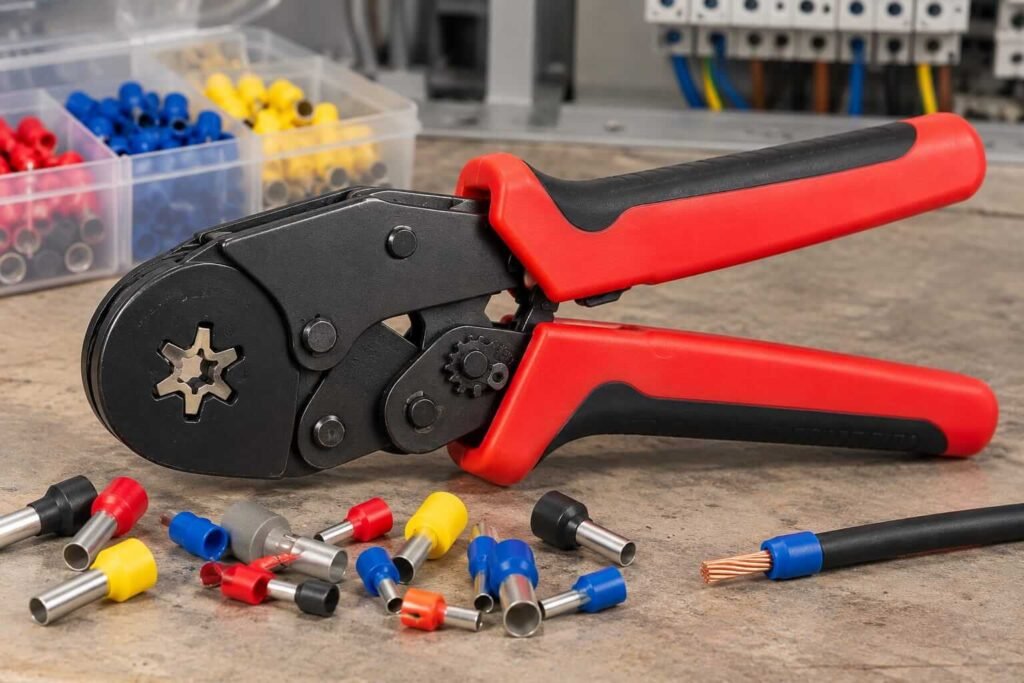
A ferrule crimping tool is designed to compress a metal ferrule onto the stripped end of a stranded conductor. Many wire-end ferrules have an insulating plastic collar that helps guide the wire into a compatible electrical terminal.
Ferrules are commonly used in control panels, electrical cabinets, and other installations where terminals are designed to accept ferrule-terminated conductors.
The tool uses a shaped die to compress the ferrule around the conductor. The correct combination of wire, ferrule, crimping tool, and terminal is essential for a suitable termination.
How to Use a Ferrule Crimping Tool
- Choose the correct ferrule: Match it to the conductor size and the terminal manufacturer’s requirements.
- Strip the wire: Remove the required length of insulation without damaging the copper strands.
- Insert the conductor: Push the stripped wire fully into the ferrule, ensuring that the strands are contained inside the metal sleeve.
- Position the ferrule: Place it in the appropriate crimping die.
- Crimp the ferrule: Operate the tool according to the manufacturer’s instructions.
- Inspect the result: Check that the conductor is properly inserted and that the ferrule is correctly compressed, with no damaged or stray strands.
Always isolate the circuit and verify that it is de-energized before working on electrical conductors.
Types of Ferrule Crimping Tools
Square crimping tools: These produce a roughly square crimp profile and are commonly available for compatible wire-end ferrules.
Hexagonal crimping tools: These produce a six-sided profile and may be suitable for particular ferrule and terminal systems.
Ratcheting crimping tools: These use a mechanism designed to help complete a consistent crimping cycle. The exact operation varies by model.
Self-adjusting crimping tools: Some models adjust to different ferrule sizes within their specified range, which can be convenient for electricians who work with several conductor sizes.
No single crimp profile is best for every application. Check the ferrule and terminal requirements before selecting a tool.
Key Features to Consider Before Buying
The best tool for your work is not necessarily the most expensive one. It should match your usual conductor sizes, ferrules, and installation requirements.
Wire Size Range
Check the minimum and maximum conductor sizes supported by the tool. Some models are intended for small control-panel wires, while others accommodate a wider range.
Choose a tool that covers the sizes you regularly use, and confirm the specifications provided by the manufacturer.
Crimping Profile
Ferrule crimping tools may produce square, hexagonal, trapezoidal, or other crimp profiles. The suitable profile depends on the ferrule and terminal system.
If you regularly work with a specific type of terminal, check the recommended termination method before buying a tool.
Ratcheting Mechanism
A ratcheting mechanism can help provide repeatable crimping cycles when used correctly. It may be particularly useful when preparing many wire ends during electrical installation or control-panel work.
Check that the mechanism operates smoothly and follows the manufacturer’s instructions.
Handle Comfort and Build Quality
Comfortable handles can make repetitive work easier. Look for a stable crimping head, solid construction, smooth movement, and grips that feel comfortable in your hand.
A tool should operate without excessive looseness in its moving parts. Warranty coverage and manufacturer support are also worth considering.
Ferrule Compatibility
Confirm which ferrule types and sizes the tool supports. A tool designed for wire-end ferrules should not automatically be treated as suitable for ring terminals, spade terminals, or other electrical connectors.
Use a crimping tool specifically designed for the termination you need to make.
Maintenance
Follow the manufacturer’s instructions for cleaning, inspection, and maintenance. Keeping the crimping mechanism clean and checking for wear can help the tool continue operating as intended.
Ferrule Crimping Tools and Other Electrician Hand Tools
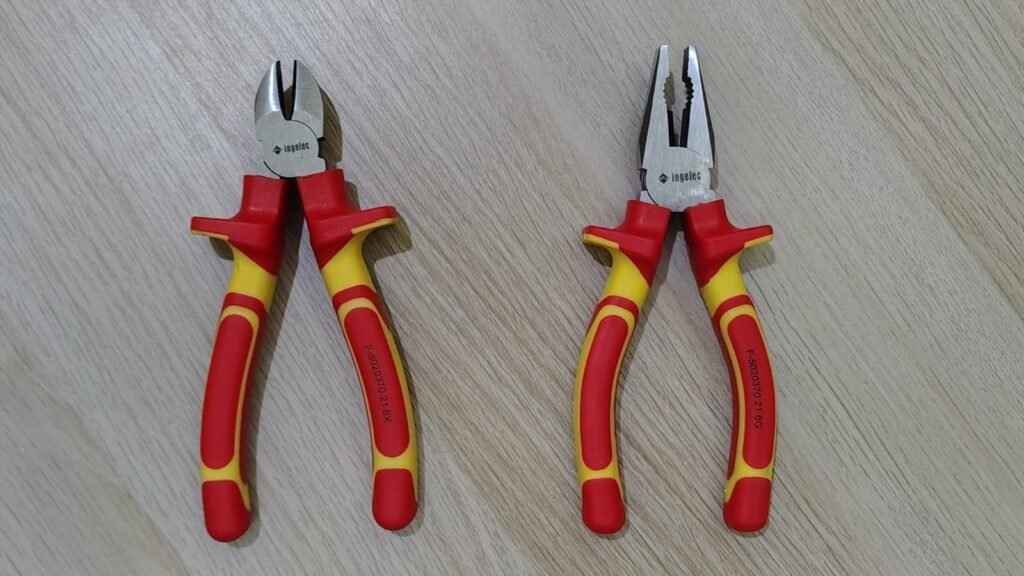
Ferrule crimping tools serve a different purpose from wire strippers and screwdrivers. A wire stripper removes insulation to prepare a conductor, while a ferrule crimper compresses a compatible ferrule onto the stripped wire end.
For more information about preparing electrical wires, read our related guide:
. Best Wire Stripper and Cutter Review: Essential Tool for Precision Wiring
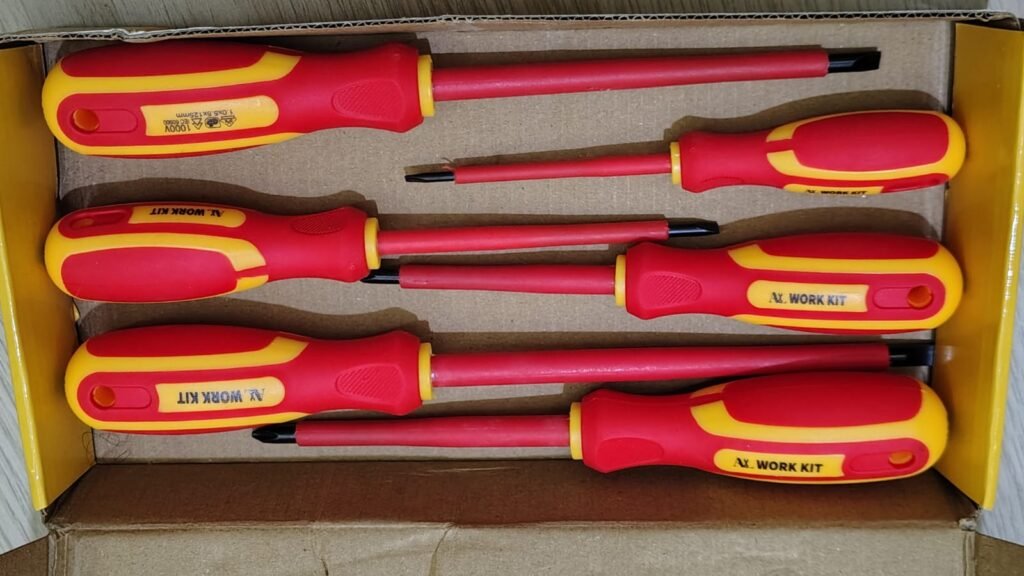
Electricians also need suitable screwdrivers for working with compatible electrical terminals and other components. You can learn more in our guide:
. Best Insulated Screwdriver Sets for Electricians: Safety & Buyer’s Guide
Use every tool only for its intended purpose and follow the relevant manufacturer instructions.
Common Mistakes to Avoid
- Using a ferrule that does not match the conductor size.
- Selecting an incompatible crimping die.
- Damaging conductor strands while stripping insulation.
- Leaving strands outside the ferrule.
- Using ferrules on terminals that do not permit them.
- Skipping inspection of the finished crimp.
- Buying a tool without checking its supported wire-size range.
For professional electrical work, follow the tool and terminal manufacturers’ instructions and applicable electrical standards. A neat-looking crimp alone does not prove that a connection is safe or reliable.
Final Thoughts
A ferrule crimping tool can be a valuable addition to an electrician’s hand-tool collection when working with stranded conductors and terminals designed for ferrule connections.
The right choice depends on the conductor sizes you use, the ferrules you install, the required crimp profile, and the tool’s construction. By checking these details before buying, you can choose a tool that suits your work and helps you prepare consistent wire terminations.