Why A Heavy-Duty Cordless Drill Is Essential For Tough Concrete
Drilling into concrete, brick, and masonry requires more than an ordinary cordless drill. The right tool helps you work efficiently, create clean holes, and reduce unnecessary strain during demanding construction and renovation projects.
However, not every cordless drill is designed for heavy-duty masonry work. Before choosing a tool, you need to understand the differences between a standard drill, a hammer drill, and a rotary hammer. Battery performance, impact energy, drill-bit compatibility, vibration control, and dust management are also important factors.
This guide explains what to look for when choosing a cordless drilling tool for concrete and walls, helping electricians, plumbers, contractors, and DIY users select equipment that matches their needs.
Rotary Hammer vs. Hammer Drill: Which One Is Better?
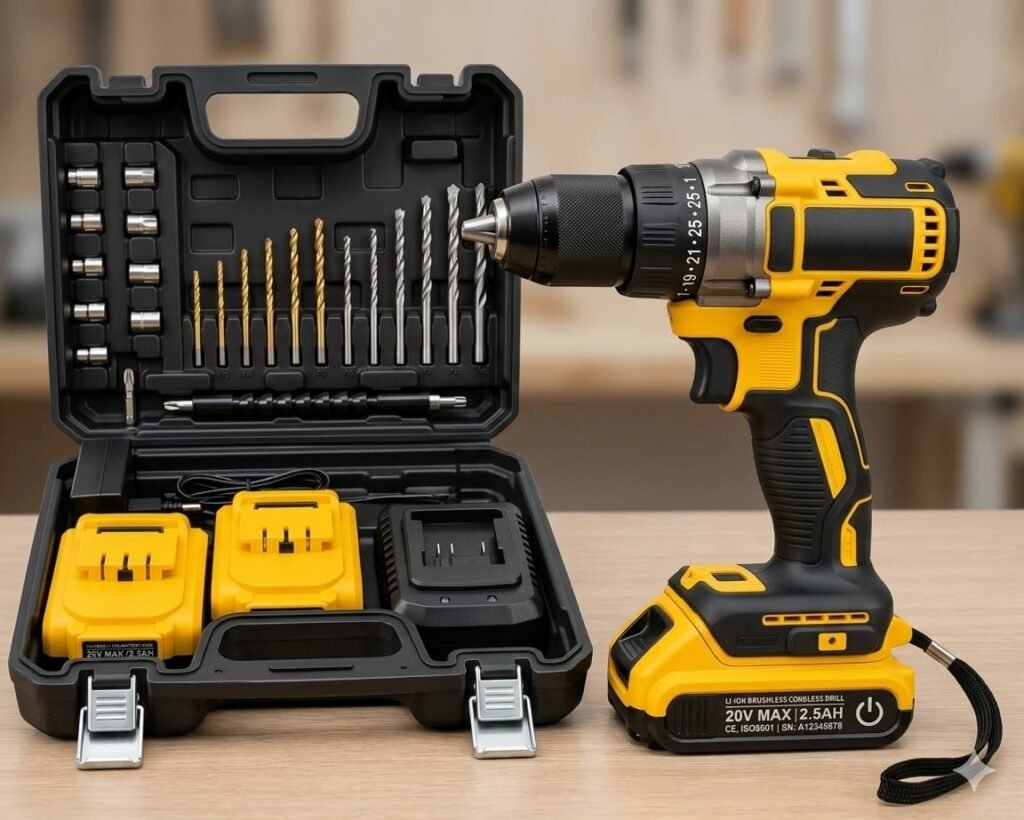
One of the most important decisions is choosing between a cordless hammer drill and a cordless rotary hammer. Although both tools can help with masonry drilling, they are designed for different levels of work.
Cordless Hammer Drill
A hammer drill combines rotary motion with a rapid hammering action. It is generally suitable for smaller holes in brick, softer masonry, and occasional light-duty concrete drilling when used with the correct masonry bit.
Hammer drills are often compact and versatile, making them useful for professionals who regularly switch between drilling into wood, metal, and masonry. However, drilling into hard concrete repeatedly can be slow and demanding, especially when using a standard drill chuck.
Cordless Rotary Hammer
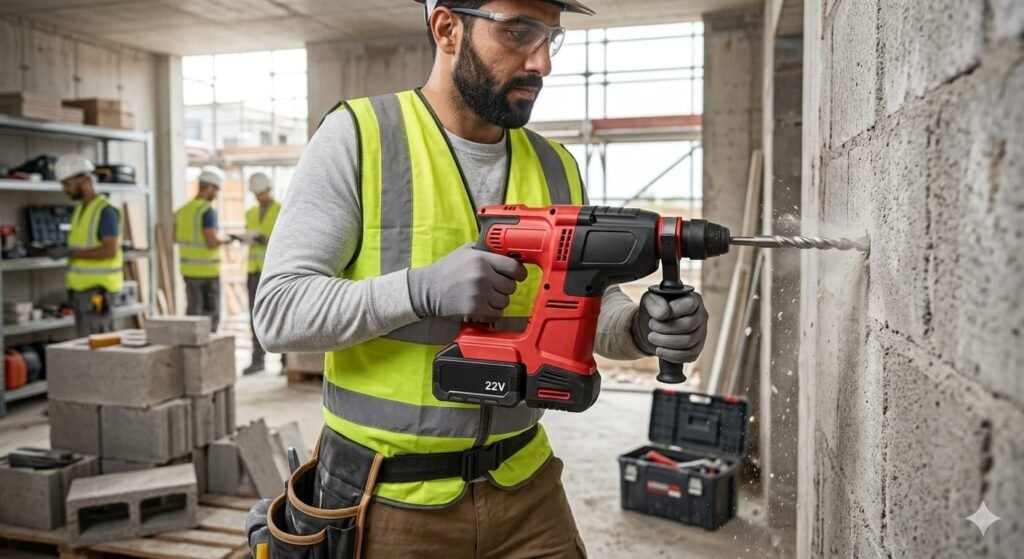
A rotary hammer uses an electro-pneumatic hammering mechanism in many models to deliver stronger impacts than a typical hammer drill. It is generally the better choice for frequent drilling into hard concrete, installing anchors, and completing demanding construction tasks.
Many rotary hammers use an SDS-Plus or SDS-Max tool holder. SDS-Plus is common for general construction and smaller-to-medium drilling applications, while SDS-Max is typically used for larger and more demanding jobs.
Some rotary hammers also offer a hammer-only mode for compatible chiselling applications. Always check the manufacturer’s specifications before using a tool for chiselling or other heavy-duty work.
Battery Platform, Voltage, and Motor Type
Battery performance matters when choosing a cordless tool for concrete drilling. A suitable battery system can help you work away from power outlets and move more easily around a job site.
Choose a Battery Platform That Fits Your Work
Many cordless hammer drills and rotary hammers use battery platforms in the 18V or 20V nominal product class. Some manufacturers also offer higher-voltage systems for demanding applications. These labels do not provide a direct comparison of drilling performance across different brands.
Voltage alone does not determine drilling power or impact energy. You should also compare the tool’s impact energy, drilling capacity, motor design, operating speed, battery capacity, and the manufacturer’s stated performance figures.
Consider a Brushless Motor
Brushless motors are common in modern professional cordless tools. Compared with brushed designs, they can reduce maintenance associated with motor brushes and may improve efficiency, depending on the tool’s design and application.
If you frequently drill into concrete, a brushless rotary hammer can be a worthwhile investment. However, the motor type should be considered alongside the tool’s actual drilling performance, ergonomics, reliability, and price.
Battery Capacity and Runtime
Battery capacity, measured in amp-hours (Ah), gives you an indication of how much charge a battery stores. A higher-capacity battery may provide longer runtime, but it can also add weight and change the balance of the tool.
For extended drilling sessions, consider keeping a spare compatible battery and using a charger that suits your battery platform. Runtime varies according to the material, hole diameter, drilling depth, battery condition, and workload.
Impact Energy and Drilling Performance
Impact energy, commonly expressed in joules, is an important specification when comparing rotary hammers. It describes the energy delivered by each hammering impact under the manufacturer’s specified test conditions.
For example, the DEWALT DCH133B is specified at 2.6 joules, while the DCH293B is specified at 3.5 joules. These figures can help illustrate differences between particular models, but they should not be treated as a complete measure of overall performance.
More impact energy is not automatically better for every task. Smaller holes for light-duty anchors may not require a large rotary hammer, while larger holes and frequent drilling into hard concrete can benefit from a tool designed for more demanding applications.
Before buying, compare the manufacturer’s stated drilling capacity in concrete, recommended bit sizes, impact energy, tool weight, and intended application. Do not rely on voltage or a marketing label such as “heavy-duty” alone.
Drill Bits and Chuck Compatibility
Using the correct drill bit is essential for safe and efficient concrete drilling. A powerful tool cannot deliver its intended performance when fitted with an unsuitable, damaged, or worn bit.
SDS-Plus and SDS-Max Bits
SDS-Plus bits are widely used with smaller rotary hammers for general concrete drilling, masonry anchors, and many installation tasks. SDS-Max bits are designed for compatible larger rotary hammers and more demanding applications.
These systems are not interchangeable. Check the tool holder and bit compatibility before purchasing accessories. Some rotary hammers can accept conventional drill bits through a suitable compatible adapter, but this depends on the model and the intended application.
Choose the Correct Bit for the Material
Use a masonry or concrete bit suitable for the material and the type of drilling operation. Match the bit diameter and length to the hole you need, and follow the manufacturer’s instructions for the tool and accessory.
For anchor installation, make sure the hole diameter and depth meet the anchor manufacturer’s requirements. Replace worn or damaged bits, and avoid forcing the tool when drilling progress slows.
Dust Removal and Health Safety
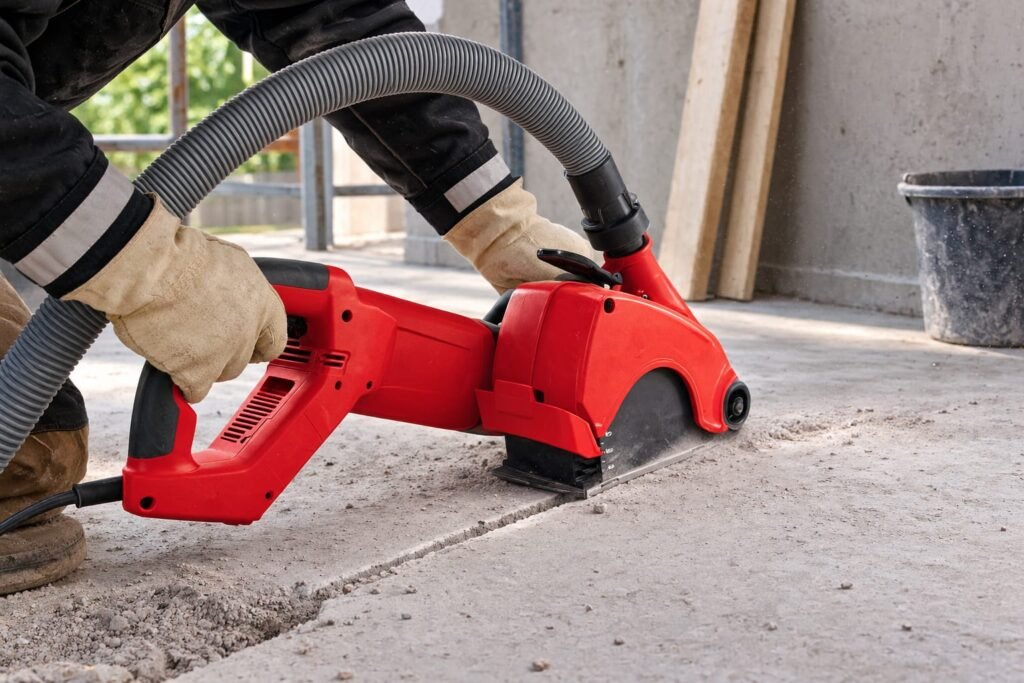
Drilling concrete, mortar, and other masonry materials can release respirable crystalline silica dust. Breathing this fine dust can cause serious lung disease, so dust control should be part of your equipment selection and work plan.
Some cordless rotary hammers support a compatible dust extraction attachment or an integrated dust collection system. These accessories can help collect dust near the drilling point, but their effectiveness depends on the design, maintenance, filter, and working conditions.
Before buying a dust extraction accessory, confirm that it is compatible with your exact tool model and drilling application. Use an appropriate dust extractor and follow the manufacturer’s instructions and applicable workplace safety requirements.
For additional guidance, consult the following official resources:
- OSHA: Respirable Crystalline Silica in Construction
- OSHA: Construction Silica Standard
- Hilti: On-Board Dust Removal Systems
Never assume that a dust collection accessory eliminates all exposure. Use the required protective measures for your tasks and ensure proper mask compliance under heavy operations.
Related Tool Guides
If you are comparing specialized tools for heavy-duty installation and workshop renovation projects, you may also find these guides useful: