Why Every DIYer and Professional Needs a Cordless Screwdriver Kit
A cordless screwdriver kit can make everyday fastening tasks easier for DIY enthusiasts, electricians, carpenters, furniture assemblers, and other tradespeople. Instead of turning every screw by hand, users can rely on a battery-powered tool to speed up repetitive work and maintain better control over many fastening jobs.
The right choice depends on the type of work you do. A compact cordless screwdriver is useful for light fastening and assembly, while a cordless drill driver can handle screwdriving and drilling with suitable accessories. Understanding the difference helps you choose a tool that meets your needs without paying for features you may rarely use.
What Is a Multi-Functional Cordless Screwdriver Kit?
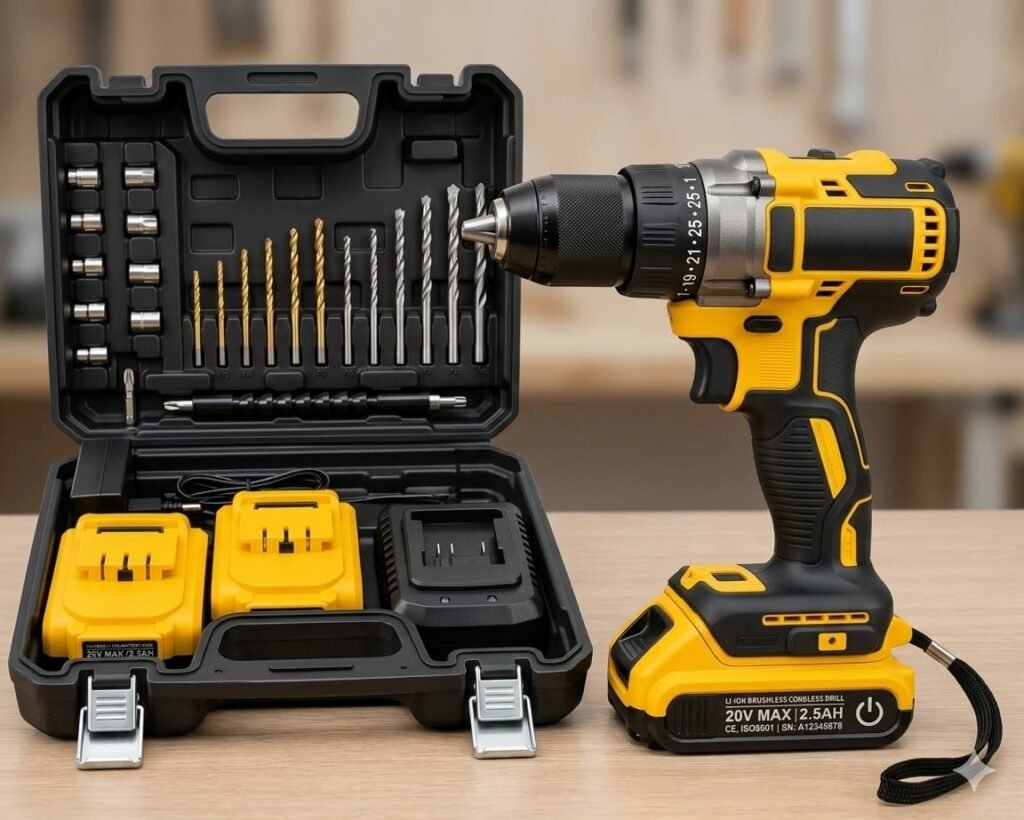
A cordless screwdriver kit usually includes a battery-powered tool and accessories for driving screws. Depending on the model, the package may also contain a charger, one or more batteries, screwdriver bits, drill bits, extension holders, and a storage case.
Some products are designed mainly for light screwdriving, while others are cordless drill drivers that offer a wider range of applications. A drill driver generally has a chuck that can hold compatible drill bits, whereas a compact screwdriver may use a hex bit holder. Always check the product specifications before buying.
A large accessory set can be convenient, but the number of included pieces does not automatically mean better quality. Bit fit, durability, compatibility, and the usefulness of the accessories matter more than the total quantity.
The Main Benefits of Using a Cordless Screwdriver
- Less manual effort: The motor turns the screw, reducing the repeated twisting motion required when using a traditional screwdriver.
- Faster repetitive work: Powered screwdriving can save time when assembling furniture, fitting suitable fixtures, or completing multiple fastening tasks.
- Better control: Models with variable speed and adjustable torque settings allow users to adapt the tool to different screws and materials.
- Convenient portability: Battery-powered operation is useful when working away from a mains power outlet.
- Access to different fasteners: Compatible bits can help users work with Phillips, slotted, Torx, and hex screw heads.
- Compact handling: Smaller models can be convenient when working inside cabinets, furniture frames, and other restricted spaces.
These benefits depend on the tool and the task. A cordless screwdriver does not eliminate every form of physical strain, so use a comfortable working position and take breaks during repetitive work.
Key Features to Compare Before Buying
1. Torque Control and Clutch Settings
Torque is the rotational force used to turn a screw. Adjustable torque settings can help reduce the risk of driving a screw too deeply, damaging the screw head, or stripping threads in suitable materials.
Many cordless drill drivers include an adjustable clutch with multiple settings. The number of settings varies by model, and having more settings does not necessarily mean the tool is more accurate. Compact electric screwdrivers may use different torque-control systems.
Choose a tool with suitable control for your usual tasks. Start with a low setting when working with delicate materials, test it on a spare piece if possible, and increase the setting gradually when needed. Some applications may still require a manual screwdriver for final tightening.
2. Variable Speed and Gear Settings
A variable-speed trigger allows the user to control how quickly the tool rotates. Starting slowly can help the bit engage with the screw head and reduce slipping. This is particularly useful when working with small fasteners or delicate materials.
Some cordless drill drivers offer a two-speed gearbox, with a lower range for controlled screwdriving and a higher range for drilling or faster rotation. The available speeds vary between models, so check the manufacturer’s specifications rather than assuming every tool offers the same RPM range.
If your main tasks involve furniture assembly and light fastening, straightforward speed control may be sufficient. If you also need to drill holes, consider a drill driver with a suitable chuck and speed range.
3. Battery Capacity and Charging Time
Battery capacity is commonly measured in amp-hours (Ah). A larger capacity can provide longer runtime under comparable conditions, but actual performance also depends on the tool’s power demand, material, screw size, and frequency of use.
A kit with two batteries can be useful for longer jobs because one battery may be used while the other charges. However, a spare battery is not essential for every DIY user. For occasional household repairs, a single battery may be enough.
Check whether the package includes a battery and charger or whether these must be purchased separately. If you already own cordless tools, confirm compatibility with the exact battery platform and model before buying.
4. Size, Weight, and Grip
A lightweight, compact tool can be easier to handle during furniture assembly and work in restricted spaces. Larger drill drivers may offer more versatility but can be heavier, especially when fitted with a large battery.
Look for a comfortable handle, a secure grip, accessible controls, and a balanced design. An LED work light can help illuminate dark corners, although it does not replace proper workplace lighting.
If possible, compare the tool’s dimensions and weight with the battery fitted. This gives you a more realistic idea of how it may feel during everyday use.
5. Screwdriver Bits and Accessories
A useful kit should include bits that match the fasteners you regularly use. Common types include Phillips, slotted, Torx, and hex bits. Some packages also include drill bits, magnetic bit holders, extension bars, or flexible extensions.
Check that each bit fits the screw head properly. Using the wrong size or type can damage the fastener and make it difficult to remove later. Poor-quality bits may wear quickly, so consider their material and construction rather than choosing a kit based on quantity alone.
Also confirm whether the tool uses a standard hex bit holder or a drill chuck. The holder determines which accessories can be fitted, and not every accessory is compatible with every tool.
Cordless Screwdriver vs. Cordless Drill Driver
Although these tools are sometimes grouped together, they are not identical. A compact cordless screwdriver is generally designed for fastening screws, often in light-duty applications. A cordless drill driver is usually more versatile and can drive screws and drill holes when fitted with the correct accessories.
- Choose a cordless screwdriver for light fastening, furniture assembly, and small household tasks where a compact tool is sufficient.
- Choose a cordless drill driver if you need to drive a wider range of screws and drill holes in suitable materials.
- Consider a combi drill if your work also requires a hammer-drilling mode for compatible masonry applications.
Do not assume that a tool advertised as a screwdriver can perform every drilling task. Check the manufacturer’s intended applications, bit-holder design, and permitted accessories before use.
Who Can Benefit from a Cordless Screwdriver Kit?
For home repairs and furniture assembly, a cordless screwdriver can help with tasks such as installing handles, assembling flat-pack furniture, and fastening suitable fittings. A compact model may be enough if you rarely need to drill holes.
Tradespeople and professional electricians also require highly efficient fastening tools during heavy-duty electrical installations. Utilizing powered drivers speeds up faceplate mounting and enclosure assembly across residential and commercial job sites.
Related Tool Reviews
If you are comparing specialized tools for your trade and professional workshop tasks, you may also find these reviews useful: