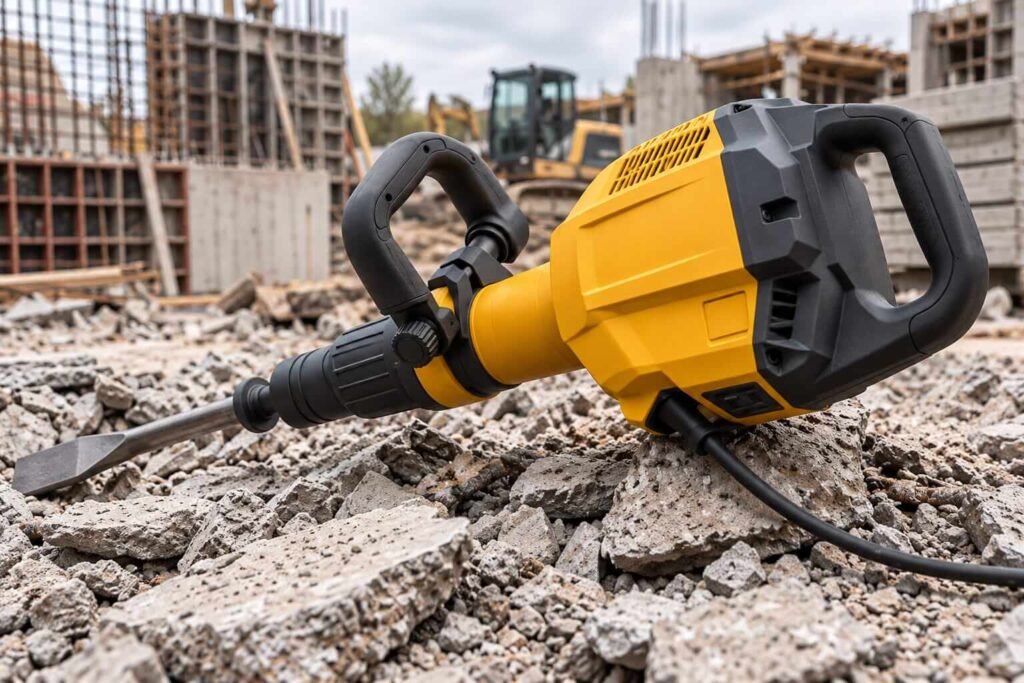
A demolition hammer is a powerful tool designed for breaking concrete, removing tiles, and carrying out heavy-duty renovation work. Whether you are a professional tradesperson or a DIY enthusiast, choosing the right demolition hammer can make difficult jobs faster and easier.
In this guide, we explain the main types of demolition hammers, the features to consider before buying, and how to choose a tool that suits your work.
What Is a Demolition Hammer?
A demolition hammer is a power tool that delivers repeated hammering force to break hard materials. Unlike a standard hammer drill, it is primarily designed for chiselling and demolition rather than drilling holes.
Common applications include:
- Breaking concrete and masonry.
- Removing floor and wall tiles.
- Chipping away old mortar and plaster.
- Breaking up small concrete sections.
- Carrying out renovation and construction work.
Types of Demolition Hammers
Demolition hammers are available in different sizes and power levels. The right choice depends on the material, the size of the job, and how often you use the tool.
1. Lightweight Demolition Hammers
Lightweight models are suitable for removing tiles, chipping plaster, and carrying out light renovation work. They are easier to control and can be more comfortable for detailed tasks or work in restricted spaces.
2. Medium-Duty Demolition Hammers
Medium-duty models offer a balance between power and handling. They are useful for removing concrete sections, breaking masonry, and completing regular renovation jobs.
3. Heavy-Duty Demolition Hammers
Heavy-duty models are designed for demanding work, including breaking thick concrete and carrying out extensive demolition. They can deliver greater impact energy but are usually heavier and require more physical control.
What to Consider When Buying a Demolition Hammer
Before choosing a demolition hammer, compare the following features.
Impact Energy
Impact energy is usually measured in joules (J). It indicates the energy delivered with each hammering action. Higher impact energy can help with demanding demolition tasks, but the best level depends on the material and the work involved.
Motor Power
For corded models, motor power is commonly measured in watts (W). However, motor power alone does not determine how effectively a demolition hammer breaks concrete. Impact energy, tool design, and overall build quality also matter.
Weight and Handling
A lighter tool is generally easier to control and may cause less fatigue during extended use. Heavier models can be suitable for demanding demolition, but consider whether you can handle the tool comfortably and safely.
Chisel Compatibility
Check which chisels the tool accepts and whether suitable pointed and flat chisels are available. Some tools use SDS-Max accessories, while others use hex-shank systems. These fittings are not interchangeable in every case, so check compatibility before purchasing additional chisels.
Vibration Control
Demolition work can expose users to significant vibration. Look for models with vibration-reduction features, follow the manufacturer’s instructions, and take appropriate breaks to reduce exposure.
Corded or Cordless
Corded demolition hammers provide a continuous power supply when an electrical outlet is available. They can be practical for longer jobs in a fixed work area.
Cordless models offer greater freedom of movement where cables are inconvenient. However, battery runtime, charging time, and the availability of spare batteries are important considerations for demanding work.
Demolition Hammer vs. Hammer Drill
A demolition hammer is designed mainly for chiselling and breaking materials. A hammer drill or rotary hammer may be more suitable when drilling holes in concrete or masonry is the main task.
If your work requires both drilling and chiselling, compare the operating modes of the tools carefully. A dedicated demolition hammer may not be the best choice when regular drilling is also required.
Safety Tips for Demolition Work
Using a demolition hammer safely is essential. Follow these precautions before and during operation:
- Wear safety glasses or a face shield, hearing protection, suitable gloves, and protective footwear.
- Use appropriate respiratory protection when dust may be present.
- Check for hidden electrical cables, water pipes, and other services before breaking walls or floors.
- Keep a firm grip on the tool and follow the manufacturer’s operating instructions.
- Secure the work area and keep other people at a safe distance.
- Follow guidance on vibration exposure and take breaks as needed.
- Disconnect the power supply or remove the battery before changing chisels or carrying out maintenance, following the manufacturer’s instructions.
Frequently Asked Questions
Can a demolition hammer break concrete?
Yes. A suitable demolition hammer can break concrete, but the required tool size and impact energy depend on the concrete’s thickness, strength, and the size of the area being removed.
Can I use a demolition hammer to remove tiles?
Yes. A suitable chisel can help remove floor or wall tiles. Work carefully and use an appropriate angle to reduce damage to the surface underneath.
Is a heavier demolition hammer always better?
No. A heavy-duty model may be better for thick concrete, but a lighter tool can be easier to control for smaller jobs. Choose according to the work you actually need to do.
What should I check before buying a demolition hammer?
Compare impact energy, weight, vibration control, chisel compatibility, power supply, durability, warranty, and the type of work you plan to perform.
Final Thoughts
The best demolition hammer is the one that matches your workload. Lightweight models are useful for smaller renovation jobs, medium-duty tools offer a balance between power and handling, and heavy-duty models are better suited to demanding concrete demolition.
Before buying, compare the specifications carefully and choose a tool that provides the right balance of power, control, comfort, and durability.
Related Guides
Looking for more tools for your construction and renovation projects? Explore these helpful guides: