Portable site generators provide reliable power for tradespeople working on construction sites, renovation projects, and outdoor jobs where mains electricity is unavailable. Choosing the right generator depends on your tools, power requirements, runtime, and working conditions.
The best choice depends on the tools you use, their power requirements, how long you need to work, and the conditions on your job site.
This guide explains the main features to consider before buying a portable generator for professional or occasional use.
1. Choosing Power Output for Portable Site Generators
Power output is one of the most important factors when selecting a generator. Before buying, make a list of the electrical tools and equipment you expect to run.
Check both:
- Running watts: The power an appliance needs during normal operation.
- Starting watts: The extra power some motors require when they first start.
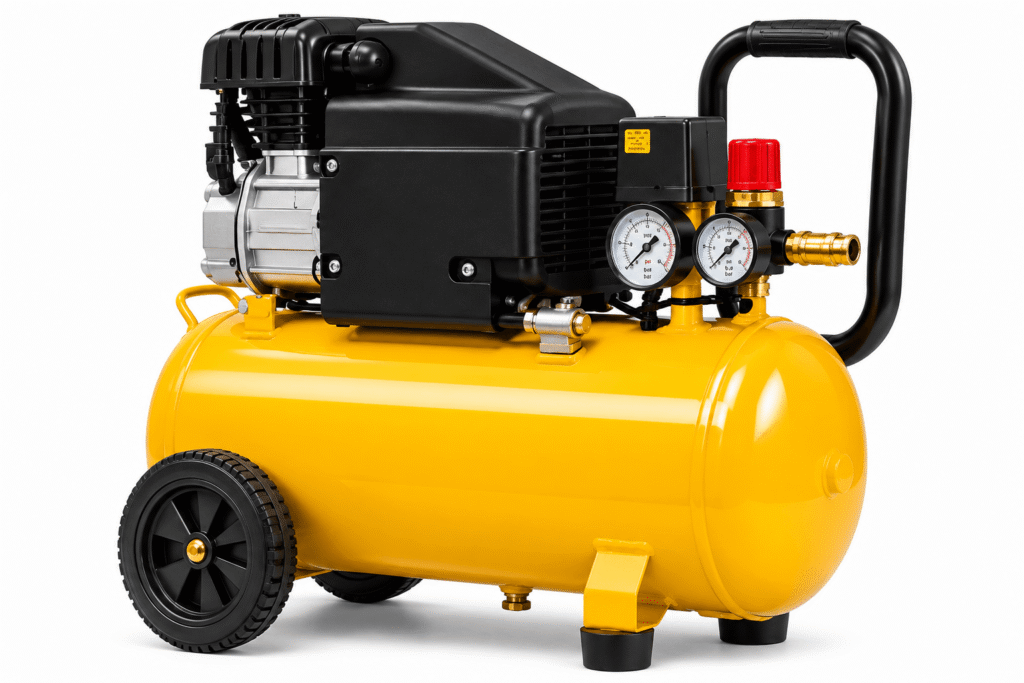
Tools with electric motors, such as compressors and certain power tools, may need considerably more power during startup than during normal operation. If the generator cannot handle this demand, it may overload or struggle to start the equipment.
For example, if you regularly use a portable compressor, check its starting and running power requirements before selecting a generator. Our guide to Best Portable Air Compressors for Workshop and Construction Use can help you explore compressor options.
Always check the manufacturer’s specifications for your tools and allow suitable capacity for the equipment you plan to run together. Do not assume that a generator’s advertised peak wattage is the amount it can supply continuously.
2. Match the Generator to Your Trade
Different trades have different power needs. Think about the work you normally do before choosing a generator.
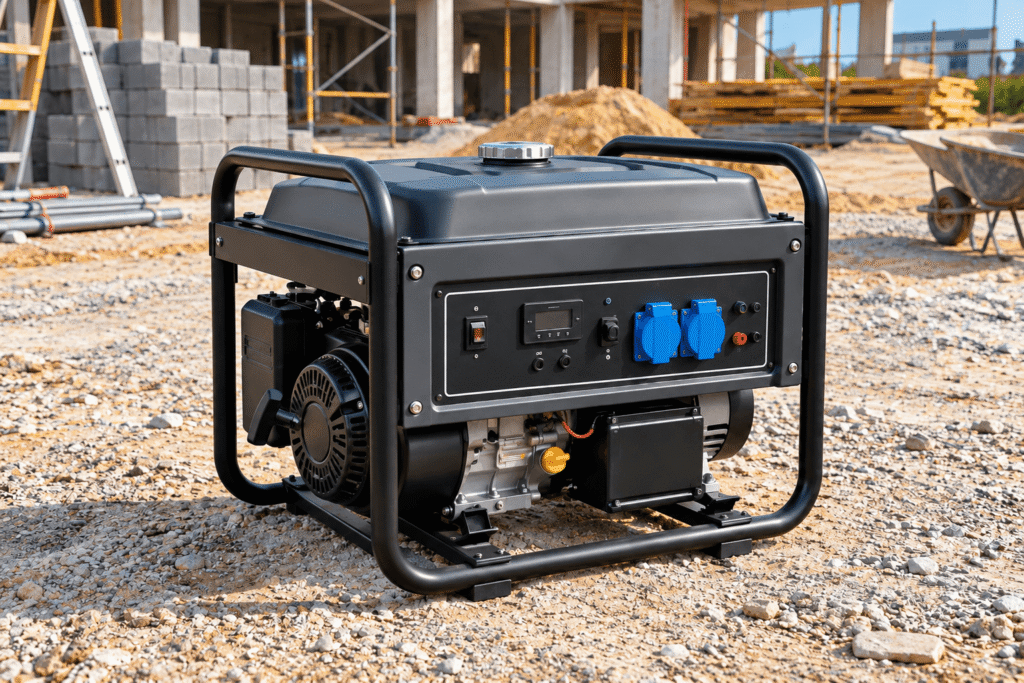
Portable site generators should be selected according to the power requirements of the tools used on each job site.
Electricians
Electricians may need to power drills, lighting, chargers, and other electrical equipment. Choose a generator with suitable outlets and enough capacity for the tools you expect to use at the same time.
Carpenters and General Tradespeople
Circular saws, table saws, and other motor-driven tools may require extra starting power. Check each tool’s specifications and consider how many tools need to operate simultaneously.
Welders
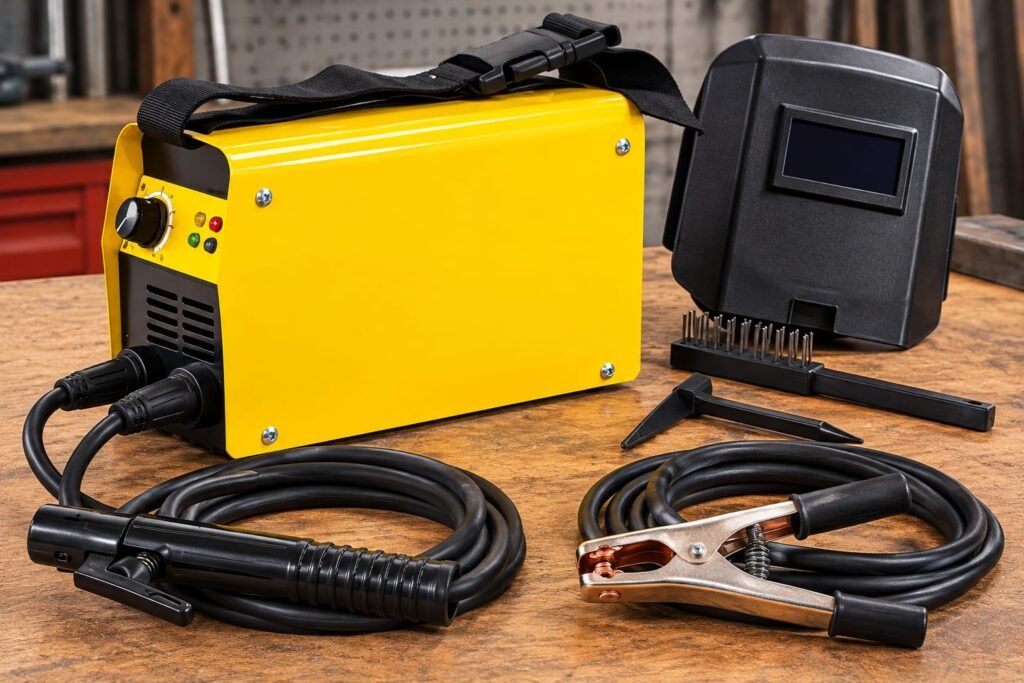
If welding is part of your work, pay particular attention to the welding machine’s input requirements. Not every portable generator is suitable for every welder.
Before choosing a generator for welding work, read our guide to Best Welding Machines for Home and Workshop Use and check the welding machine manufacturer’s recommendations for generator compatibility.
Painters and Renovation Workers
Lighting, chargers, and certain sprayers or compressors may be part of the setup. Consider the total load and whether the generator can supply power reliably throughout the working day.
3. Check Voltage, Frequency, and Outlets
Make sure the generator matches the electrical requirements of the equipment you intend to use.
Check the following before buying:
- Voltage: Confirm that it matches your tools and chargers.
- Frequency: Make sure the generator’s frequency is suitable for your equipment.
- Outlets: Check that the generator has the correct types and number of outlets.
- Rated output: Confirm the continuous power available, not just the maximum advertised output.
In Morocco and many other countries, common household and job-site equipment uses 230 V and 50 Hz, but you should always check the specifications of the actual equipment and generator.
Do not assume that a generator with the correct outlet will automatically be suitable for every electrical tool.
4. Inverter Generator or Conventional Generator?
Portable generators use different technologies, and the best choice depends on your needs.
Inverter Generators
Inverter generators produce power through electronic conversion and are often designed to provide stable output. Many models are compact, relatively quiet, and fuel-efficient under lighter loads.
They can be useful for suitable electronics, battery chargers, lighting, and smaller tools. However, check the manufacturer’s specifications to confirm that the model can handle your equipment’s starting current and power requirements.
Conventional Generators with AVR
Some conventional generators use automatic voltage regulation (AVR) to help control voltage output. They may be suitable for many common job-site applications, depending on their specifications.
Neither inverter technology nor AVR alone guarantees compatibility with every tool. Check the generator’s output characteristics and the requirements of sensitive equipment before connecting it.
5. Consider Fuel Type and Runtime
Portable generators are available with different fuel systems, including petrol and diesel. Each option has advantages and limitations.
When comparing models, consider:
- Fuel availability: Choose a fuel that is practical to obtain where you work.
- Runtime: Check the stated operating time and the load conditions used to calculate it.
- Fuel consumption: Compare expected consumption at the loads you normally use.
- Maintenance: Follow the manufacturer’s service schedule and operating instructions.
Runtime figures are not always directly comparable. A generator may run for a different length of time depending on its fuel-tank capacity and the electrical load connected to it.
For long workdays, consider whether the generator’s runtime and refuelling requirements fit your working routine.
6. Portability and Build Quality
A generator used on different job sites should be practical to transport and position.
Look for features such as:
- Strong handles and suitable wheels.
- A frame that protects important components.
- A manageable weight for your transport arrangements.
- A design that allows safe access to controls and maintenance points.
- A suitable level of noise for the work environment.
A larger generator may provide more power but can be harder to move. Think about how often you transport it, whether you work alone, and how much space you have in your vehicle.
Build quality also matters when equipment is regularly moved between workshops and construction sites. Check the warranty, service availability, and access to replacement parts.
7. Check Maintenance and Practical Features
Before buying, review the maintenance requirements and available features.
Depending on the model, useful features may include overload protection, low-oil shutdown, a fuel gauge, an hour meter, and clear operating indicators.
These features can make a generator easier to operate and maintain, but they do not replace correct use or regular inspection.
Read the manual and check the manufacturer’s recommendations for oil, filters, servicing, and storage. Make sure you can obtain the required consumables and spare parts.
8. Generator Safety on the Job Site
Generator safety is essential. Portable generators produce carbon monoxide, a poisonous gas that cannot be seen or smelled.
Follow these basic precautions:
- Operate the generator outdoors, well away from doors, windows, vents, and other openings.
- Never run a petrol or diesel generator inside a building, garage, workshop, or enclosed space.
- Keep the generator dry and follow the manufacturer’s instructions for wet-weather operation.
- Use suitable cables and inspect them for damage before use.
- Follow the manufacturer’s grounding and electrical protection instructions.
- Never connect a generator directly to a building’s wiring through a wall outlet. A proper transfer switch or other approved connection method must be installed by a qualified electrician.
- Keep fuel away from hot components and allow the engine to cool before refuelling.
For further guidance, consult the official OSHA portable generator safety guidelines.
Always follow local electrical regulations and the instructions supplied with the generator and connected equipment.
9. Compare the Total Cost
The purchase price is only one part of the cost of owning a generator.
Also consider fuel consumption, servicing, replacement parts, transport, warranty coverage, and the availability of local repairs.
A cheaper generator may be suitable for occasional light use, while a tradesperson who relies on it daily may benefit from investing in a model with appropriate capacity, durable construction, and accessible service support.
Choose a generator that meets your real working requirements rather than paying for power or features you do not need.
Portable Generator Buying Checklist
Before making your final decision, check that:
- The generator has enough continuous output for your tools.
- It can handle the starting power required by motor-driven equipment.
- Its voltage and frequency match your equipment.
- It has the outlets you need.
- Its fuel type and runtime suit your working day.
- Its size and weight are practical for your job sites.
- Maintenance, warranty, and spare parts are accessible.
- You understand the safety requirements for operating and connecting it.
Final Thoughts
Choosing a portable site generator starts with understanding the tools you use and the conditions in which you work. Compare continuous power output, starting requirements, fuel consumption, portability, maintenance, and safety features before making a decision.
A suitable generator can provide dependable power away from the mains, but it must be correctly sized for the equipment and operated according to the manufacturer’s instructions.
Take time to compare the specifications of several models, and choose one that meets your actual needs without paying for unnecessary capacity.