Introduction
A manual hydraulic cable crimper is an essential tool for electricians who work with large electrical cables and heavy-duty cable lugs. It uses hydraulic pressure to compress a compatible connector around a cable, helping create a secure electrical connection when the correct tool, die, and connector are used.
When choosing a manual hydraulic cable crimper, compare its cable capacity, included dies, and compatibility with the cable lugs used in your electrical work.
Compared with conventional hand crimpers, manual hydraulic crimpers can require less physical effort when working with larger cable sizes. They are commonly used in electrical installation, industrial maintenance, electrical panel work, and other applications involving heavy-duty cable connections.
In this guide, we explain how manual hydraulic cable crimping tools work, which features to consider before buying one, and how to choose a suitable model for your electrical work.
What Is a Manual Hydraulic Cable Crimping Tool?
A manual hydraulic cable crimping tool is a hand-operated tool that uses hydraulic pressure to compress cable lugs, terminals, or connectors onto electrical conductors.
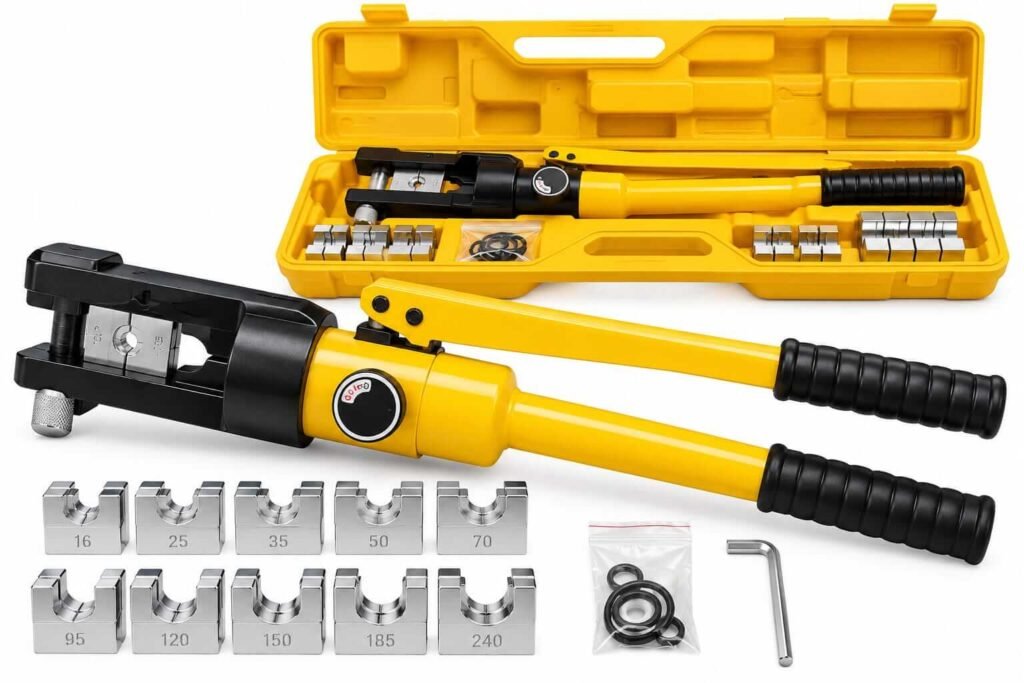
Most models include a hand pump or pumping lever, a hydraulic cylinder, a crimping head, and interchangeable dies. Some tools are supplied with a storage case and a selection of dies for different connector sizes.
These tools are particularly useful when an electrician needs to crimp larger conductors that would be difficult to handle with an ordinary mechanical crimper.
Important: A hydraulic crimper is not suitable for every type of terminal. Always check that the tool, die, connector, and cable material are compatible.
How Does a Manual Hydraulic Crimper Work?
The operator closes the crimping head around the connector and selects the appropriate die. Operating the pump builds hydraulic pressure, which moves the crimping mechanism and compresses the connector around the conductor.
The correct procedure depends on the tool design. Some models have a release valve, while others use a different mechanism to return the piston after crimping.
For a reliable connection:
- Select the correct die for the connector and cable size.
- Strip the cable to the length specified by the connector manufacturer.
- Insert the conductor fully into the lug or terminal.
- Position the connector correctly inside the crimping head.
- Operate the tool according to its instructions.
- Inspect the finished crimp and verify the connection using the appropriate inspection or testing procedure.
Never assume that a connector is correctly crimped simply because it looks compressed. Follow the connector manufacturer’s installation instructions and applicable electrical standards.
Key Features to Consider Before Buying
1. Cable Size Capacity
Cable capacity is one of the most important specifications to check. Different tools support different conductor cross-sectional areas, commonly expressed in square millimetres (mm²), or American Wire Gauge (AWG).
For example, a tool rated for a particular range of cable sizes may not be suitable for smaller or larger connectors outside that range.
Check the manufacturer’s stated capacity and make sure it matches the cables and lugs you use most often.
2. Hydraulic Crimping Force
The available crimping force affects the types of connectors a tool can handle. Some models are designed for lighter electrical work, while others are intended for larger cable lugs.
Compare the manufacturer’s rated force and supported connector types rather than choosing a tool based on force alone. The correct combination of die, connector, and cable is essential for a proper crimp.
3. Interchangeable Crimping Dies
Interchangeable dies allow a tool to work with different connector sizes and crimp profiles.
Before buying, check:
- How many dies are included.
- Which sizes are covered.
- Whether replacement dies are available.
- Whether the die profiles match the connectors you intend to install.
A kit with many dies is not necessarily better if it does not include the sizes you actually need.
4. Crimping Head Design
The head should hold the connector securely and allow you to position it correctly. Consider the space available around electrical panels, cable trays, and installation points.
A compact head may be useful in restricted spaces, but the tool must still provide the correct crimping capacity for the application.
5. Handle Comfort and Pumping Effort
Manual hydraulic tools depend on the operator to pump the mechanism. Handle design, grip material, and overall balance can affect comfort during repeated work.
If possible, consider the tool’s weight and how easily it can be operated in the positions where you normally work.
6. Build Quality and Maintenance
Look for a robust body, a well-made crimping head, secure die retention, and clear operating instructions. Hydraulic tools also require appropriate inspection and maintenance.
Check the manufacturer’s guidance for hydraulic fluid, seals, storage, and servicing. Do not use a tool that leaks hydraulic fluid or has damaged components.
Manual Hydraulic vs. Battery-Powered Hydraulic Crimpers
Both tool types use hydraulic pressure, but they differ in how that pressure is generated.
| Feature | Manual hydraulic crimper | Battery-powered hydraulic crimper |
|---|---|---|
| Power source | Hand-operated pump | Rechargeable battery |
| Operation | Requires repeated manual pumping | Motor-driven hydraulic operation |
| Charging | Not normally required | Battery charging is required |
| Portability | Depends on tool size and design | Depends on tool and battery weight |
| Typical consideration | Purchase cost and manual effort | Purchase cost, battery system, and work volume |
A manual hydraulic crimper may be a practical option for electricians who want a self-contained tool without a battery system. Battery-powered models may be more convenient for frequent, repetitive crimping.
The best choice depends on the size and frequency of your jobs, your budget, and the connectors you install.
Advantages of Manual Hydraulic Cable Crimping Tools
Manual hydraulic crimpers offer several potential benefits:
- High crimping force: Suitable models can handle connectors that require more force than ordinary hand crimpers provide.
- No battery required: The tool can be used without charging a battery.
- Portable operation: Many kits come in a carrying case for transport between job sites.
- Interchangeable dies: A compatible die set can support multiple connector sizes.
- Useful for electrical installation: They can be suitable for cable-lug work when the tool and connector specifications match.
The actual benefits depend on the design and quality of the particular model.
Limitations to Keep in Mind
Manual hydraulic crimpers are not the right choice for every electrician or every job.
Some models are heavy, and repeated pumping may become tiring during high-volume work. Die compatibility and supported connector sizes can also limit their usefulness. In addition, a hydraulic mechanism needs proper maintenance and inspection.
Before buying, consider how often you perform crimping work and whether a manual, battery-powered, or another approved crimping system best suits your needs.
Safety Tips for Using a Hydraulic Crimper
Electrical connections must be made using the correct tools and procedures.
- Work only on circuits that have been safely isolated and verified de-energized.
- Wear appropriate personal protective equipment.
- Use the specified die and connector combination.
- Keep fingers clear of the crimping head and moving parts.
- Inspect the tool before use and follow the manufacturer’s operating instructions.
- Do not exceed the tool’s rated capacity or attempt to modify its hydraulic mechanism.
- Inspect completed connections according to the connector manufacturer’s instructions and applicable electrical standards.
For critical electrical installations, use the specified crimping procedure and any required verification or testing.
How to Choose the Right Manual Hydraulic Crimper
Before purchasing, make a short checklist of your requirements:
- Cable range: Identify the conductor sizes you work with most often.
- Connector compatibility: Confirm that the tool and dies support your cable lugs.
- Crimping force: Check the manufacturer’s rating and application guidance.
- Die selection: Make sure the kit includes the required sizes and profiles.
- Ease of use: Consider the weight, handle design, and working space.
- Maintenance and warranty: Check service support, replacement parts, and warranty conditions.
- Budget: Compare the full kit and its long-term usefulness, not just the initial price.
Always verify the specifications for the exact model before ordering. Similar-looking hydraulic crimpers can have different capacities and die systems.
Frequently Asked Questions
What is a manual hydraulic cable crimper used for?
It is used to compress compatible cable lugs and terminals onto electrical conductors using hydraulic pressure generated by a hand-operated mechanism.
Is a manual hydraulic crimper better than a standard hand crimper?
It depends on the application. A manual hydraulic crimper can provide greater crimping force for suitable larger connectors, while a standard hand crimper may be more practical for smaller terminals.
Can one hydraulic crimper handle every cable size?
No. Each tool has a specified operating range and compatible die profiles. Check the manufacturer’s specifications before using it with a particular cable or connector.
How do I know whether a crimp is correct?
Follow the connector manufacturer’s instructions, use the specified tool and die, and perform any required visual inspection, measurement, or testing. Appearance alone does not prove that a connection is reliable.
Should I choose a manual or battery-powered hydraulic crimper?
A manual model may suit occasional work or users who prefer not to rely on batteries. A battery-powered model may be more convenient for frequent repetitive work. Compare capacity, ergonomics, cost, and service support.
Related Cable Crimping Tools
Choosing the right crimping tool depends on the type of connector, cable size, and electrical work you perform. Explore these related guides to compare different crimping tools and find the right option for your needs.
Best Ferrule Crimping Tools for Electricians: Features and Buying Guide
Learn how to choose a crimping tool for wire ferrules and electrical connections
Best Wire Crimping Tool for Electricians: Features, Types, and Buying Guide
xplore common wire crimping tools, their features, and what to consider before buying
Learn More About Electrical Cable Terminals
Choosing the right cable terminals is important for creating secure and reliable electrical connections. Copper cable lugs, aluminum lugs, and insulated terminals require suitable crimping tools that match the terminal type and cable size.
For more information about different electrical terminals and connectors, visit the official manufacturer’s website:
BM Group electrical terminals page
Final Thoughts
A manual hydraulic cable crimping tool can be a valuable addition to an electrician’s toolkit when the work involves compatible cable lugs and larger conductors. The most important factors are the supported cable range, crimping force, die compatibility, build quality, and ease of use.
Rather than choosing a tool simply because it includes many dies or advertises a high force rating, match its specifications to the connectors and cables you actually use. A correctly selected tool, used according to the manufacturer’s instructions, helps electricians produce consistent and reliable crimped connections.