Introduction
Powered hydraulic cable crimping tools help electricians make secure cable connections while reducing manual effort.
A battery-powered hydraulic cable crimping tool is designed to make cable crimping easier by combining an electric motor with a hydraulic mechanism. Instead of relying entirely on manual force, the tool generates the pressure needed to crimp compatible connectors onto conductors.
These tools can help electricians reduce physical effort, save time on repetitive tasks, and work more conveniently in different areas of a job site. In this guide, we explain how battery-powered hydraulic crimping tools work, their advantages, common applications, and what to consider before choosing one.
What Is a Battery-Powered Hydraulic Cable Crimping Tool?
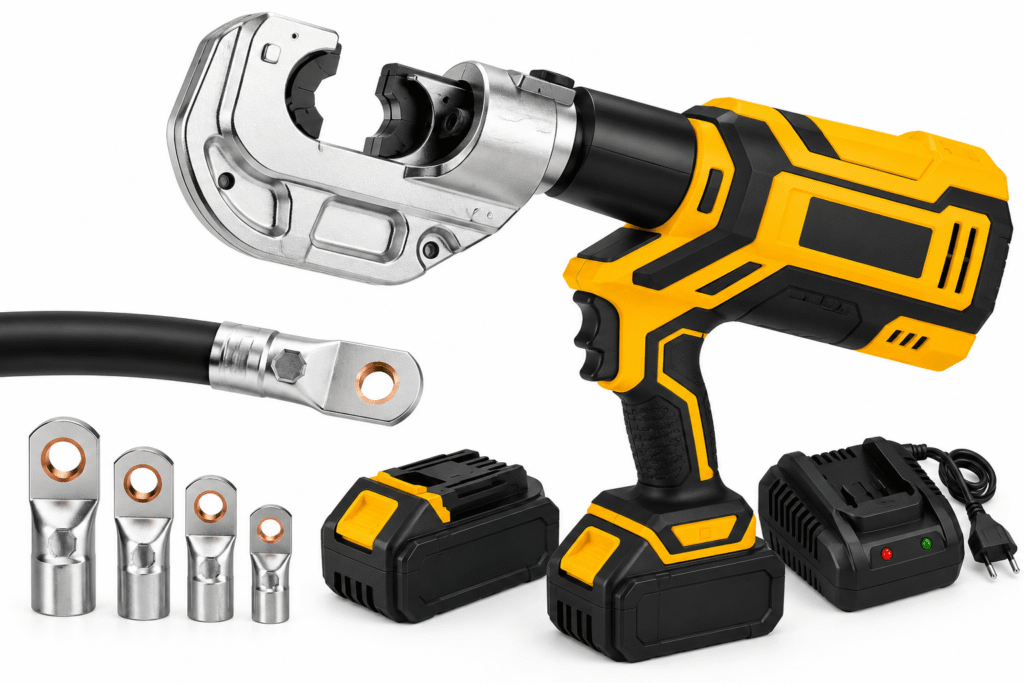
A battery-powered hydraulic cable crimping tool is a cordless tool used to crimp compatible electrical lugs and connectors onto conductors. It uses a rechargeable battery to power an electric motor, which operates a hydraulic system that generates the required crimping force.
Many models use interchangeable dies to shape the connector around the conductor. The correct combination of tool, die, connector, and conductor helps create a secure electrical and mechanical connection.
Electricians use these tools in electrical distribution panels, commercial buildings, industrial installations, power distribution systems, and other projects involving cable termination.
However, not every model is suitable for every cable size or connector. Always check the manufacturer’s specifications before selecting a tool for a particular application.
Why Are Battery-Powered Hydraulic Crimping Tools Useful?
1. Reduced Physical Effort
One of the main benefits of a battery-powered hydraulic crimper is that it reduces the manual effort required during crimping. A traditional hand-operated tool depends on the user’s force, while a battery-powered hydraulic model uses its motor and hydraulic mechanism to generate the specified pressure.
This can be especially helpful when working with larger cable connectors or completing many crimping operations during a single project.
2. Greater Efficiency on the Job Site
Electricians may need to prepare and crimp numerous cable connections during an installation. A powered crimping tool can make repeated operations more convenient and help maintain an efficient workflow.
The actual time required for each crimp depends on the tool, connector, conductor size, and operating procedure. Proper cable preparation and correct die selection remain essential.
3. Cordless Portability
Because these tools operate on rechargeable batteries, they do not need to remain connected to a mains power supply while crimping.
This makes them convenient for work in electrical cabinets, industrial facilities, construction sites, and locations where a power outlet is not readily available.
Battery capacity and charging time are worth considering, especially for electricians who perform frequent crimping throughout the day.
4. Improved Comfort During Repetitive Work
Many professional models feature ergonomic handles, rotating heads, LED work lights, and battery indicators. Depending on the design, these features can make the tool easier to position and operate in restricted or poorly lit spaces.
Tool weight is also important. A heavier model may be less comfortable during extended use, particularly when working in awkward positions.
5. Consistent Crimping Performance
Hydraulic crimping tools are designed to provide a specified crimping force. Some models also include automatic cycle control, piston retraction, or electronic monitoring features.
These features can support consistent operation, but they do not remove the need to follow the manufacturer’s instructions. A reliable connection requires the correct tool, compatible dies, suitable connectors, and the prescribed crimping procedure.
Common Applications
Battery-powered hydraulic cable crimping tools are used for a range of professional electrical tasks, including:
- Cable termination in electrical distribution panels.
- Electrical connections in commercial and industrial installations.
- Power distribution and maintenance work.
- Crimping compatible cable lugs and connectors.
- Working with copper or aluminum conductors when the tool and connector system are rated for the application.
- Projects that involve repeated cable crimping operations.
The appropriate tool depends on the conductor material, cable cross-section, connector type, and installation requirements. Never assume that one crimping tool can handle every kind of cable or connector.
What Cable Sizes Can These Tools Handle?
The supported cable size varies significantly between models. Some battery-powered hydraulic crimping tools can handle conductor cross-sections from 16 mm² to 300 mm², while other models have a smaller or larger working range.
For example, some professional tools from Klauke are specified for crimping applications within the 16–300 mm² range. This should be treated as an example rather than a universal specification for all battery-powered crimpers.
When comparing tools, check the manufacturer’s stated crimping range and confirm that it covers the cable sizes you regularly use.
Remember that mm² refers to the conductor’s cross-sectional area, not the outside diameter of the cable.
Important Features to Consider Before Buying
Crimping Force
Crimping force is commonly expressed in kilonewtons (kN). Different tools produce different levels of force and are designed for different applications.
Choose a model with a rated force suitable for your connectors and cable sizes. A higher force rating does not automatically mean the tool is the best choice for every electrician.
Crimping Range
Check the supported conductor cross-sections and connector types before purchasing. If your work regularly involves cables up to 300 mm², choose a tool explicitly rated for the required cable and connector combinations.
Die Compatibility
Die compatibility is one of the most important details to check.
Different manufacturers and models may use different die series. Some tools accept particular standard dies, while others require dedicated dies or specified adapters.
Do not assume that dies from one tool will fit another. Always consult the manufacturer’s compatibility information and use the correct dies for the connector and conductor.
Battery Capacity and Charging Time
Battery voltage, capacity, and charging time can affect how conveniently the tool fits into your working routine.
Check the battery specifications and, where available, the manufacturer’s estimate of the number of crimping cycles per charge. For demanding projects, a compatible spare battery may help reduce interruptions.
Weight and Ergonomics
A comfortable grip, balanced weight, and rotating crimping head can be useful when working in electrical cabinets or confined spaces.
Compare the complete tool weight with the battery installed, rather than relying only on the weight of the tool body.
Safety and Operating Features
Depending on the model, useful features may include automatic piston retraction, status indicators, LED lighting, pressure monitoring, and protected trigger controls.
Check the actual specifications rather than assuming that every model includes all these features.
Included Accessories
Some tools are supplied with batteries, a charger, a carrying case, and a set of dies. Others are sold as bare tools, with batteries or dies available separately.
Check the package contents carefully and consider the cost of any additional accessories you need.
Battery-Powered vs. Manual Hydraulic Cable Crimping Tools
Manual and battery-powered hydraulic crimpers are both useful for electrical work, but they suit different working conditions.
A manual hydraulic crimper uses a hand-operated pumping mechanism to generate hydraulic pressure. It may be a practical choice for occasional jobs or for electricians who prefer a tool that does not depend on a battery.
A battery-powered hydraulic crimper uses an electric motor to operate the hydraulic mechanism. It can reduce repetitive manual effort and may be more convenient when many connections need to be completed.
The best choice depends on the frequency of use, cable sizes, working environment, budget, and availability of compatible dies.
If you want to learn more about the manual option, read our guide to Best Manual Hydraulic Cable Crimping Tools for Electricians: A Complete Buying Guide.
This related article explains the main considerations when choosing a manual hydraulic crimping tool for electrical work.
Safety Tips for Hydraulic Cable Crimping
Safe operation is essential whenever electrical tools and cable connections are involved.
- Follow the tool manufacturer’s operating instructions.
- Make sure the circuit is isolated, de-energized, and verified safe before working on it.
- Use compatible dies and connectors suitable for the conductor.
- Inspect the tool, battery, dies, and connectors for damage before use.
- Keep fingers and other body parts clear of the crimping head and moving dies.
- Complete each crimping cycle according to the manufacturer’s instructions.
- Inspect finished connections in accordance with the applicable installation requirements and connector manufacturer’s guidance.
Always follow relevant electrical standards and local regulations for the installation.
Other Cordless Tools for Electrical and Construction Work
Battery-powered tools can make many tasks around a job site more convenient by reducing reliance on extension cords and fixed power outlets. The right tool still depends on the work being performed, the materials involved, and the safety requirements of the task.
For another guide to cordless equipment, see Best Cordless Angle Grinders: Power & Safety Guide. It covers important features, common uses, and safety considerations when choosing a cordless angle grinder.
Although an angle grinder serves a different purpose from a hydraulic crimping tool, both are examples of cordless equipment that professionals may use across electrical and construction projects.
How to Choose the Right Battery-Powered Hydraulic Crimping Tool
Before buying, think about the type of electrical work you perform most often. An electrician who regularly installs large power cables may need a different model from someone who mainly works with smaller conductors.
Compare the following features:
- Supported cable and connector sizes.
- Rated crimping force.
- Compatible die series.
- Battery capacity and charging time.
- Tool weight and ergonomics.
- Available safety and operating features.
- Included accessories, warranty, and replacement-part availability.
It is also worth comparing the total cost of the tool and its accessories rather than focusing only on the initial purchase price.
For manufacturer specifications and product details, consult the official Klauke website and verify the exact model’s specifications before purchasing.
Conclusion
Battery-powered hydraulic cable crimping tools can be valuable equipment for electricians who need to make reliable cable connections while reducing repetitive manual effort. Their cordless design and hydraulic mechanism can make demanding installation work more convenient and efficient.
However, no single model is ideal for every application. The right choice depends on cable sizes, connector types, required crimping force, die compatibility, battery performance, and the working environment.
By checking these details carefully, electricians can choose a tool that matches their needs and supports safe, efficient electrical installation work.