Construction work can expose your feet to falling tools, sharp nails, slippery surfaces, heavy materials, and other hazards. Wearing the right safety boots is an important part of protecting your feet and staying safe on the job.
Safety boots for construction are essential for protecting workers’ feet from falling objects, sharp nails, slippery surfaces, and other hazards on a building site. Choosing the right pair means checking toe protection, puncture-resistant soles, slip resistance, comfort, and the safety standards required for your job.
Why Safety Boots for Construction Are Important
Construction workers often spend long hours standing, walking, climbing, and carrying equipment. Ordinary shoes may not provide enough protection for these conditions.
A suitable pair of safety boots can help reduce the risk of foot injuries caused by falling objects, sharp materials, and slips. The right choice depends on the hazards present at your workplace.
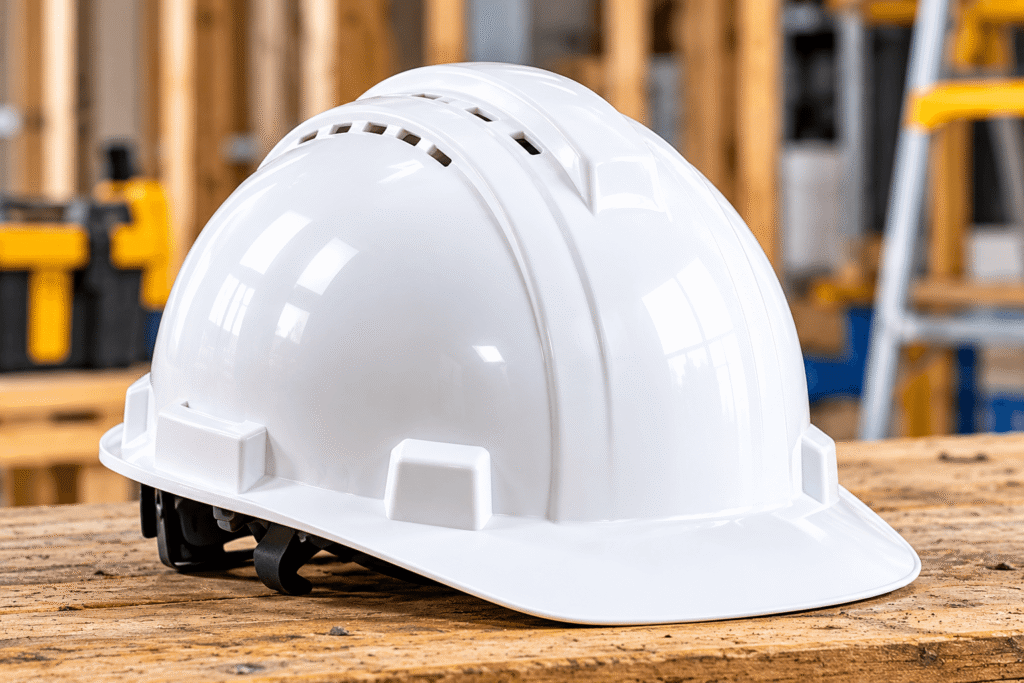
Safety footwear is an important part of personal protective equipment (PPE), alongside items such as a How to Choose the Right Safety Helmet for Construction Work and suitable Construction Workwear: How to Choose the Right Work Clothes.
1. Look for a Protective Toe Cap
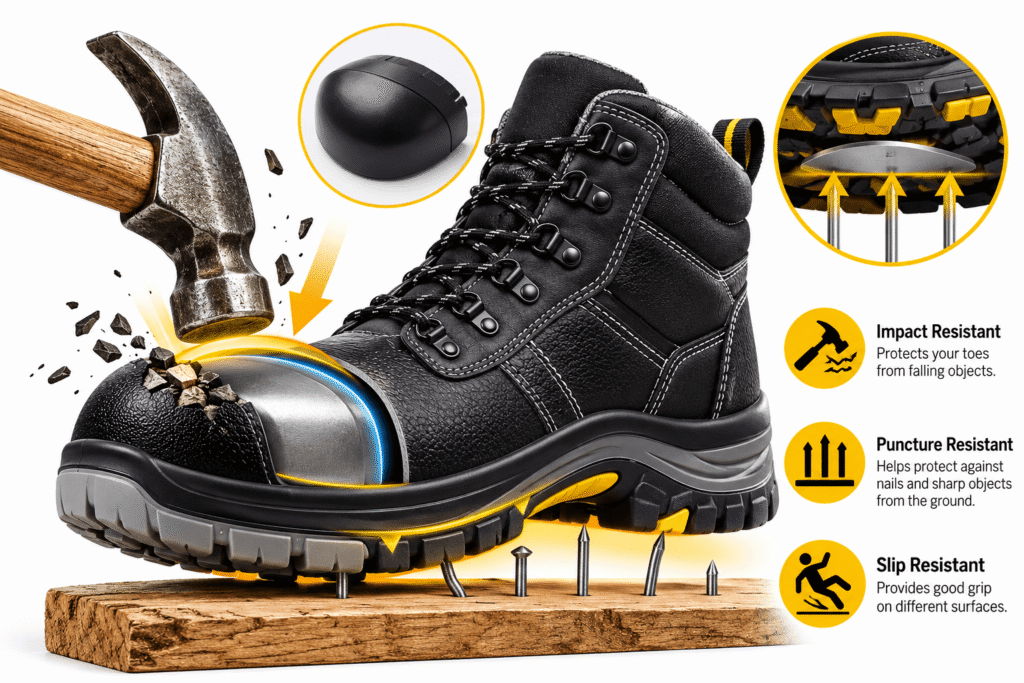
One of the most important features of safety boots for construction is a protective toe cap.
On a building site, a hammer, metal tool, brick, or other heavy object can fall onto your foot. Safety footwear with a tested protective toe cap is designed to help protect your toes against specified impact and compression hazards.
Toe caps may be made from materials such as steel or composite materials. Neither option is automatically the best for every worker. Check that the footwear meets a recognized safety standard appropriate for your workplace.
What to look for: Verified toe protection that matches the potential risks on your job site.
2. Choose a Puncture-Resistant Sole
Nails, screws, metal fragments, and other sharp materials can be scattered across construction sites. Stepping on one can cause a painful injury.
A puncture-resistant midsole is designed to help prevent sharp objects from penetrating the bottom of the boot. Depending on the design, this protection may use metal or non-metal materials.
Remember that a thick-looking outsole does not automatically mean the boot has puncture protection. Check the manufacturer’s specifications before buying.
What to look for: Clearly stated, verified puncture-resistant protection when sharp objects are a workplace hazard.
3. Check the Outsole for Slip Resistance
Dust, water, mud, and other materials can make construction surfaces slippery. A suitable outsole can help improve grip and reduce the risk of slipping.
Look for a boot designed and tested for the surfaces and conditions in which you work. The tread pattern, outsole material, and condition of the sole can all affect grip.
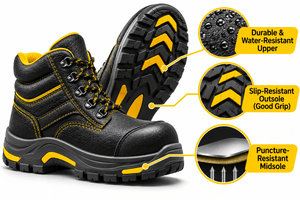
Even slip-resistant footwear cannot prevent every fall, especially on heavily contaminated or uneven surfaces.
What to look for: Appropriate slip-resistance performance and an outsole suited to your working environment.
4. Make Sure the Boots Fit Properly
Protection is important, but comfort also matters. Workers may wear safety boots for most of the working day, so a poor fit can make the job uncomfortable.
When trying on a pair, check that:
- Your toes have enough room without pressing against the protective cap.
- Your heel feels secure without excessive slipping.
- The boots do not pinch or rub against your feet.
- The sole provides suitable support for your normal work.
- You can walk, bend, and climb comfortably.
Try the boots with the type of work socks you normally wear. Do not choose a size that is too small simply because the boots feel more secure.
5. Consider the Materials and Durability
Safety boots are exposed to dust, abrasion, moisture, and repeated daily use. The upper material, stitching, sole construction, and fastening system can all influence durability.
Leather and synthetic materials each have advantages, depending on the design and intended working conditions. Waterproof footwear may be useful in wet environments, but it is not necessary for every job.
Inspect the boots regularly for damaged stitching, a separating sole, a cracked upper, or a worn tread. Replace footwear when damage or wear compromises its protective function.
What to look for: Durable construction suitable for your work, along with clear care and replacement guidance from the manufacturer.
6. Choose Boots for the Hazards of Your Trade
Different jobs can require different protective features.
When choosing safety boots for construction, consider the specific hazards you face in your trade and select protective features accordingly.
When choosing safety boots for construction, consider the specific hazards you face in your trade and select protective features accordingly.
For electricians
Electricians should assess the electrical hazards associated with their work. Ordinary safety boots, including those with protective toe caps, must not automatically be considered electrically insulating.
Where electrical hazards are present, select footwear specifically rated for the relevant risk and follow the site’s electrical safety procedures. Footwear is not a substitute for isolation, safe working practices, or other required electrical protective equipment.
For builders and general construction workers
Toe protection, puncture resistance, and suitable slip resistance can be important where falling materials, nails, and uneven surfaces are common.
For plumbers and workers in wet environments
Grip and resistance to water may be important. Where chemicals or other hazardous substances are present, confirm that the footwear is suitable for those specific materials.
For workers exposed to heat or other special hazards
Choose footwear specifically designed and rated for the relevant exposure. General-purpose construction boots may not provide the protection required for hot surfaces, molten materials, or particular chemical hazards.
7. Check the Safety Standard and Product Information
Do not choose safety boots based only on appearance, price, or claims printed on a product page.
Before buying, check the manufacturer’s documentation for:
- The applicable footwear safety standard.
- The type of toe protection provided.
- Whether puncture resistance is included.
- The stated slip-resistance performance.
- Any limitations or special-use warnings.
- The correct care, inspection, and replacement instructions.
For example, ISO 20345 is a widely used international standard for safety footwear. The exact requirements and markings depend on the standard edition and product classification. Check the actual certification and markings rather than assuming that every boot offers every protective feature.
For additional guidance, consult the UK Health and Safety Executive’s construction PPE guidance.
8. Inspect and Maintain Your Safety Boots
Even good safety boots need regular inspection. Dirt can hide damage, while worn soles may provide less grip than when they were new.
After work, remove loose dirt and clean the boots according to the manufacturer’s instructions. Allow wet footwear to dry properly, away from excessive heat.
Check the toe area, outsole, stitching, and upper regularly. If a protective toe cap is exposed or damaged, the sole is separating, or the boot has suffered a serious impact, follow the manufacturer’s instructions and replace it when its protective ability may have been compromised.
Do not attempt repairs that could weaken the protective construction.
Final Thoughts
Choosing the right construction safety boots is about more than buying a strong-looking pair of shoes. The important thing is to match the footwear to the hazards you face at work.
Look for suitable toe protection, puncture-resistant soles where needed, appropriate slip resistance, a comfortable fit, durable construction, and verified safety information.
Your feet help you work every day. Taking the time to choose the right protective footwear is a practical step toward reducing injuries and making construction work safer.
Before buying, ask yourself one simple question: Do these boots provide the protection my actual job requires?